
World Series Game 4: Rays Walk Off Brewers 4-3 in 12 Innings, Force Game 5
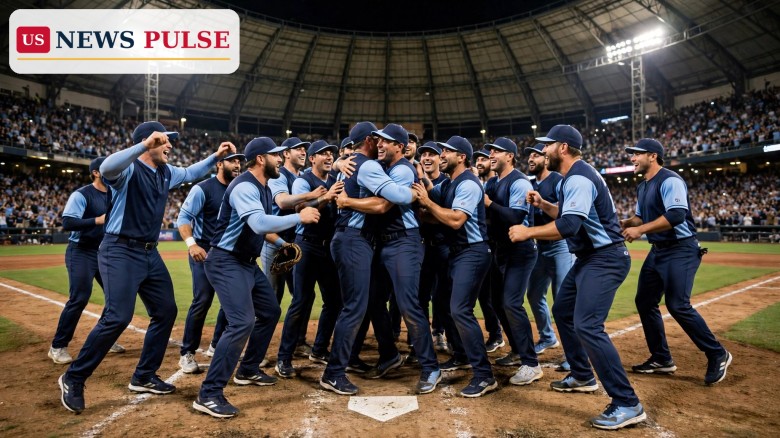
The Tampa Bay Rays refused to let their season end on Tuesday night, October 27, 2026, beating the Milwaukee Brewers 4-3 in 12 innings in World Series Game 4 at Tropicana Field in St. Petersburg, Florida. Ben Williamson's walk-off single in the bottom of the 12th capped a wild final inning, answered rookie Cooper Pratt's go-ahead home run at the top of the frame, and forced a Game 5 on Wednesday. Milwaukee still leads the series 3-1, but the Rays are alive, and the Brewers must wait at least one more day for the first World Series championship in franchise history.
World Series Game 4 had everything a clinching game is supposed to have, and then one more inning than anyone expected. Tampa Bay scored first, Milwaukee answered twice, a disputed baserunning play put the Rays back in front, a ninth hitter's home run tied it again, and both bullpens traded scoreless innings until the 12th, when the game finally broke open in both halves of the inning. By the time Williamson's hit found grass with the bases loaded and nobody out, Tropicana Field had gone from tense to delirious, and a series that looked finished after Milwaukee's 10-1 rout in Game 3 suddenly had a pulse again.
Key Points
- Final score: Tampa Bay Rays 4, Milwaukee Brewers 3, in 12 innings at Tropicana Field on Tuesday, October 27, 2026.
- Ben Williamson hit the walk-off single in the bottom of the 12th with the bases loaded and no outs, after Tampa Bay had tied the game earlier in the inning.
- Milwaukee rookie Cooper Pratt went 4-for-5 and hit a go-ahead solo home run in the top of the 12th, his first career postseason home run.
- Milwaukee still leads the World Series 3-1. Game 5 is Wednesday, October 28, at Tropicana Field in St. Petersburg.
- A disputed fourth-inning play, when Junior Caminero scored after appearing to run out of the baseline to avoid a tag, gave Tampa Bay a 2-1 lead and became a major talking point.
What Happened
Tampa Bay struck first in the second inning. With Jonny DeLuca on base against Milwaukee starter Dustin May, Chandler Simpson doubled to bring DeLuca home and give the Rays a 1-0 lead in an elimination game. It was the kind of small-ball, supporting-cast run that had been hard to come by for Tampa Bay in the first three games of the series, and it settled the home crowd early.
Milwaukee answered in the fourth. Sal Frelick singled, and rookie shortstop Cooper Pratt doubled into the left-field corner to score Frelick and tie the game 1-1. Pratt, who had already made himself a central figure in this World Series, was just getting started on a night that would end with four hits in five at-bats.
The bottom of the fourth produced the game's most argued-over moment. With a runner on second and one out, DeLuca hit a dribbler to Brewers third baseman David Hamilton. Hamilton fielded the ball and tried to tag lead runner Junior Caminero, who ducked out of the way. Hamilton then threw wildly to first in an attempt to get DeLuca, and Caminero came around to score, restoring Tampa Bay's lead at 2-1. Replays and still images circulated widely after the game appeared to show Caminero well out of the baseline as he avoided the tag, but running out of the baseline on a tag play is not a challengeable call under the rules, so the run stood.
Milwaukee tied it again in the fifth, and fittingly it was Hamilton who did it. Facing Rays pitcher Griffin Jax with the Brewers trailing by one, Hamilton, batting ninth, hit a solo home run to make it 2-2 and end Jax's night. From there, the game became a bullpen contest. Tampa Bay used Nick Martinez for two clean innings in the sixth and seventh, then turned to Bryan Baker, who breezed through the eighth and added a second scoreless inning. Milwaukee's Aaron Ashby retired every batter he faced over two and a third innings in the ninth and beyond, extending a remarkable scoreless postseason run for a reliever, before Antonio Senzatela and others kept the game tied.
Tampa Bay had a chance in the 11th. Pinch-runner Jorge Mateo came off the bench and stole second to get into scoring position, but with two outs Jonathan Aranda flied out to right-centre field, and the game went to a 12th inning tied 2-2. Senzatela had earlier stranded the potential winning run in scoring position in the 11th, striking out Taylor Walls and then, after Yandy Diaz drew a two-out walk and was replaced by Mateo, watching Mateo steal second before Aranda's fly ball ended the threat.
The 12th inning delivered the drama the first 11 had promised. Leading off the top of the 12th against Rays reliever Ian Seymour, Pratt turned on a hanging curveball and sent it to deep left field for a solo home run, his first career postseason home run, giving Milwaukee a 3-2 lead and putting the Brewers three outs from the title. Pratt had hit only three home runs in 74 regular-season games, which made the moment even more improbable, and his four hits were reported as the most ever by a rookie in a potential World Series-clinching game.
Tampa Bay answered immediately. Caminero reached base on a throwing error by Joey Ortiz to start the bottom of the 12th. Liam Hicks singled to move Caminero to third with no outs, and DeLuca singled to tie the game 3-3. Simpson then singled to load the bases with still nobody out, and Williamson wasted no time, lining a walk-off single to win it 4-3 and send the Rays streaming out of the dugout. The box score credited Tampa Bay with two runs in the 12th to Milwaukee's one, on nine hits to eight, in a game played indoors at Tropicana Field in cloudy, humid conditions.
Background and Context
The result changes the shape of the series without changing its leader. Milwaukee won the first three games, including a 10-1 demolition in Game 3 on Monday night at the same ballpark, when the Brewers scored eight runs with two outs in the fifth inning, the first time in World Series history that had happened, and left-hander Robert Gasser faced the minimum 18 batters through six innings. A win on Tuesday would have completed a sweep and delivered the Brewers' first championship. Instead, the Rays forced at least one more game, and if they win Game 5 on Wednesday, the series returns to Milwaukee for Games 6 and 7.
Both clubs are chasing a first title. Milwaukee, founded as the Seattle Pilots in 1969 and in Milwaukee since 1970, has reached the World Series only once before, losing to the St. Louis Cardinals in 1982. Tampa Bay, which began play in 1998, reached the World Series in 2008 and 2020 and lost both times. One of those teams will end a long wait this week or next; Tuesday night ensured it will not end in a sweep.
The pitching shape of Game 4 also told a story about modern October baseball. Neither team got a long start. May worked three innings for Milwaukee, Jax worked into the fifth for Tampa Bay, and from there it was a procession of relievers, matchups and high-leverage outs. That is partly why the game stretched past midnight on the East Coast and into the early hours of Wednesday in Dhaka, and partly why the 12th inning felt so open: by then, both teams were down to the last arms in their bullpens, and one mistake, one hanging curveball or one throwing error, was always likely to decide it. In the end, both happened in the same inning, and Tampa Bay got the last one.
World Series Game 4: The Call That Will Not Go Away
Long after the final score is remembered, the fourth-inning baserunning play is likely to be replayed. The rule is straightforward in outline: a runner gets three feet of leeway either side of his established base path on a tag play, and a runner who runs more than three feet away to avoid a tag should be called out. The complication in Game 4 was procedural rather than visual. Running out of the baseline is not a play that can be challenged by replay review, so once the umpires let Caminero's dodge stand and Hamilton's throw sailed wide, there was no mechanism to overturn the run, however clear the still images looked afterwards.
That distinction matters for how the game is discussed. It was not, on the evidence reported after the game, a case of a missed call that replay failed to correct; it was a case of a call that replay is not allowed to correct. Broadcasters flagged it in real time, social media screenshots circulated showing how far onto the infield grass Caminero appeared to go, and analysts noted that this was far from the first time in this World Series that Caminero had been involved in drama on the basepaths. Milwaukee tied the game in the very next half-inning, when Hamilton homered, which softened the immediate damage, but the run still counted in a game ultimately decided by one run in extra innings, and it will be part of the Game 4 story for as long as the series is discussed.
Pratt's night deserves equal space in that discussion, because it cut both ways. His double tied the game in the fourth, his home run nearly won it in the 12th, and his four hits made him the game's most productive batter. He is 22, a rookie shortstop who spent time in the minor leagues earlier in his career and was benched at one point for what his manager saw as a failure to hustle. On Tuesday he produced the biggest hit of his life, and then watched it erased within minutes by a rally he could only watch from the field. That is the cruelty of a 12-inning clinching game: one player can be the hero and the nearly-man in the same night.
Reactions and Quotes
The immediate reaction after the game centred on two things: relief in Tampa Bay and disbelief, in both dugouts, at how the 12th inning unfolded. Reports from the ballpark described a Rays celebration that began the moment Williamson's single landed, with players mobbing the infield at home plate, while Milwaukee players were left to process a title that had been three outs away. No single postgame quotation from either clubhouse had been widely circulated in the first reports filed after the final out, and this report does not invent any. What was clear from the coverage was the scale of the swing: in the space of one half-inning, Milwaukee went from celebrating Pratt's go-ahead home run to facing a bases-loaded, no-out jam it could not escape.
The wider reaction focused on the fourth-inning call. Baseball writers and former players pointed to the screenshots of Caminero's path and to the rulebook distinction between a missed call and a non-reviewable one, and the debate continued online well after the final out. Tampa Bay supporters argued, with some justification, that the Rays still had to win the game in the 12th, that Milwaukee had tied it after the disputed run, and that a walk-off win in extra innings is not decided by one fourth-inning run alone. Milwaukee supporters argued, also with some justification, that a run that should not have counted in a one-run game cannot simply be waved away. Both arguments will travel with this series into Game 5.
Within the Rays' clubhouse, the practical reaction matters more than the argument. Tampa Bay had been outscored heavily in Game 3 and had looked, for long stretches of the series, like a team running out of answers against Milwaukee's pitching. A 12-inning win in an elimination game, against a team one win from a sweep, changes the mood of a series even when it does not change the mathematics. The Rays now have a home game on Wednesday with momentum, a rested-or-not bullpen question to solve, and a simple brief: win and go back to Milwaukee.
Why It Matters
World Series Game 4 matters because it kept alive the possibility of a series, and because of what a sweep would have meant. A four-game sweep in the World Series is rare and, for the losing team, historically flattening. It would have ended Tampa Bay's season in front of its own fans with barely a contest in the final game. Instead, the Rays produced the kind of win that can reset a series: an extra-innings elimination win, a rookie star on the other side denied at the last, and a home crowd that now believes Wednesday is winnable. Belief is not a statistic, but in a short series it is often the difference between a team that folds and a team that forces a Game 6.
It also matters for Milwaukee, in a less obvious way. The Brewers are still one win from a championship, and they have two chances at home if they lose Game 5, plus the knowledge that their rookie shortstop can produce four hits in a clinching game and that their bullpen can hold Tampa Bay scoreless for long stretches. But they have now also spent a long, draining night in extra innings, used arms they might have wanted for Game 5, and watched a title slip from three outs away. Championship teams are often defined by how they respond to that kind of night. Milwaukee's response begins on Wednesday, in the same ballpark, against the same opponent, with the same prize on the line.
For the wider game, Game 4 was a showcase for why the World Series still commands a national audience in late October. It had a disputed call that exposed a quirk in the replay rules, a rookie producing the biggest hit of his life, a bullpen game that stretched past midnight, and a walk-off finish in the 12th inning. It was, in short, the kind of game that reminds casual viewers why baseball's postseason, for all its length and its analytics, can still produce a night nobody in either clubhouse will forget.
What Happens Next
Game 5 is on Wednesday, October 28, at Tropicana Field in St. Petersburg, with first pitch scheduled for 8 p.m. Eastern Time. A Milwaukee win clinches the World Series 4-1 and gives the Brewers their first championship. A Tampa Bay win makes the series 3-2 and sends it back to Milwaukee for Game 6, with a potential Game 7 to follow. Both teams will have to manage bullpens that were heavily used on Tuesday night, which makes the Game 5 starting pitching matchup and the early innings especially important: the team that gets length from its starter will have a clear advantage late.
Tampa Bay's task is now brutally simple and brutally hard: win three games in a row against a team that has beaten it three times in four. No team has come back from 3-0 in the World Series except the 2004 Boston Red Sox, and while the Rays are not in that hole, they are one loss from elimination for the second night in a row. Milwaukee's task is simpler on paper and harder in practice: win one of the next three, starting on Wednesday, and do not let a 12-inning loss become the moment the series turned.
Watch, too, for whether Major League Baseball faces fresh questions about the baseline rule after Game 4. The play itself cannot be replayed, but the debate about whether out-of-baseline calls should become reviewable is likely to resurface, as it does after every high-profile incident of this kind. For now, though, the rule stands, the run stands, and the series stands at 3-1, with one more game in Florida before it either ends or heads north.
Frequently Asked Questions
What was the final score of World Series Game 4?
Tampa Bay Rays 4, Milwaukee Brewers 3, in 12 innings, on Tuesday, October 27, 2026, at Tropicana Field in St. Petersburg, Florida.
Who hit the walk-off winner for the Rays?
Ben Williamson hit a walk-off single in the bottom of the 12th inning with the bases loaded and no outs, after Tampa Bay had tied the game 3-3 earlier in the inning.
Who hit the go-ahead home run for Milwaukee in the 12th?
Rookie shortstop Cooper Pratt hit a solo home run off Ian Seymour in the top of the 12th to give Milwaukee a 3-2 lead. It was Pratt's fourth hit of the game and his first career postseason home run.
What was the disputed play in Game 4?
In the bottom of the fourth, Junior Caminero scored after appearing to run well out of the baseline to avoid David Hamilton's tag, before Hamilton's throw to first sailed wide. Running out of the baseline is not a challengeable play, so the run stood and Tampa Bay led 2-1.
When is World Series Game 5?
Game 5 is on Wednesday, October 28, at Tropicana Field in St. Petersburg, scheduled for 8 p.m. Eastern Time. A Milwaukee win clinches the series 4-1; a Tampa Bay win sends the series back to Milwaukee at 3-2.
Related coverage on US News Pulse: Brewers Rout Rays 10-1 in World Series Game 3 to Move One Win From Title; World Series Game 4: Brewers One Win From First Title as Rays Fight to Survive.
© 2026 US News Pulse. All rights reserved.
 Print
 Save