
Venezuelan Oil Arrives in Texas as First NABEP Cargo Goes to Exxon and Citgo
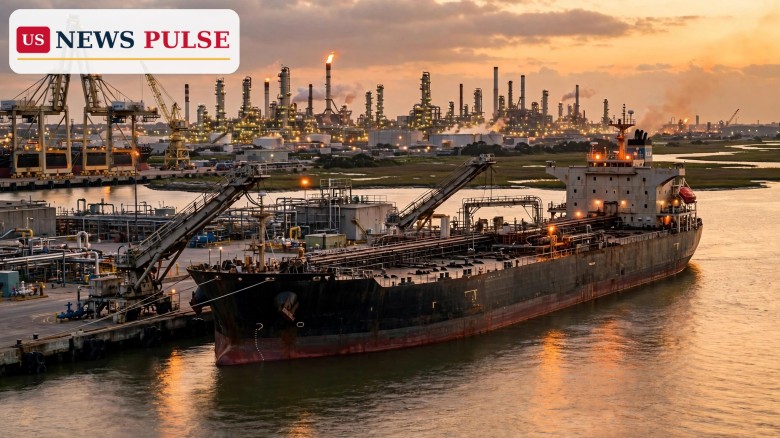
The first Venezuelan oil cargo under the deal between the United States and producer North American Blue Energy Partners (NABEP) has unloaded in Texas, and the US government will sell it to refineries run by Exxon Mobil and Venezuelan-owned Citgo Petroleum, a White House official has told Reuters. Venezuelan oil arriving in Texas marks the first tangible delivery from an arrangement that has handed Washington a stake in a Venezuelan producer, discounted access to its crude, and a fresh talking point on fuel costs just seven days before the November 3 midterm elections.
NABEP confirmed it supplied one million barrels of Venezuelan crude as part of the deal. President Donald Trump visited the Texas port on Tuesday, October 27, where one of the vessels carrying the heavy crude served as the backdrop for his speech, and he later called the delivery the first shipment of billions of barrels to come.
Key Points
- The first Venezuelan oil cargo under the US-NABEP deal unloaded in Texas on Tuesday, October 27, 2026, NABEP and a White House official confirmed.
- NABEP supplied one million barrels of Venezuelan crude, and the US government will sell the cargo to refineries run by Exxon Mobil and Citgo Petroleum.
- The White House official said the government received the oil at no cost, while Trump called it a gift; NABEP first described it as part of a right to buy 20 percent of output at cost, then revised its statement.
- The arrangement gives Washington a 35 percent stake in NABEP's parent company and discounted access to its crude, after NABEP gained 14 additional Venezuelan oilfields without a competitive process.
- NABEP says the 17 fields it now controls hold an estimated 65 billion barrels of reserves, and its output has risen to 223,509 barrels of oil equivalent per day.
What Happened
The cargo came ashore on Tuesday, the same day Trump campaigned in Texas, and the White House moved quickly to frame it as a victory. A White House official told Reuters that the first cargo of Venezuelan crude under the US-NABEP deal had unloaded in Texas and would be sold by the US government to refineries run by Exxon Mobil and Citgo. NABEP confirmed in a statement that it had supplied one million barrels of Venezuelan oil as part of the deal.
Trump visited the port on Tuesday, where one of the vessels carrying the heavy crude served as a backdrop for his speech. "They've sent me as a gift a boatload of a million barrels of oil, and I'm giving that to the United States of America," Trump told reporters. He later called it the "first shipment of BILLIONS of Barrels to come" in a post on Truth Social, and at the port he declared: "We're celebrating the greatest oil victory in history. To the victor belongs the spoils, right?"
Exactly how the oil was priced remains less clear than the celebration suggested. The government received the oil "at no cost," the White House official told Reuters, while Trump called it a gift earlier in the day. NABEP's statement initially characterised the shipment as part of Washington's right to buy 20 percent of production at cost with no markup, but was later updated to say the cargo came at no cost to US taxpayers "to recognize the historic nature of the agreement." Whether the first cargo was genuinely free or supplied at cost is therefore still an open question, and it is one that congressional critics are likely to press as more shipments follow.
NABEP chief executive Alejandro Betancourt struck a confident note in the company's statement. "This first shipment since the US-NABEP deal will be followed by thousands of such arrivals," he said. He added that the cargo reached Texas in just over a week, compared with more than a month for crude from the Middle East, a logistical selling point the company has repeated as it pitches Venezuelan crude as a nearby, reliable supply for US Gulf Coast refineries built to process heavy oil.
Background and Context
The delivery is the first from an arrangement that gives Washington a 35 percent stake in NABEP's parent company and discounted access to the crude it produces. The pact was struck after US forces captured and removed former President Nicolas Maduro from power in January, and it handed NABEP 14 additional oilfields on top of the three it already had in Venezuela, without a competitive process. The deal was announced in stages through August and September, with the Pentagon described as taking a passive 35 percent stake and the State Department gaining preferential rights to buy 20 percent of NABEP's production at cost, plus a right of first refusal over the remaining 80 percent.
NABEP was previously owned by US oil tycoon Harry Sargeant and is now controlled by Venezuelan businessman Alejandro Betancourt. Several of the 14 newly granted contracts had previously been operated by Chinese companies, and at least one by a Russian firm, so the arrangement also displaces Chinese and Russian interests that had long played a major role in Venezuela's energy sector. The administration has presented that shift as part of reshaping Venezuela's oil industry after Maduro's removal, while critics have questioned both the process and the precedent of Washington holding equity in a foreign oil producer.
Senate Democrats have already challenged the legality of the Pentagon's proposed stake. Four senior Democrats, led by Senator Jeanne Shaheen of New Hampshire, the ranking Democrat on the Senate Foreign Relations Committee, wrote to senior administration officials questioning the legal authority that would allow the Pentagon's Office of Strategic Capital to acquire an equity interest in a foreign oil company. They demanded the full text and terms of the agreement before it is finalised, asked how the State Department would finance purchases of NABEP's oil, and warned the arrangement could complicate a democratic transition in Venezuela.
The scale of what is at stake explains why the deal draws such attention. NABEP has said the 17 fields it controls in Venezuela hold an estimated 65 billion barrels of oil reserves. Venezuela itself claims about 300 billion barrels in proven reserves, the largest in the world. The company's total output reached 223,509 barrels of oil equivalent per day as of October 19, it said, up from about 18,000 barrels per day two years ago. Betancourt said last week that output at Petrozamora, its largest active project, had risen to 115,000 barrels per day.
Venezuelan Oil Texas: What the First Cargo Means
For US refiners, the practical significance of Venezuelan oil arriving in Texas is straightforward. Gulf Coast refineries, including those run by Exxon and Citgo, are configured to process heavy crude of exactly the kind Venezuela produces, and Venezuelan barrels arriving in just over a week offer a nearer alternative to Middle Eastern supply that takes more than a month to reach Texas. If shipments scale up as Betancourt promises, with "thousands of such arrivals" to follow, Venezuelan crude could become a regular feedstock for Gulf Coast plants rather than a one-off symbolic delivery.
For the White House, the political significance is just as clear. The shipment gives Trump a chance to tout access to cheaper crude as evidence his policies are delivering economic benefits ahead of the midterm elections, with fuel costs a potential vulnerability for Republicans. In Texas, Republican Senate candidate Ken Paxton faces Democrat James Talarico in a closely watched race that could help determine control of the Senate, and Trump campaigned in the state on Tuesday with the tanker as his backdrop. The oil story and the campaign story were deliberately staged together.
For Venezuela, the delivery is the first visible fruit of the post-Maduro energy order Washington is building. The country's oil industry, long starved of investment and battered by sanctions and mismanagement, is being revived under a US-backed private operator with privileged access to American markets and capital. Supporters argue that will benefit both Venezuelans and Americans. Critics, including the Senate Democrats who have demanded the deal's full text, argue that handing fields to a single firm without competition, and taking a government equity stake in return, raises questions about transparency, accountability and who ultimately benefits from Venezuela's vast reserves.
Reactions and Quotes
Trump's remarks at the port set the tone for how the administration wants the delivery to be understood: not as an ordinary commercial shipment, but as spoils of a geopolitical victory. "They've sent me as a gift a boatload of a million barrels of oil, and I'm giving that to the United States of America," he told reporters. "We're celebrating the greatest oil victory in history. To the victor belongs the spoils, right?" he added, before calling the delivery the "first shipment of BILLIONS of Barrels to come" on Truth Social.
Trump also praised oil executive Harold Hamm, who was in attendance, as the "biggest independent oilman in the world," before recounting a conversation about Venezuela's vast petroleum reserves. "You know how you find oil in Venezuela? You look on the ground. There it is," Trump said, a line that drew laughter at the port but also underlined the administration's pitch: Venezuela's reserves are so abundant that reviving production is presented as almost effortless.
Betancourt, for his part, framed the shipment as the start of a long pipeline. "This first shipment since the US-NABEP deal will be followed by thousands of such arrivals," the NABEP chief executive said in the company's statement, adding that the cargo reached Texas in just over a week, compared with more than a month for crude from the Middle East. The message to refiners and to Washington was the same: this was not a stunt, but the first load of a sustained trade.
The sceptical reaction has come, so far, mainly from Congress rather than from the industry. The Senate Democrats' letter, led by Shaheen, questioned the Pentagon stake's legality and policy wisdom, demanded the agreement's full text, and raised the possibility of a congressional investigation. Neither Exxon nor Citgo has publicly commented in detail on the purchase terms, and the White House has not published the sale price or the mechanics of how the government will sell the cargo onward to the two refiners.
Why It Matters
The arrival matters for three reasons that go beyond a single tanker. First, it tests whether Venezuelan crude can return to the US market at scale after years in which sanctions, politics and the collapse of Venezuela's own industry kept it away. One million barrels is a rounding error in a US market that consumes roughly 20 million barrels a day, but a pipeline of "thousands of such arrivals," if it materialises, would be a genuine new supply source for Gulf Coast refiners.
Second, it tests a new model of American energy statecraft. Washington has not merely eased sanctions or licensed a private deal; it has taken a 35 percent stake in the producer's parent company, secured discounted access to output, and positioned itself as the seller of the crude to US refiners. That blurs the line between government and market in a way that will invite legal scrutiny, as the Senate Democrats' letter already shows, and that future administrations may find hard to unwind.
Third, it lands at a politically sensitive moment. With fuel prices a live issue for voters and the midterms a week away, the administration is using the first cargo to argue that its Venezuela policy is already paying off at the pump, or at least at the port. Whether motorists actually see lower prices will depend on how much Venezuelan crude flows, at what price, and how refiners pass any savings onward, none of which is settled by a single shipment. But as a campaign prop, a tanker full of Venezuelan oil in a Texas port is hard to beat.
What Happens Next
The immediate question is volume. Betancourt has promised thousands of arrivals, and NABEP's rising output, 223,509 barrels of oil equivalent per day as of October 19, suggests it has barrels to ship. Watch for the second and third cargoes, for whether Exxon and Citgo take regular deliveries, and for any disclosure of the prices the government pays and charges. If the cargoes keep coming at scale, Venezuelan crude will quietly re-enter the US supply mix; if they stall, the first shipment will look more like a photo opportunity than a trade.
The second question is oversight. Senate Democrats have demanded the full text of the agreement and an explanation of the Pentagon's legal authority, and they have raised the possibility of an investigation. Expect further letters, and possibly hearings, as more shipments arrive and as the government's role as both stakeholder and seller comes under closer examination. The unresolved question of whether the first cargo was free or bought at cost will be an early test of how transparent the arrangement proves to be.
The third question is Venezuela itself. The deal's supporters say revived production will benefit Venezuelans as well as Americans, and NABEP's rising output at Petrozamora and elsewhere is presented as evidence. But how much of the revenue reaches ordinary Venezuelans, how the post-Maduro authorities govern the sector, and whether other producers are allowed to compete for fields will determine whether this becomes a broad-based revival or a narrow arrangement between Washington and one favoured firm.
Read more on US News Pulse: Trump and Rubio visit Venezuelan oil tanker in Port Arthur, Texas, Trump floats Venezuela as 51st state at Corpus Christi rally, and Trump Texas rallies: Paxton, methane plan and a Talarico surge.
Frequently Asked Questions
What is the first Venezuelan oil cargo to arrive in Texas?
It is one million barrels of Venezuelan crude supplied by NABEP under its deal with the United States, which unloaded in Texas on Tuesday, October 27, 2026, and will be sold by the US government to refineries run by Exxon Mobil and Citgo Petroleum.
Was the Venezuelan oil free?
A White House official told Reuters the government received it at no cost, and Trump called it a gift. But NABEP first described it as part of Washington's right to buy 20 percent of output at cost, then revised its statement to say it came at no cost to taxpayers, so the exact pricing remains unclear.
What is NABEP?
North American Blue Energy Partners is a US-backed oil producer now controlled by Venezuelan businessman Alejandro Betancourt. It controls 17 fields in Venezuela, after gaining 14 additional fields without a competitive process following the removal of Nicolas Maduro in January.
What stake does the US government hold?
The arrangement gives Washington a 35 percent stake in NABEP's parent company, along with discounted access to its crude, including preferential rights to buy 20 percent of production at cost.
Will more Venezuelan oil shipments follow?
Betancourt has said the first shipment "will be followed by thousands of such arrivals," and NABEP's output has risen to 223,509 barrels of oil equivalent per day. Whether that pace is sustained, and at what price, will determine how significant the trade becomes.
© 2026 US News Pulse. All rights reserved.
 Print
 Save