
Nordic Leaders Putin Call: Stubb and Støre Urge Putin to End Ukraine War
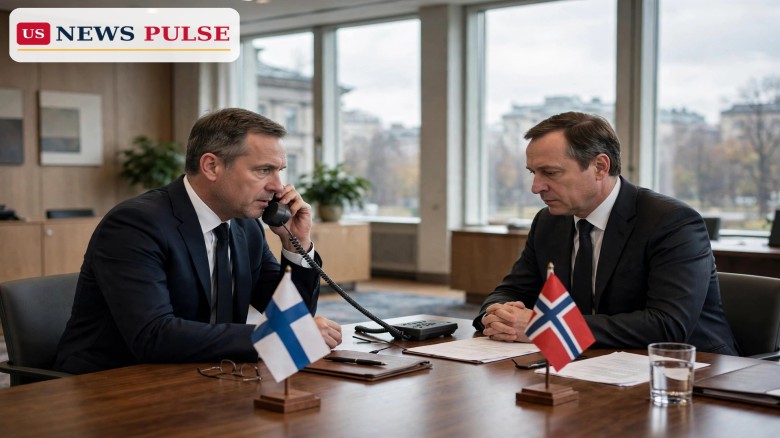
In a break with years of European silence toward the Kremlin, the Nordic leaders Putin call on Tuesday placed Finland's president and Norway's prime minister on the phone with Vladimir Putin for about 90 minutes to press for an end to the war in Ukraine. Finnish President Alexander Stubb and Norwegian Prime Minister Jonas Gahr Støre made the call from Helsinki, then spoke to Ukrainian President Volodymyr Zelenskyy, in the first direct outreach of its kind by Western European leaders in months.
The two leaders said the discussion was frank and substantive, and linked it directly to planned peace talks between Russia, Ukraine and the United States in Abu Dhabi next month. The call immediately split Europe's own ranks: Ukraine welcomed it, Denmark condemned it as a solo run, and the Kremlin gave no sign of softening its war aims.
Key Points
- Finland's Alexander Stubb and Norway's Jonas Gahr Støre phoned Vladimir Putin on Tuesday, October 27, 2026, for about 90 minutes from Helsinki.
- The call followed an October 20 meeting in Oslo with Zelenskyy and US envoy Steve Witkoff, and was held in consultation with Ukraine.
- Stubb said ending the war requires direct discussion, while Støre stressed de-escalation; both reaffirmed support for Ukraine.
- The Kremlin readout showed no compromise, insisting Russia's interests be taken into account fully and unconditionally.
- Denmark's prime minister criticised the initiative as uncoordinated, while Sweden and Poland urged caution; Ukraine's foreign minister called it the right approach.
What Happened
Stubb and Støre initiated the call themselves, according to the joint statement issued by their offices, to discuss Russia's war against Ukraine and the diplomatic efforts to end it. The statement stressed that the two men spoke as leaders of their own countries and not on behalf of Europe as a whole, and that Finland and Norway will continue their longstanding support for Ukraine.
"The discussion was frank and substantive. We are neighbouring countries to Russia. The outcome of this war will have a direct impact on our and the broader European security. Ending the war requires direct discussions," Stubb said.
"The war comes with enormous human and material costs. The suffering and destruction will impact generations. In the call we stressed the importance of de-escalation," Støre said.
Speaking to reporters in Helsinki, Stubb said the idea for the call had originated during the October 20 meeting in Oslo, where he and Støre met Zelenskyy alongside Witkoff, with US President Donald Trump's son-in-law Jared Kushner taking part remotely. Witkoff then travelled to Saint Petersburg to meet Putin. "Both the Americans and the Ukrainians thought it would be a good idea to reach out," Stubb said, adding that Ukraine had wished for the Nordic countries to help it "open a channel of communication".
Støre told reporters the 90-minute conversation had highlighted "big differences in views" on Ukraine. After the Putin call, the two leaders spoke to Zelenskyy, whose adviser Dmytro Lytvyn confirmed the Ukrainian leader was holding a call with Stubb and Støre later on Tuesday.
Background and Context
The war began with Russia's full-scale invasion of Ukraine in February 2022 and is the deadliest conflict in Europe since World War II. For years, Western European leaders have mostly refused to talk to Putin, hoping to isolate him. That practice has left them sidelined in peace efforts led by Trump, who is seen in many European capitals as unpredictable and prone to side with Putin at Ukraine's expense.
That perception has hardened this month. Putin agreed to supply Russian diesel to the United States, Trump eased sanctions on Russia, and Ukraine has complained of disruption to intelligence-sharing by the US and to satellite internet services on which its military relies. Meanwhile, long-range airstrikes by both sides have increased this year even as battle lines have remained largely static.
Both Finland and Norway border Russia, and both are firm supporters of Ukraine. They also share an interest in stability in the Baltic Sea region and the High North, which the joint statement said was highlighted in the call, along with freedom of navigation and international maritime law. The Kremlin readout added that Putin had informed the two leaders about the start of a US-brokered humanitarian operation near the Russian-occupied town of Oleshky in the Kherson region, where a temporary local ceasefire is in place.
According to the Kremlin, the Nordic leaders welcomed the agreement to resume trilateral talks between Russia, Ukraine and the United States in Abu Dhabi in the first half of November, the first such talks since February. A source close to the Kremlin said French President Emmanuel Macron had been the last EU leader to speak with Putin, in a summer call that yielded no results and was not made public.
Nordic Leaders Putin Call: Why Helsinki Acted Now
The timing was deliberate. The call was explicitly tied to the coming Abu Dhabi round, where Russian, Ukrainian and US officials are due to discuss the terms of any settlement, including security guarantees for both Russia and Ukraine after the conflict ends. Stubb argued that Europe could no longer be a bystander to peace efforts giving Russia "the silent treatment", and said all Western allies had been consulted on the initiative.
Austrian political analyst Gerhard Mangott said European governments had "manoeuvred themselves into a dead end" when it came to finding a solution to the war, and that Tuesday's call was an effort to establish a channel for dialogue. He pointed to remarks by Kremlin aide Yuri Ushakov on Sunday suggesting Europe should be part of discussions, which Mangott read as a shift, given that Moscow had previously consistently rejected the idea of discussing a settlement with the Europeans.
The Nordic leaders also framed the call as a neighbourhood responsibility rather than a European mandate. As countries sharing a border with Russia, they argued, they have a direct stake in how the war ends and in the security of the Baltic and the far north, whether or not the rest of Europe joins the conversation.
Reactions and Quotes
The Kremlin's readout gave no sign of compromise. "It was emphasised that achieving a just and long-term peace is possible only if the legitimate interests of the Russian Federation are fully and unconditionally taken into account," it said. "At the same time, attention was drawn to the confrontational policies of EU and NATO countries, which are contributing to the prolongation of the hostilities."
Russian Foreign Minister Sergei Lavrov said Tuesday's call had offered nothing new on the Ukraine conflict, with an information war likely to escalate, and that European countries were simply seeking a role in the negotiation process. A source close to the Kremlin said Putin told Stubb and Støre that European involvement was welcome and that the war needed to end "taking into account the realities on the ground" - which the source said signified that Russia would not compromise over its aim to capture the whole of Ukraine's Donbas region. The Europeans responded by saying a "just" peace was needed, the source said.
Ukrainian Foreign Minister Andrii Sybiha said the call had been coordinated with Kyiv and was "the right approach". "We welcome such active support for our diplomatic efforts and peace process," he said, adding that he also hoped the local ceasefire around Oleshky could "pave the way to other steps in the peace process."
Denmark's Prime Minister Mette Frederiksen was sharply critical. "I'm very sceptical about this Norwegian and Finnish initiative. It hasn't been coordinated with any of the rest of us," she told reporters while attending a meeting of Nordic leaders. "I honestly don't know what those two countries think they can achieve with this." She added: "I believe we should keep Europe united, rather than going it alone."
Swedish Prime Minister Ulf Kristersson said other European leaders were not informed of the talks. "My impression is that everyone wants peace, except for Putin himself. I have quite low expectations for this type of conversation," he told Swedish daily DN. Polish Prime Minister Donald Tusk said he had told Stubb and Støre that "absolute caution and vigilance are necessary in such contacts". Stubb and Støre replied that they had "consulted thoroughly with all our partners."
Why It Matters
The call matters less for what Putin said - which, on the Kremlin's own account, was nothing new - than for what it reveals about Europe's position. For the first time in this phase of the war, two European leaders have broken the taboo on direct contact with Putin, and they did so with Ukrainian backing and American encouragement. That combination is new, and it puts pressure on the rest of Europe to decide whether talking to Moscow is betrayal or necessity.
It also matters for the Abu Dhabi talks. If European voices are to be heard there at all, someone has to open the channel first, and Helsinki and Oslo have now claimed that role. The risk, as Frederiksen and Kristersson warned, is that separate national initiatives fragment Europe's position and let Moscow play capitals against each other. The opportunity, as Mangott argued, is that a direct channel - even one that changes nothing today - is a precondition for any negotiated end to the war.
For the United States, the call is a useful test. Trump has driven the peace process largely over Europe's head, and a Nordic initiative that he and Zelenskyy both encouraged suggests Washington may now welcome European help - provided it does not complicate the Abu Dhabi timetable. For Ukraine, the calculation is simpler: any channel that keeps Kyiv's allies talking, and keeps the Oleshky ceasefire alive as a model, is worth having.
What Happens Next
The next milestone is the trilateral meeting in Abu Dhabi in the first half of November, the first between Russian, Ukrainian and US officials since February. Expect the agenda to centre on security guarantees, the future of the Donbas, and whether the Oleshky local ceasefire - which Ukraine's top negotiator Davyd Arakhamia said is set to last until November 1 - can be extended or replicated elsewhere.
Watch also for the European fallout. Frederiksen's public rebuke, Kristersson's low expectations and Tusk's warning suggest the Nordic initiative will be debated hard at the next gathering of European leaders, and whether Stubb and Støre brief their partners in full may determine whether the call becomes a precedent or a one-off.
If the Abu Dhabi talks produce even a framework, the Helsinki call will be remembered as the moment Europe stopped giving Moscow the silent treatment. If they collapse, critics will say the call achieved nothing except a photo opportunity for the Kremlin. Either way, the taboo is broken, and the next European leader to pick up the phone will face a very different debate.
Frequently Asked Questions
Why did Finland and Norway call Putin now? The call was timed ahead of trilateral Russia-Ukraine-US talks in Abu Dhabi in early November, and followed an October 20 Oslo meeting with Zelenskyy and US envoy Steve Witkoff. Stubb said Ukraine wanted the Nordic countries to help open a channel of communication.
Did Putin agree to anything? No. The Kremlin readout showed no softening: it insisted Russia's legitimate interests be taken into account fully and unconditionally, and Foreign Minister Sergei Lavrov said the call offered nothing new.
Why did Denmark criticise the call? Prime Minister Mette Frederiksen said the initiative was a solo run that had not been coordinated with the rest of Europe, and argued Europe should stay united rather than go it alone. Sweden's prime minister said other leaders were not informed.
What did Ukraine say about the call? Foreign Minister Andrii Sybiha said it was coordinated with Kyiv and was "the right approach", welcoming active Nordic support for Ukraine's diplomatic efforts and peace process.
What happens next? Trilateral talks in Abu Dhabi in the first half of November are the next step, alongside questions over whether the Oleshky local ceasefire, set to run until November 1, can be extended.
Related coverage on US News Pulse: the Oleshky ceasefire and aid mission, Saudi Arabia's reported $1 billion Houthi truce offer, and reported US strike plans on Iran.
© 2026 US News Pulse. All rights reserved.
 Print
 Save