
California Ballots Hearing: Judge Questions DOJ Bid to Block 20,000 Votes
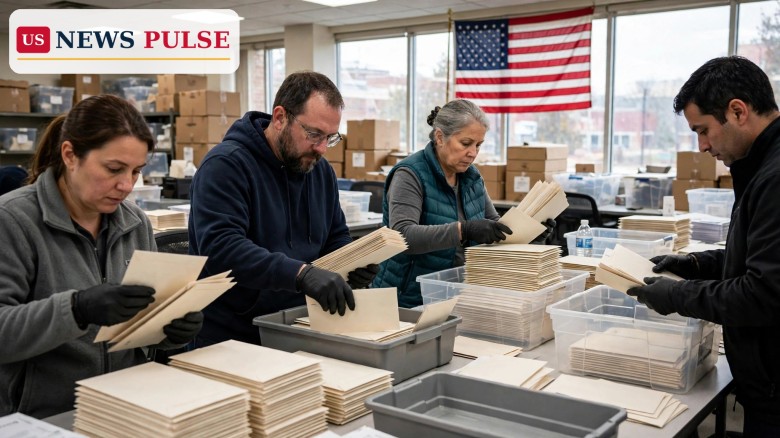
A federal judge in Los Angeles sharply questioned the Justice Department on Tuesday as it asked him to block California from counting mail ballots from more than 20,000 registered voters it alleges are likely noncitizens, telling government lawyers they already had a remedy: prosecution. After a three-hour hearing, US District Judge David Carter ended the session without a ruling, promising to decide on Wednesday, just six days before the November 3 midterm elections.
Key Points
- US District Judge David Carter heard three hours of arguments on Tuesday, October 27, in Los Angeles on the Justice Department's request for a temporary restraining order covering more than 20,000 California mail ballots.
- Carter opened by demanding precedent for sequestering ballots, asking "Give me the case, give me the state," and later told the government: "You've got a remedy for goodness sake. Go out and indict."
- California argued the department's claims rest on "mysterious database methods" and warned that blocking the ballots would risk disenfranchising eligible voters while an election is already under way.
- The judge said he would rule on Wednesday, October 28, and raised the prospect of a further hearing in several weeks with expert testimony from the Justice Department and Los Angeles County.
- California's December 3 election certification date is the hard deadline for resolving the dispute, Carter noted, in a case that tests how far federal courts will go in state-run elections.
What Happened
The hearing, held at 1 p.m. Pacific time in Los Angeles, was the latest courtroom chapter in the Trump administration's effort to expand the federal government's role in elections ahead of the midterms. The Justice Department filed its lawsuit against California on October 15, asking the court to bar officials from counting any mail ballots from the more than 20,000 registered voters it flagged as likely noncitizens until their citizenship status is confirmed.
Carter, appointed to the bench by President Bill Clinton, signalled scepticism from his very first question. "Give me the case, give me the state," he asked, seeking a precedent for sequestering ballots in the way the department requested. The government, represented by Bill Essayli, the top federal prosecutor in Los Angeles, did not answer with one.
As the argument continued, Carter pressed the department on why a court should intervene at all when criminal prosecution is available. Federal law makes it a misdemeanour for a noncitizen to vote in a federal election, and Carter pointed directly to that tool. "You've got a remedy for goodness sake. Go out and indict," he said.
He returned to the balance at the heart of the case: the risk of stopping lawful votes against the chance of catching unlawful ones. "I'd like you to respond why, in balancing those two interests, this court would cause disenfranchisement where voters would not be counted versus the ability to catch those few who are [noncitizen voters], as you've ably done," Carter said.
After three hours, Carter closed the hearing without granting or denying the temporary restraining order. He told lawyers he would issue his ruling on Wednesday. The Justice Department's lawyer, Bilal Essayli, had asked for a swift ruling at the end of Tuesday's hearing and described the federal request as a narrow one designed to ensure election integrity.
Background and Context
The lawsuit is a rare intervention by the Justice Department in the voting process weeks before an election, and it arrives as the Republican Party fights to retain control of both houses of Congress in a tight midterm battle. The US Constitution assigns the administration of elections to individual states, though the federal government retains an oversight role, and California has argued throughout that its safeguards against noncitizen voting are robust.
California is the most populous US state and a Democratic stronghold, holding 52 seats in the House of Representatives, more than any other state. President Donald Trump has made California a focal point of his immigration crackdown since returning to the White House, accusing the state of undermining public safety through its "sanctuary state" policies that limit cooperation with federal immigration enforcement.
Trump has repeatedly insisted that states are not doing enough to stop voting by noncitizens, which he says is widespread. Multiple studies and state audits, however, have found noncitizen voting to be rare. That tension between the administration's claims and the documented record has run through every stage of the California litigation.
The district court hearing follows an earlier appellate setback for the department: a federal appeals court had already declined to order California to set aside the same 20,000 ballots. The Justice Department has pursued similar ballot fights elsewhere, including asking Washington state to set aside ballots from more than 400 suspected noncitizens and charging 48 noncitizens with illegal voting across five states. The California case, however, is by far the largest, and it is being fought in the state with the most House seats at stake.
California Ballots
The California ballots at issue are mail ballots, and that matters for the timing. Voting is already under way, with ballots in voters' hands and many already returned. California's lawyer, Anne Bellows, argued that the Justice Department's assertions relied on "mysterious database methods" and that complying with its demands would risk disenfranchising eligible voters whose citizenship the department has not actually disproved.
Bellows invoked the Supreme Court's repeated warning against courts changing election rules close to an election. "The Supreme Court has reiterated time and again that, as an election is close at hand, federal courts should not interfere to change the rules under which that election is held," she said. "This applies with even more force when the election is ongoing."
That argument goes to the core of the department's problem in front of Carter. A temporary restraining order is an emergency remedy, granted only when the applicant shows it is likely to succeed and will suffer irreparable harm without one. Carter's questions suggested he was unconvinced on both points: unconvinced that the department had shown the voters it flagged are in fact noncitizens, and unconvinced that blocking their ballots was the right remedy when prosecution exists for anyone who votes unlawfully.
The judge also looked beyond the emergency request. He expressed interest in setting another hearing in several weeks focused on expert testimony from both the Justice Department and Los Angeles County, and he pointed to California's December 3 election certification date as the deadline by which the issue must be resolved. That timetable suggests that even if the emergency bid fails, the underlying lawsuit may continue well past Election Day.
Reactions and Quotes
The sharpest exchanges of the hearing came from the bench itself. Carter's opening demand, "Give me the case, give me the state," set the tone, and his "Go out and indict" remark captured his view that the department was asking a court to do work that belongs to prosecutors. His balancing question, asking why a court would cause disenfranchisement to catch a few unlawful voters the government has already shown it can prosecute, framed the case in terms California has pressed from the start.
For California, Bellows argued that the department's case rests on suspect methods and would put eligible voters at risk. "The Supreme Court has reiterated time and again that, as an election is close at hand, federal courts should not interfere to change the rules under which that election is held," she said, adding that the principle applies with even more force when the election is ongoing.
For the department, Essayli countered that the federal government had made a narrow request to ensure election integrity, and he pressed Carter for a swift ruling. The department has framed its California lawsuit as part of a broader election-integrity drive, one that has also produced ballot challenges in Washington and criminal charges against noncitizens accused of voting in several states.
Outside the courtroom, the hearing drew attention precisely because of what Carter did not do. He did not grant the emergency order on the spot, and he did not dismiss the case either. His promise of a Wednesday ruling keeps the dispute live into the final week of the campaign, with both sides able to claim that the judge took their arguments seriously while neither side yet has the order it wants.
Why It Matters
This case matters for three reasons. First, it will decide whether 20,000 Californians see their mail ballots counted in an election where control of the House may turn on a handful of seats. California's 52 House seats make it the largest single prize in the midterms, and even a small number of excluded ballots could matter in close races.
Second, it tests the limits of federal intervention in state elections. If a court blocks ballots on the basis of database flags that the state says are unreliable, it would hand Washington a powerful new tool in every future election. If the court refuses, it reinforces the principle that states run elections and that the federal remedy for unlawful voting is prosecution, not mass ballot sequestration.
Third, the timing matters as much as the outcome. With voting already under way and certification due December 3, a ruling that arrives late, or a case that drags into expert-testimony hearings, could leave thousands of voters uncertain about whether their ballots counted. That uncertainty itself has become a feature of this election cycle, as federal lawsuits and state responses pile up in the final days before November 3.
What Happens Next
The immediate next step is Carter's ruling, promised for Wednesday, October 28. If he grants the temporary restraining order, California officials would have to set aside and not tabulate the flagged ballots until citizenship is confirmed, a logistical challenge with voting already in progress. If he denies it, the ballots will be counted as normal while the underlying lawsuit continues.
Beyond Wednesday, Carter has raised the prospect of a further hearing in several weeks with expert testimony from the Justice Department and Los Angeles County. That hearing would test the competing claims about the data behind the 20,000 flags: whether the department's matching methods reliably identify noncitizens, or whether they sweep in eligible voters, as California contends.
California's December 3 certification date sets the outer limit. Whatever the court decides on the emergency request, and whatever expert evidence follows, the dispute must be resolved by the time the state certifies its results. Watch also for parallel developments: the department's Washington ballot request, its criminal voting cases, and any appeal from whichever side loses on Wednesday.
Frequently Asked Questions
What did Judge Carter decide at the California ballots hearing?
He did not decide the emergency request at the hearing. After three hours of arguments on Tuesday, October 27, Carter ended the session without a ruling and said he would issue it on Wednesday, October 28.
How many California ballots are at issue?
More than 20,000. The Justice Department asked the court to bar California from counting mail ballots from that many registered voters, whom it alleges are likely noncitizens, until their citizenship is confirmed.
What did Carter mean by "go out and indict"?
He was pointing to the existing criminal remedy for unlawful voting: federal law makes it a misdemeanour for a noncitizen to vote in a federal election. Carter's point was that the department can prosecute anyone who votes unlawfully rather than asking a court to block ballots in advance.
Why does California say the ballots should be counted?
California says its safeguards against noncitizen voting are robust, that the department's assertions rely on "mysterious database methods," and that blocking the ballots would risk disenfranchising eligible voters while the election is already ongoing.
When must the California dispute be resolved?
By California's December 3 election certification date, according to Carter. He has also raised a further hearing in several weeks with expert testimony from the Justice Department and Los Angeles County.
Related coverage on US News Pulse: DOJ Charges Green-Card Holders With Illegal Voting in 5 States Ahead of Midterms, Washington Ballots Row: DOJ Demands 400 Suspected Noncitizen Votes Set Aside and Midterm Election Observers: Tens of Thousands to Watch Polls on Nov 3.
© 2026 US News Pulse. All rights reserved.
 Print
 Save