
Canada-US Trade Stalemate to Outlast Midterms as Carney Says US Edging Closer
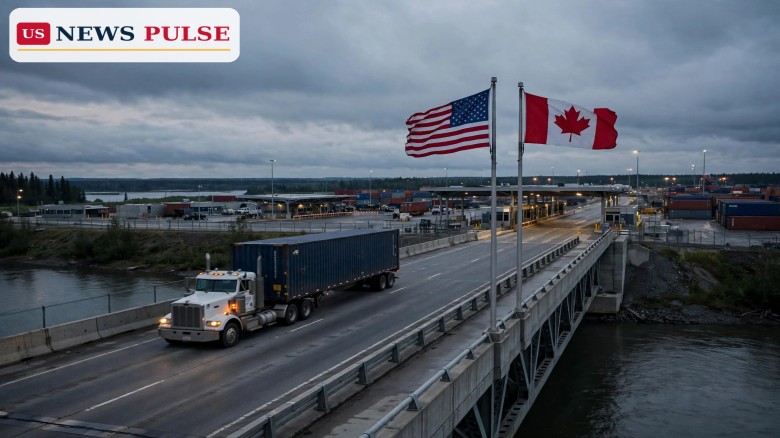
Canada and the United States are not expected to reach a trade deal before next week's midterm elections, despite a flurry of calls between senior officials in recent days and upbeat talk from Washington that an agreement is close. The Canada-US trade stalemate, which has dragged on since negotiations collapsed in August, now looks set to outlast the November 3 vote, leaving tariffs, auto rules and cross-border supply chains in limbo for American and Canadian businesses alike.
Canadian officials have told industry groups in recent weeks that no agreement is anticipated before the elections, according to CBC News, which cited three sources familiar with the discussions. The message, delivered as the White House turns its full attention to the campaign trail, is that the gap between the two sides remains too wide to close in the days left before voters go to the polls.
Key Points
- Canada and the US are not expected to strike a trade deal before the November 3 midterm elections, CBC News reported, citing three sources.
- Prime Minister Mark Carney said talks have intensified only slightly, and any progress is because Washington is moving closer to Canada's position.
- Canada's chief negotiator said "pens are down, and the doors are open" — conversations are happening, but not at the negotiating table.
- President Donald Trump told a Michigan rally a deal would be settled "pretty soon" and that Canada was willing to give Washington "anything".
- Trump threatened in August to raise tariffs on Canadian cars, trucks, auto parts and steel to 50 percent from January 1, 2027.
What Happened
The latest picture emerged on Monday, October 26, when Carney spoke to reporters in Ottawa after a meeting of first ministers and First Nations leaders. He described what he called a "slight, slight intensification" of discussions, but stressed that Canada's negotiating position had not changed since talks fell apart in August. "We have very clear bottom lines, red lines, which meant that we were not willing to sign what was offered in August," Carney said. "To the extent any progress has been made, it's because the U.S. is coming closer to our position."
That sober assessment contrasted sharply with the tone from Washington. At a campaign rally in Port Huron, Michigan, on Sunday, Trump told supporters: "We'll have that settled pretty soon. They're willing to give us anything at this moment." White House economic adviser Kevin Hassett went further on Fox News, saying negotiations had "picked up" after being slowed by a referendum vote in Alberta, and that a deal was "very close". "Secretary Lutnick has been talking to his Canadian counterparts all week. I think it's very close to finally having a deal on that," Hassett said.
Canadian sources speaking to CBC News and Radio-Canada urged caution about that spin. One source familiar with the discussions said there were "substantive conversations, but there are still key elements that remain unresolved." The same source added bluntly: "We are not on the verge of an agreement just yet." Another Canadian government source said the state of play was best understood through the words of Janice Charette, Canada's chief trade negotiator, who told the Toronto Global Forum last week: "Pens are down, and the doors are open. Canada stands ready to continue discussions."
Charette explained that while conversations were taking place at "multiple levels", they were not happening at the negotiating table. "We're having conversations to see whether or not we can come back to the table for a set of detailed negotiations," she said. "We don't know exactly when that's going to happen."
Background: How the Canada-US Trade War Reached This Point
The dispute is one of the longest-running trade fights of Trump's second term, and it has repeatedly spilled into domestic politics on both sides of the border. Canada and the United States appeared close to an agreement in the summer, but talks broke down in August after Ottawa concluded that Washington's offer crossed its red lines. Trump then imposed 50 percent tariffs on roughly 20 billion dollars' worth of Canadian goods, prompting retaliation and a further round of trade restrictions.
Trump has repeatedly complained about the American trade deficit with Canada, but economists note that energy more than accounts for the gap: the United States buys millions of barrels of Canadian oil every day, typically at a discount, and runs a trade surplus with Canada once energy is excluded. The president has also pressed automakers to move production from Canada to the United States, threatening an industry that has been deeply integrated across the border for decades, with parts crossing back and forth several times before a finished vehicle rolls off the line.
The political pressure has been building in the northern United States, where the trade war is deeply unpopular with voters of both parties. In Michigan, Republican Senate candidate Mike Rogers says in a campaign advertisement that Canada is "not our enemy" and that "we need to end this tariff war now." In Maine, Republican Senator Susan Collins pressed the administration to ease tariffs on Canadian goods used by farmers and other businesses — and on Friday, Washington announced exemptions for some of those products, even as it imposed new tariffs on dozens of others.
Trump's broader campaign against Canada — including his repeated threats to make the country the 51st American state — has pushed Carney to look elsewhere for markets. The prime minister has set a goal of doubling Canadian exports outside the United States over the next decade, and he hosts European Union leaders in Montreal on Thursday and Friday to pursue closer economic and security ties. European Commission President Ursula von der Leyen has even proposed making Canada the EU's first associate member, a status that has yet to be defined.
Canada-US Trade Stalemate: Why No Deal Is Expected Before the Midterms
The timing is the heart of the story. With the midterms just seven days away, the White House is, in the words of one CBC source, "fully immersed in the election". Trump has spent much of recent weeks at rallies, and polls suggest his Republican Party could lose the House of Representatives and possibly the Senate. Canadian officials have told industry groups there is no substantial engagement at the negotiating level right now, even though officials from both countries remain in contact.
That has not stopped the weekend telephone traffic. A Canadian source told CBC News that Trade Minister Dominic LeBlanc had to stay in Ottawa over the weekend because his calls with Commerce Secretary Howard Lutnick and US Trade Representative Jamieson Greer increased in the past few days. Industry stakeholders also received calls from senior members of the federal government over the weekend to discuss the current status of the talks, according to two industry sources.
LeBlanc himself later confirmed the cautious Canadian position in a CBC interview. "We have continued to remain engaged with the United States. But we're not going to rush into some particular circumstance and … agree to something that we don't think is in Canada's sovereign interest or economic interest," he said. His office added on Sunday that Canada "remains in constructive dialogue" with Washington and "stands ready to work constructively and in good faith towards a more mutually beneficial trading relationship that respects Canada's interests."
Brian Clow, a former deputy chief of staff to former prime minister Justin Trudeau, said optimism in some circles had rested on the trade war's unpopularity with American voters. "But that window appears to be entirely closed," he said — a reference to hopes that voter anger might force a pre-election deal.
Reactions and Quotes
The sharpest Canadian reaction came from Ontario Premier Doug Ford, who spoke on his way into the Ottawa meeting. "They're going for an election down there and I don't think Trump's doing too well," Ford said. "I think the trade deal with Canada is affecting him." Asked whether Carney had asked him to reconsider Ontario's ban on American alcohol to move the talks along, Ford said "not yet" — but added that a fair deal for steelworkers, autoworkers and manufacturing workers would have him put American liquor back on LCBO shelves "in a heartbeat."
David Axelrod, the former chief strategist to US president Barack Obama, suggested on social media on Monday that "an 11th-hour trade deal [with] Canada is an option [Trump] still might pursue to help his Senate candidates in northern states." Canadian sources speaking to Radio-Canada cautioned that it was in Washington's interest to "spin" the narrative that a deal was possible — especially with the midterms a week away.
On the American side, Greer pushed back against the idea that Canada was being singled out, telling CBC that tariffs were "not focused on any one country". But the August threat still hangs over the talks: in a post on his Truth Social platform that month, Trump threatened to raise tariffs on cars, trucks, auto parts and steel to 50 percent from January 1, 2027. LeBlanc said Washington had not taken any official step yet on that threat but described it as "obviously of concern".
Perhaps the most telling quote came from Carney himself, on whether he could trust Trump to honour any new agreement. Carney had previously warned that Washington's signature was sometimes "written in pencil". Asked on Monday whether the president would "sign in pen" this time, he replied: "I don't know that."
Why It Matters
For American consumers and businesses, the stalemate is not an abstraction. Tariffs on Canadian goods feed into the price of cars, building materials, food and energy in border states and beyond, and the uncertainty makes it harder for companies to plan production, hiring and investment. The auto industry, in particular, cannot simply reroute decades of integrated supply chains overnight: a single vehicle may cross the border several times before it is finished, so each new tariff layer compounds costs on both sides.
For the midterms, the trade war cuts both ways. Trump hopes that the appearance of progress — a deal "pretty soon", in his rally language — reassures voters in Michigan, Maine and other northern states where the tariffs bite hardest. But if no deal materialises, Republican candidates in those states will have campaigned on a promise that did not arrive, while Democrats can argue that the president's trade policy hurt the very voters he claims to defend. The CBC reporting suggests Ottawa understands that dynamic perfectly well — and is in no hurry to hand Washington a pre-election win on terms it dislikes.
For Canada, the stakes are existential in a slower way. The United States remains by far its largest trading partner, but Carney's push to diversify — doubling non-US exports over a decade, deepening ties with Europe — signals a country preparing for a world in which American market access can no longer be taken for granted. A deal that sacrifices too much for speed would undermine that strategy; a prolonged stalemate, painful as it is, preserves Canada's bargaining power for the negotiations that will eventually resume.
What Happens Next
The immediate calendar is crowded. The midterms take place on November 3, and the outcome — particularly control of the House and Senate — will reshape Trump's leverage and his appetite for a deal. Carney's Montreal meetings with EU leaders on Thursday and Friday will test how far Canada's diversification strategy can go in practice. And January 1, 2027, the date Trump named for the threatened 50 percent tariffs on autos and steel, looms as the next hard deadline.
In the meantime, expect more of the same pattern: frequent calls between LeBlanc, Lutnick and Greer; upbeat signals from Washington; and careful, non-committal language from Ottawa. The real test will come after the votes are counted, when both sides must decide whether to return to the table for detailed negotiations — or settle in for a trade war that outlasts the election cycle that was supposed to end it.
Related coverage on US News Pulse: US warns EU over Airbus loan, US-India trade deal nears finish, and Trump on respecting midterm results.
Frequently Asked Questions
Will there be a Canada-US trade deal before the midterms? According to CBC News sources, no. Canadian officials have told industry groups that no agreement is expected before the November 3 vote, and sources say the gap between the two sides is still too wide.
What did Mark Carney say about the talks? Carney said discussions had intensified only slightly, that Canada's position had not changed since August, and that any progress was because Washington was moving closer to Canada's position.
What tariffs has Trump threatened? In August, Trump threatened to raise tariffs on Canadian cars, trucks, auto parts and steel to 50 percent from January 1, 2027. He has already imposed 50 percent tariffs on roughly 20 billion dollars' worth of Canadian goods.
Why do the talks matter for American voters? Tariffs affect car prices, building materials, food and energy, and they are deeply unpopular in northern states. Republican candidates in Michigan and Maine have both pressed for relief.
What happens after the midterms? Both sides will need to decide whether to return to detailed negotiations. Carney is also pursuing closer ties with Europe, while the January 2027 tariff deadline gives the talks a new sense of urgency.
© 2026 US News Pulse. All rights reserved.
 Print
 Save