
Texas Claims Nine Rio Grande Islands to Block Cartel Safe Havens on the Border
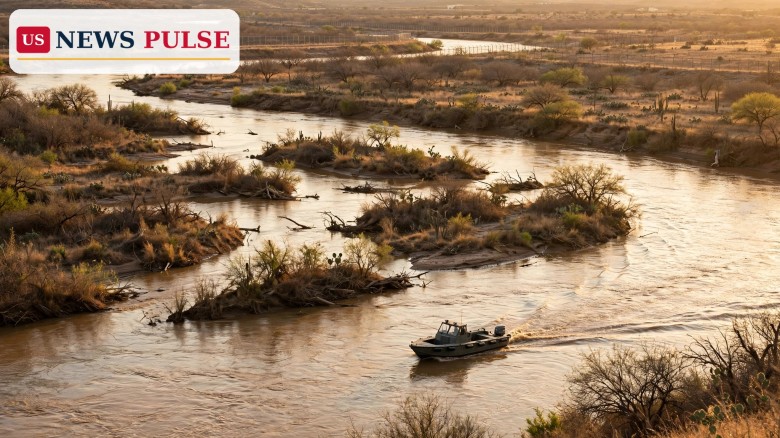
Texas has claimed nine Rio Grande islands as state land, adding roughly 66 acres of river territory to its jurisdiction in a move officials say is designed to deny Mexican drug cartels a place to hide. Texas Land Commissioner Dawn Buckingham announced the claim on Monday, October 26, 2026, saying years of uncertain ownership had kept the islands beyond the reliable reach of law enforcement — and that the state is now notifying its police and federal partners so they can patrol, inspect and clear them.
Key Points
- Texas has identified nine islands along the Rio Grande, totalling about 66 acres, as property belonging to the State of Texas, Land Commissioner Dawn Buckingham announced on October 26, 2026.
- The islands had uncertain ownership for years, which officials say limited monitoring and protection and left them at risk of becoming cartel safe havens.
- State and federal law enforcement are being notified so officers can gain access to patrol, inspect and clear the islands of illegal activity.
- There has been no confirmed cartel activity on these nine specific islands, but cartels have used other Rio Grande islands for smuggling, weapons storage and evading arrest.
- The claim follows earlier Texas island takeovers, including the 170-acre Fronton Island in 2023 and the Beaver and Roma islands offered to the Trump administration in 2025.
What Happened
Buckingham, who runs the Texas General Land Office (GLO), said her agency had confirmed that the nine islands belong to Texas. The announcement came in a press release on Monday and in a post on X the same day, in which she wrote: "Texas is getting bigger! Building on our work during the border crisis, we're claiming nine more islands in the Rio Grande for the State of Texas. We must have operational control of our border — and that means ensuring cartels, smugglers, and human traffickers have no safe haven on Texas soil. Texas land. Texas sovereignty. Texas security."
A GLO official confirmed the claim to the Daily Caller News Foundation, saying: "Yes — the Texas General Land Office (GLO) has identified nine islands along the Texas-Mexico border, totaling roughly 66 acres, as property belonging to the State of Texas." The agency did not publish a map of the nine islands in its initial announcement, and the precise locations along the river were not specified in the coverage that followed.
Buckingham said she is working with state and federal law enforcement to make sure officers and agents use accurate land navigation coordinates during border operations. Speaking to NewsNation, she said the move takes the islands "off the map" for possible cartel use, adding: "It's kind of making Texas bigger again." The practical effect, she said, is that police will no longer have to guess who owns the ground they are standing on when they pursue smugglers or clear a river island.
Background and Context
Islands in the Rio Grande have been a legal grey zone for as long as the river has moved. The river shifts its channel over time, building new sandbars and islands and sometimes cutting old ones away, and ownership of the land that appears mid-river has often been disputed between Texas, the federal government and Mexico. That ambiguity mattered little when the islands were empty. It matters a great deal now that cartels use the river as a smuggling corridor.
Buckingham has made island claims a signature part of her border strategy. In 2023, over the objections of the federal government, she claimed that Fronton Island — a 170-acre island in the Rio Grande — was state land. Texas state troopers and the Texas Military Department then cleared the island of all its vegetation in an operation called Operation Flat Top, levelling it so cartel members could no longer hide there. The GLO says cartel activity on Fronton has fallen by 100 percent since the operation, and the island is now described by the agency as a former cartel hot spot for pushing guns, ammunition, drugs and trafficking victims across the border.
In 2025, Buckingham offered the incoming Trump administration access to two more Rio Grande islands to help with border security and deportations: Beaver Island, a roughly 20.3-acre island in Starr County, and the Roma Islands near Roma, Texas, two parcels of 12.13 and 20.3 acres that had earned a reputation as a "smuggler's paradise." Those islands were earmarked for vegetation clearance and razor wire to establish full operational control. In the fall of 2024, the GLO also bought a 1,402-acre ranch in Starr County and, within 24 hours of closing, signed an easement to build a 1.5-mile border wall there, later offering the land to the Trump administration for deportation facilities and staging areas.
The nine-island claim sits inside a much larger Texas border apparatus. Governor Greg Abbott's Operation Lone Star, launched during the Biden administration, has poured state troopers and National Guard soldiers into the border region for years. On October 2, 2026, the United States deployed 500 troops to the Rio Grande Valley after cartel gunmen fired shots at the United States Coast Guard, a reminder that the river itself is an active front line, not just a line on a map.
Texas Rio Grande Islands: Why Ownership Changes Everything
The legal question at the heart of the announcement sounds dry — who owns a patch of riverbank? — but it decides what police can actually do. When an island's ownership is uncertain, Buckingham has argued, it becomes a kind of "no man's land" in which neither the United States nor Mexico can effectively enforce laws or take military action. Officers unsure of their jurisdiction hesitate; smugglers do not.
That is why the GLO's determination matters more than the acreage. Sixty-six acres is small — Fronton alone is nearly three times larger — but a formal state claim converts disputed ground into Texas property, and Texas property can be patrolled, fenced, cleared and defended by state troopers without a jurisdictional argument first. The same logic drove the Fronton operation: once the survey said the island was Texas land, the bulldozers could move in.
There is an important limit to the announcement, and Buckingham's own account states it plainly: there has been no confirmed cartel activity on these nine specific islands. The claim is preventive. The islands are being secured, officials say, because other islands in the same river have been used for exactly the crimes Texas wants to prevent — smuggling rings, weapons and drug storage, and evasion of arrest — and because leaving them unclaimed invites the same use. Critics of the approach, including federal officials who objected to the Fronton claim in 2023, have questioned whether a state can unilaterally settle river-boundary ownership, but no federal challenge to the nine-island claim had been reported in the coverage that followed the announcement.
Reactions and Quotes
Buckingham's press release set out the case in her own words: "As Texas Land Commissioner, I have a responsibility to protect every acre of state land entrusted to the General Land Office. For years, the ownership of these islands has been uncertain, limiting the ability to ensure they are properly monitored and protected. Now that the GLO has confirmed these nine islands belong to the State of Texas, we are notifying our law enforcement partners so that they can gain access to these state-owned properties to patrol, inspect and clear them of any illegal activity they may encounter, consistent with the law. Texas land will never become a safe haven for cartels, human traffickers, smugglers, or other criminal organizations."
Her X post struck the same note in shorter form, framing the claim as a continuation of the state's border-crisis work and a step toward "operational control" of the border. The announcement was welcomed in border-security circles, where the Fronton Island operation is held up as the model: clear the ground, remove the cover, and cartel use collapses.
Coverage of the announcement so far carries no response from Mexico's government and no statement from federal agencies about whether they will join patrols on the nine islands. That silence is itself a detail to watch, because earlier island claims drew federal objections before they drew federal cooperation. The GLO says it is working with both state and federal partners on navigation coordinates, which suggests coordination is under way even if it has not been publicly described.
Why It Matters
The claim matters for three reasons. First, it closes a practical enforcement gap on a stretch of river where smugglers operate nightly. If officers can enter, search and clear the islands without a legal argument about whose land they are on, the islands stop being useful as staging posts, however small they are.
Second, it extends a Texas strategy that has already changed facts on the ground. Fronton Island went from a cartel-controlled "island of death" — in the words of a retired Texas Department of Public Safety intelligence captain who worked the area — to a cleared, patrolled piece of state land. The nine new islands are the same playbook applied more broadly, and their fate will test whether the Fronton result can be repeated at scale.
Third, the timing is political. The announcement landed a week before the November 3 midterm elections, on the same day President Donald Trump was campaigning in Texas for the Senate race, and while border security remains one of the defining issues of the campaign. Buckingham herself is on the ballot in November, seeking a second four-year term as land commissioner against Democratic nominee Benjamin Flores. A border announcement in the final week of a campaign is never just about land surveys, and voters in Texas will read it as a statement of intent as much as an administrative act.
What Happens Next
The immediate next step is notification: the GLO says it is telling its law enforcement partners about the claim so they can use the islands in operations. Watch for the first signs of that work — patrols on the islands, vegetation clearance of the kind carried out on Fronton and planned for Beaver and Roma, and possibly razor wire or fencing if the islands are judged to need it.
Watch, too, for the federal response. If federal agencies publicly back the claim or join patrols, the islands will be secured quickly. If they object, as they did over Fronton in 2023, the claim could become another front in the long-running state-federal argument over who controls the border. A response from Mexico's government, if one comes, would add a third dimension, since river islands sit on an international boundary.
Finally, watch the map. The GLO has not yet published precise locations for the nine islands, and the details of where they sit — which county, which stretch of river, how close to existing fencing and patrol routes — will say a lot about whether they were chosen for their smuggling value or simply because the surveys were ready. Either way, Texas just got about 66 acres bigger, and the cartels just lost nine places to hide.
Frequently Asked Questions
How many islands did Texas claim, and how big are they?
Nine islands along the Rio Grande, totalling roughly 66 acres, according to the Texas General Land Office announcement on October 26, 2026.
Who announced the claim?
Texas Land Commissioner Dawn Buckingham, who runs the General Land Office. She announced it in a press release and on X on Monday, October 26, 2026.
Have cartels used these nine islands?
No confirmed cartel activity has been reported on these specific islands. Officials say the claim is preventive, because cartels have used other Rio Grande islands for smuggling, weapons storage and evading arrest.
Why does island ownership matter for law enforcement?
When ownership is uncertain, officers may be unsure they have jurisdiction to patrol, search or clear an island. A formal state claim gives Texas police clear authority to enter and secure the land.
What happened on Fronton Island, the earlier Texas island claim?
Texas claimed the 170-acre Fronton Island in 2023, cleared all its vegetation in Operation Flat Top, and the GLO says cartel activity there has since fallen by 100 percent.
Related coverage on US News Pulse: Trump Texas rallies: Paxton, methane plan and a Talarico surge on Oct 27 and Trump and Rubio visit Venezuelan oil tanker in Port Arthur, Texas today.
© 2026 US News Pulse. All rights reserved.
 Print
 Save