
Haifa Smoked Sprats Recall: 560 lbs Pulled Over Botulism Risk in 3 States
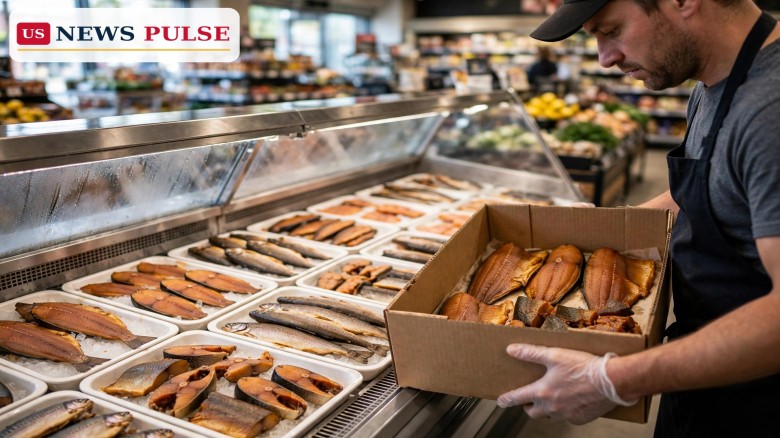
Haifa Smoked Fish has recalled about 560 pounds of cold smoked sprats sold in New York, New Jersey and Pennsylvania after a federal inspection found the fish was produced without the food safety controls needed to prevent the growth of Clostridium botulinum, the bacterium that causes botulism. The company announced the recall on October 27, 2026, and the United States Food and Drug Administration (FDA) posted the announcement and issued a separate advisory telling consumers not to eat, sell or serve the affected fish. No illnesses have been reported so far, but officials warn that the product should not be eaten even if it looks and smells normal.
The recall covers every lot of the product, which was sold loose, without a brand name, in bulk cardboard boxes labelled Cold Smoked Sprats and shipped refrigerated to retail stores in the three states. Because there is no UPC code and no lot number for shoppers to check, anyone in New York, New Jersey or Pennsylvania who bought loose or bulk-packed smoked sprats from a retailer should check with the store where the fish was bought before eating it. The company, D&M Smoked Fish Inc., doing business as Haifa Smoked Fish Inc. of Queens, New York, is offering a full refund on returns to the place of purchase.
Key Points
- Haifa Smoked Fish of Queens, New York, is recalling approximately 560 lbs of Cold Smoked Sprats over potential Clostridium botulinum contamination.
- The fish was distributed to retail stores in New Jersey, New York and Pennsylvania, and all lots are included in the recall.
- The product was sold loose in bulk cardboard boxes with no brand name, no UPC code and no lot number for shoppers to check.
- An FDA inspection in Jamaica, New York, found the firm was producing cold-smoked sprats without the required controls to prevent botulinum growth and toxin formation.
- No illnesses have been reported to date, and the FDA has not yet published an enforcement classification for the recall.
What Happened
The recall was announced on October 27, 2026, when Haifa Smoked Fish warned that its Cold Smoked Sprats may be contaminated with Clostridium botulinum, a bacterium that can cause life-threatening illness. The FDA published the company announcement and, in a linked advisory, directed consumers not to eat, sell or serve Cold Smoked Sprats sold by Haifa Smoked Fish Inc.
According to the announcement, the affected fish was packed loose in bulk cardboard boxes labelled Cold Smoked Sprats and shipped refrigerated. It was sold through retail stores in New Jersey, New York and Pennsylvania. The announcement does not name individual stores, which is part of what makes this recall harder for shoppers to act on: a customer who bought smoked sprats loose from a deli counter or a bulk display may have no packaging at home to check.
The company says consumers should not use the product even if it does not look or smell spoiled, and should return it to the place of purchase for a full refund. Questions can be directed to the company at 718-523-8899 between 9 a.m. and 5 p.m. Eastern Standard Time. Retailers and food service operators who received the product should stop selling or serving it and remove it from inventory.
The FDA notice is listed under Food and Beverages and the topic of foodborne illness, with the agency's Human Foods Program and its Office of Inspections and Investigations associated with the notice. As a company announcement, the recall is being carried out by the firm, with the FDA publishing it to alert the public.
Background and Context
Cold smoking is a preservation method that flavours and dries fish at low temperatures, without cooking it. That distinction matters for food safety: because cold-smoked fish is never heated to a temperature that destroys Clostridium botulinum, processors must rely on a chain of other controls, including salt concentration, refrigeration, packaging and handling, to stop the bacterium from growing and producing toxin. When those controls are missing, the risk rises even though the fish may look, smell and taste entirely normal.
Botulism itself is rare in the United States, but it is one of the most serious forms of food poisoning. The toxin attacks the nervous system, and symptoms can include general weakness, dizziness, double vision and trouble speaking or swallowing. Difficulty breathing, weakness of other muscles, abdominal swelling and constipation may also occur. Health officials stress that anyone experiencing these symptoms after eating a recalled product should seek immediate medical attention, because the illness can progress quickly and can be life-threatening.
Smoked and cured fish products have long been recognised as a category that needs tight processing controls for exactly this reason. Federal food safety rules for seafood processors are built around hazard controls at each step of production, and FDA inspections test whether those controls are actually in place. In this case, the inspection at the firm's Jamaica, New York, facility found that the required controls to prevent botulinum growth and toxin formation were not in place for cold-smoked sprats.
The company has not reported any confirmed contamination test results in its announcement. The recall is therefore based on the potential for contamination arising from the missing controls, rather than on a laboratory finding that a particular batch tested positive. That distinction is important for shoppers: the absence of a positive test does not make the fish safe, because the missing controls mean the safety net that normally protects each batch was not operating.
The recall also lands in a busy season for FDA food alerts. In recent weeks the agency has warned shoppers about other products, including two lots of Darwin's cat food that tested positive for Salmonella and a petition seeking mandatory botulinum testing for powdered infant formula after outbreaks sickened 52 babies. Those cases are separate from the Haifa recall, but they underline a common theme: when a safety control fails or is absent, regulators move to pull product and warn the public before illnesses appear.
Haifa Smoked Sprats Recall: What Shoppers Should Check
The most practical problem with this recall is identification. Most recalls give shoppers a UPC code, a lot number or a best-by date to match against a package in the pantry or freezer. This one gives none of those, because the sprats were sold loose, under no brand name, in bulk boxes that a retail store would have opened and sold from. A shopper who bought smoked sprats from a store in New Jersey, New York or Pennsylvania in recent weeks therefore cannot clear the product by reading a label at home.
The safest course, according to the recall notice and food safety guidance, is to ask the store where the fish was bought whether its smoked sprats came from Haifa Smoked Fish, and to avoid eating the fish until that is confirmed. Anyone who still has packaging or a receipt should hold on to it, since it can help the store trace the product and process a refund. If the fish cannot be traced, the cautious choice is to throw it out rather than risk eating it.
Retailers have a parallel duty: stop selling or serving the product, pull it from inventory, and answer customer questions about its source. Food service operators, including delis and restaurants that may have bought the sprats in bulk, should check their suppliers and remove any affected stock from service. The FDA advisory applies to selling and serving as well as eating, so a business that keeps the product on a menu or a counter after the warning is ignoring a direct federal advisory.
Consumers who ate the fish and feel well do not need to panic, but they should know the symptoms to watch for and seek care promptly if any develop. Botulism symptoms can take time to appear, and early medical attention matters. Anyone who believes the product made them ill can also report the problem to the FDA through its MedWatch programme, which helps regulators track whether a recall is working and whether more action is needed.
Reactions and Quotes
The company's own warning is the clearest statement in the recall: consumers are warned not to use the product even if it does not look or smell spoiled. That sentence, carried in the FDA-posted announcement, is deliberately blunt, because botulinum toxin is invisible and odourless. A fish that looks fresh can still be dangerous if the controls that prevent toxin formation were missing during processing.
The FDA, for its part, has gone further than simply posting the company's notice. Its separate advisory tells consumers not to eat, sell or serve the affected sprats, a step that puts retailers and restaurants on the same footing as shoppers. The agency notes that it posts company announcements as a public service and does not endorse either the product or the company, a standard disclaimer that underlines the FDA's role here as a public warning system rather than a guarantor of any brand.
Food safety experts have long warned that loose and bulk-sold foods create a traceability gap in exactly this kind of recall. When a product has no brand and no lot code, the burden shifts to the retailer to know its supplier and to the shopper to ask. Consumer advocates regularly advise shoppers in such cases to keep receipts, ask the store directly, and treat an untraceable product as recalled until proven otherwise. That advice fits this recall precisely.
No illnesses have been reported to date, according to the company, and no consumer or retailer reaction beyond the recall itself has been publicly documented. That silence is, in one sense, good news: it suggests the recall was issued before anyone fell ill. It also means the public record so far consists of the company's announcement and the FDA's advisory, rather than a trail of complaints or hospital reports.
Why It Matters
This recall matters for three reasons. First, botulism is rare but exceptionally dangerous, and it is preventable when processing controls work. A recall that catches a missing control before illnesses occur is the food safety system working as intended, but it also reveals a gap: the controls were absent long enough for about 560 pounds of fish to reach stores in three states.
Second, the recall exposes the limits of label-based safety advice. Most shoppers are told to check a UPC or a lot number, and most recalls are written around those identifiers. When a product is sold loose and unbranded, that advice fails, and the recall only works if stores know their suppliers and shoppers ask questions. For the many small retailers and delis that sell smoked fish, that is a real operational test.
Third, the case sits alongside a wider pattern of seafood and smoked-fish recalls in which processing controls, rather than a single contaminated batch, are the problem. A six-state recall of cold smoked salmon over Listeria concerns was reported in the same period, and the infant formula botulism petition now before the FDA seeks mandatory testing precisely because current rules do not require it. Regulators, manufacturers and retailers are all being pushed to show that the controls behind everyday foods are real, documented and checked.
For shoppers in New York, New Jersey and Pennsylvania, the immediate stakes are simple and personal: a fish bought loose from a store counter could be part of this recall, and there is no label at home that can prove otherwise. The cost of caution here is a returned product and a refund. The cost of ignoring the warning could be a life-threatening illness.
What Happens Next
The next steps are straightforward. Shoppers in the three affected states should check their refrigerators and freezers for cold smoked sprats bought from retail stores, ask the store about the supplier if the source is unclear, and return any affected product for a full refund. Anyone with symptoms should seek medical care immediately and tell the clinician about the recalled fish.
Retailers and food service operators should confirm whether their smoked sprats came from Haifa Smoked Fish, remove any affected stock, and be ready to answer customer questions. The FDA's recalls page will carry further updates if the scope of the recall changes, if an enforcement classification is published, or if any illnesses are reported.
The FDA has not yet published an enforcement classification for this recall, which will eventually grade its severity. Until then, the advisory stands on its own terms: do not eat, sell or serve the affected sprats. If the firm's inspection findings lead to further regulatory action, or if the recall expands to other products or states, those developments will be published through the same FDA channels.
Longer term, the case may feed into broader scrutiny of cold-smoked seafood controls, particularly for small processors selling loose product. For now, though, the message to the public is narrow and urgent: check, ask, return, and do not eat the fish on a guess.
Frequently Asked Questions
Which product is recalled? Approximately 560 lbs of Cold Smoked Sprats from Haifa Smoked Fish (D&M Smoked Fish Inc.) of Queens, New York. All lots are included, and the fish was sold loose, with no brand name, in bulk cardboard boxes.
Where was it sold? Retail stores in New Jersey, New York and Pennsylvania. Individual stores are not named in the announcement, so shoppers in those states who bought loose smoked sprats should ask the store about the supplier.
Can I eat it if it looks and smells fine? No. The company and the FDA warn not to use the product even if it does not look or smell spoiled, because botulinum toxin cannot be seen or smelled.
What should I do with the fish? Return it to the place of purchase for a full refund, and contact the company at 718-523-8899 between 9 a.m. and 5 p.m. Eastern Standard Time with questions. Retailers should stop selling or serving it and remove it from inventory.
What are the symptoms of botulism? General weakness, dizziness, double vision, trouble speaking or swallowing, difficulty breathing, weakness of other muscles, abdominal swelling and constipation. Anyone with these symptoms after eating the fish should seek immediate medical attention.
Related coverage on US News Pulse: FDA warns over two lots of Darwin's cat food after Salmonella find and Petition seeks FDA botulism testing rule for infant formula after 52 babies sickened.
© 2026 US News Pulse. All rights reserved.
 Print
 Save