
Flavio Bolsonaro Leaves Brazil for US After Election Loss, Sources Say
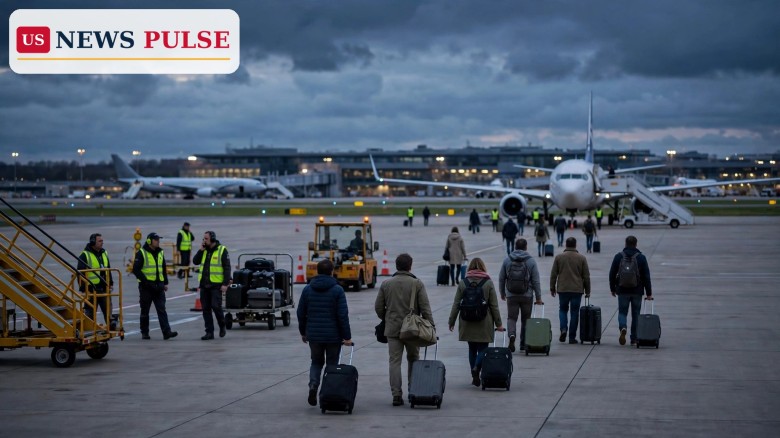
Flavio Bolsonaro has left Brazil for the United States after losing Sunday's presidential runoff to Luiz Inacio Lula da Silva, two sources told Reuters on Tuesday, October 27, 2026, in a reported departure that came hours after Brazil's Supreme Court ordered him to surrender his passports. The Flavio Bolsonaro US departure, reported less than 48 hours after the election, has not been confirmed by Brazilian migration authorities, and a senior federal police official said there was no record of him leaving through any regular migration point — a contradiction that leaves the central fact of the story still partly in dispute.
Key Points
- Two sources told Reuters that Flavio Bolsonaro left Brazil for the United States after losing the October 25, 2026 presidential runoff to Lula.
- Brazil's Supreme Court had given him 24 hours on Monday to hand over his passports as part of a money-laundering investigation in which he denies wrongdoing.
- Authorities cancelled his passports on Tuesday after the deadline lapsed, according to sources cited by Reuters.
- A senior Brazilian federal police official said Bolsonaro had not exited the country through any regular migration point.
- Bolsonaro has not formally conceded defeat and has said he will seek to annul the result over alleged voter irregularities, while his Liberal Party acknowledged Lula's victory on Monday.
- The reported move echoes his father Jair Bolsonaro's trip to the United States after refusing to concede defeat to Lula in 2022.
What Happened
The first reports of Bolsonaro's departure surfaced on Tuesday morning, when he could not be reached by people close to him. One source close to Bolsonaro told reporters they had tried to call him that morning without success. The Sun, citing a United States official, reported that the senator had boarded a plane to the US after being missing since the morning, less than 48 hours after failing to secure a majority in the runoff.
Reuters, in a report by Ricardo Brito and Gram Slattery carried by several outlets on Tuesday, then confirmed the outline through its own sources: two sources said Bolsonaro had left Brazil for the US, and an ally confirmed an earlier media report of the departure. The Times of India, reporting the same development, said an ally told Reuters that Bolsonaro had flown to the US after his electoral defeat. Neither the US embassy in Brazil nor Bolsonaro's lawyer immediately commented on the reports; the embassy did not respond to a request for comment, and his lawyer declined to comment.
The timing matters because of what happened the day before. On Monday, October 26, Brazil's Supreme Court ordered Bolsonaro to surrender his passports within 24 hours. When that deadline lapsed on Tuesday, his passports were cancelled, two other sources told Reuters. The order barred him from leaving the country while the investigation continues, which is why a departure on Tuesday, if confirmed, would amount to a direct defiance of the court.
Yet the official record does not yet line up neatly with the sourced reports. A senior Brazilian federal police official said Bolsonaro had not exited the country via any regular migration point. That statement does not rule out an irregular departure, and it does not confirm that he is still in Brazil — it only establishes that no ordinary border or airport exit was recorded. For now, the honest summary is this: multiple sources say he is in the United States, while the official migration record has not shown it.
Background and Context
Bolsonaro, a senator and the candidate of the Liberal Party, lost Sunday's runoff in what many observers had expected to be a closer contest or even a Bolsonaro win. With all votes counted, Lula secured 51.76 percent of the vote against 48.24 percent for Bolsonaro — more than 64 million votes for Lula against just under 60 million for Bolsonaro, a margin of nearly 4.4 million votes. The result gives Lula, who previously led Brazil from 2003 to 2010, a historic fourth term as president.
On Sunday night, Bolsonaro refused to recognise the result. Speaking from outside his home on Monday, he told supporters the outcome was "impossible" and "inexplicable" and called for the election's annulment. He has said he will seek to annul the result over alleged voter irregularities, though no court has yet ruled on any such challenge and election authorities have reported the count as complete. On Monday, his Liberal Party acknowledged Lula's victory, creating a split between the party's institutional position and its candidate's personal stance.
The passport order grew out of a separate criminal investigation. Supreme Court Justice Alexandre de Moraes signed the order on Monday, instructing police to take Bolsonaro's travel documents. According to The New York Times, which reviewed a court document, the ruling grows out of an inquiry into Bolsonaro's ties to Willer Tomaz, a lawyer accused of laundering more than $1 billion through a large fraud scheme. Police attention focused on the claim that Bolsonaro had access to the bank accounts of a company the lawyer owns, with a Federal Police report saying someone working for the lawyer asked the bank in May 2025 to cancel the senator's access. Tomaz denies any wrongdoing and rejects the claim that Bolsonaro ran the company's account.
Agence France-Presse described the investigation somewhat differently, reporting that Bolsonaro is being examined over alleged corruption and money laundering connected to the financing of a biopic about his father, former president Jair Bolsonaro. Bolsonaro denies wrongdoing in both versions of the case. The court also told him to keep his distance from Tomaz, who is described as a close friend. On Monday, Bolsonaro labelled the passport order an attempt to intimidate him.
Flavio Bolsonaro Leaves Brazil: What the Sources Say
The confusion over Bolsonaro's whereabouts began on Monday, when rumours circulated that he had headed for Argentina. Authorities found no record of him entering Argentine territory, and a private plane at Iguazu International Airport on the Argentina-Brazil border was checked, with border officers finding no flight plan listing the Bolsonaro family. A spokesperson for Argentine President Javier Milei, who has yet to congratulate Lula on his victory, said there was no asylum request from Bolsonaro.
That left the United States as the reported destination — and a destination with a family history. Bolsonaro's younger brother Eduardo lives in the United States, and ahead of the vote he told podcaster Steven Crowder that an election loss would require a move. "If my brother does not win, I am in favour of him leaving the country," Eduardo Bolsonaro said. Right-wing influencer Paulo Figueiredo, who serves as a sort of unofficial spokesperson for the Bolsonaro family, declined to answer questions about Bolsonaro's whereabouts on Tuesday. "After months of intense work that has been unfairly thwarted, I am not in the mood to speak to the press," he said in a message. "If I have any comments to make on any matter, I will get in touch."
The parallel with his father is unavoidable and is already shaping coverage of the story. After refusing to concede defeat to Lula in 2022, former president Jair Bolsonaro travelled to the United States. He eventually returned to Brazil and was later sentenced to 27 years in prison for plotting a coup. Whether his son's reported trip follows the same arc — a period abroad followed by a return to face the courts — is the question now dominating Brazilian politics, and it is one that cannot be answered until his whereabouts are officially confirmed.
Reactions and Quotes
Official reaction so far has been defined largely by silence and non-denial. The US embassy in Brazil did not immediately respond to a request for comment on the reports. Bolsonaro's lawyer declined to comment. The federal police statement about regular migration points is, so far, the only official Brazilian statement touching on his movements, and it neither confirms nor denies a departure by other means.
Among Bolsonaro's own circle, the tone has been defiant rather than explanatory. His Sunday-night position — that the result was "impossible" and "inexplicable" — remains his last public statement on the election itself, and his Monday comment that the passport order was an attempt to scare him frames the legal case as political intimidation rather than a routine judicial measure. His brother's pre-election remark that he favoured his brother leaving the country in the event of a loss is now being read, in hindsight, as a signal of the family's thinking.
On the winning side, Lula's victory speech in Sao Paulo struck a very different note. Addressing a packed crowd of supporters, Lula said: "We are going to change the way that this country is governed … This election was a defeat for denialism." He added: "I want to thank God and to thank you, Brazilian men and women of this country … it was democracy that made this happen." The contrast between that celebration and the mystery over his defeated rival's whereabouts captures the strange, unsettled mood in Brazil two days after the vote.
Internationally, the story has an American dimension that goes beyond the reported destination. US President Donald Trump had already described the runoff result as rigged and corrupt after Lula's win, a claim covered in detail in our earlier report on the aftermath of the vote. If Bolsonaro is indeed in the United States, questions about his immigration status, given his cancelled passports, and about any contact with US officials are likely to follow quickly — though no such contact has been reported so far.
Why It Matters
The reported departure matters for three separate reasons, each of which would be significant on its own. The first is legal: a senator under a Supreme Court travel ban who is reported to have left the country anyway would be in open confrontation with Brazil's highest court, at a moment when that court is already central to the country's politics. The passport cancellation is a serious step, and a successful evasion of it would raise hard questions about enforcement.
The second is political. Brazil has just held one of the most consequential elections in its recent history, and the losing candidate's refusal to concede, combined with a reported flight abroad, risks prolonging the uncertainty that normally ends on election night. The Liberal Party's acknowledgment of Lula's victory shows that Brazil's institutions are moving on, but a candidate who disputes the result from abroad can still command a large audience and keep the annulment campaign alive.
The third reason is historical. The Bolsonaro family's relationship with the United States as a refuge after electoral defeat is now, in the words of one report, "a family tradition at this point." The father's journey ended in a 27-year prison sentence after his return. That precedent will hang over every decision the son makes next, and over every statement from Brazilian authorities about whether they will seek his return.
What Happens Next
The immediate question is confirmation. Brazilian authorities, US officials, or Bolsonaro himself could settle the whereabouts question with a single statement, and until one of them does, the story remains a sourced report rather than an established fact. Journalists and officials will be watching for any recorded arrival, any statement from Bolsonaro or his lawyers, and any further word from the federal police on how he may have left.
The legal track will continue regardless. The money-laundering investigation does not pause because a subject is abroad, and the Supreme Court's passport order and its cancellation of his documents remain in force. Further court measures, formal requests to foreign authorities, or a public statement from the court are all possible in the coming days, though none has been announced.
Politically, the focus will shift to whether Bolsonaro files a formal annulment challenge and, if so, on what evidence, and to how his party handles a candidate whose position now differs from its own. Lula's transition, meanwhile, proceeds on the basis of a certified result and a party acknowledgment of his victory. The next days will show whether Brazil's post-election period settles into a normal transition or remains defined by a missing candidate and an unresolved legal fight.
Frequently Asked Questions
Has Flavio Bolsonaro definitely left Brazil for the US? Not officially. Two sources told Reuters he left Brazil for the US, and a US official was cited in other reporting, but a senior federal police official said there was no record of him exiting through any regular migration point. His whereabouts are reported, not officially confirmed.
Why did the Supreme Court order him to surrender his passports? Justice Alexandre de Moraes ordered police to take his travel documents on Monday as part of a money-laundering investigation. Bolsonaro denies wrongdoing and called the order an attempt to intimidate him.
What was the election result? Lula won the October 25 runoff with 51.76 percent against 48.24 percent for Bolsonaro — more than 64 million votes to just under 60 million, a margin of nearly 4.4 million votes.
Has Bolsonaro conceded defeat? No. He has said the result was "impossible" and "inexplicable" and that he will seek its annulment over alleged irregularities, although his Liberal Party acknowledged Lula's victory on Monday.
Did his father do the same thing? Yes, in outline. After refusing to concede defeat to Lula in 2022, Jair Bolsonaro travelled to the US. He later returned to Brazil and was sentenced to 27 years in prison for plotting a coup.
Related coverage: Brazil Election 2026: Lula Wins Historic Fourth Term Against Bolsonaro and Trump Calls Brazil Election Rigged After Lula Beats Bolsonaro in Runoff.
© 2026 US News Pulse. All rights reserved.
 Print
 Save