
DoorDash Instacart Deal: $17 Billion Talks to Unite Grocery Delivery Giants
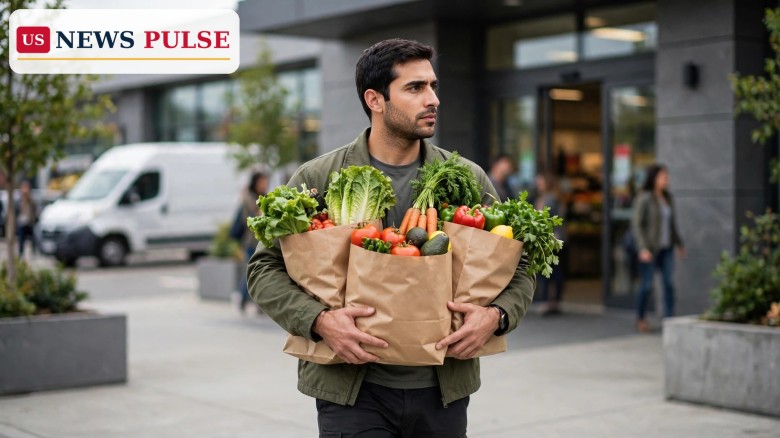
DoorDash is in advanced talks to acquire grocery delivery rival Instacart in a deal that could be finalised as soon as this week and could value Instacart at around $17 billion, according to people familiar with the matter cited by The Wall Street Journal, in what would be one of the biggest consolidations in American food delivery since the pandemic-driven boom. The talks are advanced but not done, the Journal stressed, and there are no guarantees they will come together, a warning that matters for shoppers, couriers and investors alike because a deal of this size would reshape who delivers America's groceries, and on what terms.
Key Points
- DoorDash is in advanced talks to buy Instacart, with a deal possibly finalised this week, at a value of around $17 billion, The Wall Street Journal reported, citing people familiar with the matter.
- Instacart had a market value of around $13 billion before the Journal reported the talks, and its shares rose roughly 8% on Monday, while DoorDash, valued at around $73 billion, fell around 6%.
- Buying Instacart would give DoorDash a major grocery delivery partner network, adding to its existing retail delivery from Kroger, Safeway and Aldi, plus Macy's, CVS and Target.
- The two companies previously discussed a deal in 2021 at a valuation of $40 billion to $50 billion, talks that were partly derailed by antitrust questions, according to a report by The Information.
- Separate talks between Instacart and Uber are no longer active, the people familiar with the matter told the Journal, leaving DoorDash as the live suitor.
What Happened
The Journal reported on Monday afternoon that DoorDash was in advanced talks to acquire Instacart, also known as Maplebear Inc., and that a deal could be finalised as soon as this week. The reported value of around $17 billion is about $4 billion above Instacart's roughly $13 billion market value before the report, a premium that reflects both the strategic value of a grocery network and the market's judgement, on Monday at least, that Instacart was worth more inside a larger delivery group than alone. Instacart shares rose roughly 8% on Monday following the report, according to the Journal, while DoorDash shares dropped around 6%, a split that is typical when an acquirer is seen as paying up: the target's shareholders gain, and the buyer's shareholders ask whether the price is right.
DoorDash began as a restaurant delivery company and now dominates that space, the Journal noted, but it has spent years expanding into retail, delivering goods from brands including Macy's, CVS and Target, and exploring new means of delivery and ordering, including drones and texts to chatbots. Buying Instacart would add a major grocery delivery partner to that roster, the Journal said, because Instacart's core business involves online grocery shopping and convenience home delivery from retailers. DoorDash already provides food delivery from retailers such as Kroger, Safeway and Aldi, so the overlap is real, and so is the complement: Instacart brings deep grocery relationships, a large shopper network and retailer technology that DoorDash would otherwise have to build or buy piece by piece.
Neither company had publicly confirmed the talks in the reporting reviewed for this article, which is normal for advanced negotiations reported through sources rather than announced in a press release. Until either company files a statement with regulators or issues an announcement, the $17 billion figure, the timing and the structure of any deal should be read as reported, not confirmed. That distinction does not make the report less significant: the Journal's account moved both stocks sharply on Monday, and the market reaction itself is now part of the story, because it shows how investors price the risks and rewards of combining two of America's largest delivery platforms.
Background/Context
Instacart was founded in 2012 in San Francisco by Apoorva Mehta, Max Mullen and Brandon Leonardo, and it went public in 2023, pricing its initial public offering at $30 a share and trading under the ticker CART. It describes itself as a leading grocery technology company that partners with more than 2,200 retail banners, representing nearly 100,000 stores, and powers e-commerce, fulfilment, in-store technology, artificial intelligence offerings and advertising for partners through its Marketplace, Enterprise platform and Ads ecosystem. Its shoppers build baskets from partners including Costco, Safeway, Kroger and Aldi, then pick, bag and deliver them, often in under an hour, and the company earns money from delivery charges, item markups, brand advertising and premium subscriptions.
DoorDash, meanwhile, has grown well beyond restaurant delivery. In the second quarter of 2026 it reported revenue of $4.45 billion, up 35.6% year over year and ahead of the roughly $4.34 billion consensus estimate, with total orders up 27% to 970 million and Marketplace gross order value up 36% to $33.08 billion. Adjusted earnings before interest, taxes, depreciation and amortisation grew 39.5% to $914 million. The quarter was the first full period reflecting the integration of Deliveroo, the UK-based delivery platform DoorDash acquired in 2025, and investors watched closely whether that deal could accelerate growth without eroding profitability. DoorDash guided third-quarter Marketplace gross order value of $33 billion to $34 billion and adjusted earnings of $950 million to $1.1 billion.
Grocery is central to that growth story. DoorDash said it drove strong year-over-year growth in Marketplace gross order value in the US grocery and retail categories in the second quarter, and significantly improved unit economics, helped by better selection and product quality that brought users to the app for more shopping occasions and increased basket size. Chief financial officer Ravi Inukonda told the earnings call: "As we continue to operate and expand our new verticals in grocery business, what you're seeing is as the product is getting better, the basket sizes are increasing." In the 12 months through the second quarter, DoorDash grew the number of paid DashPass members in the United States by more than it had in the previous 24 months combined, and in the second quarter about three-quarters of total orders placed by DashPass members were in the US grocery and retail categories. Co-founder and chief executive Tony Xu said on the call that grocery is among the company's fastest-growing segments.
DoorDash Instacart Deal: Why Grocery Is the Prize
The prize in this deal is not just more delivery orders, it is the weekly grocery shop. Eating represents 20 to 25 occasions per week per consumer, according to DoorDash management's long-term argument cited in analyst coverage, and grocery adds entirely new use cases beyond restaurant meals: a regular, repeatable, high-frequency basket that keeps customers inside one app, one subscription and one delivery network. A combined DoorDash-Instacart would be able to offer restaurants, groceries, convenience goods and retail products in a single basket, or at least in a single account, and to spread the fixed costs of logistics, technology and advertising across more orders.
For retailers, the logic cuts both ways. A larger delivery partner can bring more customers, better technology and in-store tools such as smart carts and pricing software, which Instacart has built through acquisitions including Caper AI and Eversight. At the same time, a more concentrated delivery market gives retailers fewer alternatives and less bargaining power over fees, placement and data, which is why large mergers in this sector draw close attention from merchants as well as regulators. For shoppers, the immediate question is whether a combined platform means lower fees, faster delivery and wider choice, or higher markups and fewer competing offers. For the shoppers and Dashers who do the picking and delivering, the question is whether a larger platform brings steadier work and better tools, or more pressure on pay and conditions, in a sector that already faces rising labour costs and tighter regulation of delivery workers.
The competitive backdrop has also changed since the last time these two companies talked. Instacart explored a sale in 2021, when its shares were trading at a significantly higher price and it controlled more of the food delivery market, the Journal noted. Since then Walmart and Amazon have become more formidable challengers, and the pandemic surge in online demand has receded, leaving a sector that faces rising labour costs, tighter regulation and intensifying competition. That history helps explain the gap between the $40 billion to $50 billion range discussed in 2021 and the roughly $17 billion figure now reported: the market, the competitive field and the companies themselves have all changed, and a deal priced in 2026 reflects a different reality from one priced at the peak of the delivery boom.
Reactions/Quotes
The clearest reaction so far has come from the market itself. Instacart's roughly 8% rise on Monday, against DoorDash's roughly 6% fall, suggests investors see more upside for the target than for the buyer at the reported price, at least in the short term. That split is not a verdict on the deal's long-term logic, which depends on whether the combined company can grow grocery orders, improve unit economics and keep retailers and shoppers on board, but it is a useful early signal: the market is willing to pay up for Instacart's grocery network, and it wants DoorDash to prove the price is justified.
DoorDash's own recent commentary points to why it might be willing to pay. Xu's description of grocery as among the company's fastest-growing segments, and Inukonda's account of rising basket sizes as product quality improves, both suggest a company that sees grocery not as a side business but as the next engine of growth. Instacart's calendar adds another near-term focal point: it is due to report third-quarter 2026 financial results after market close on Thursday, November 5, 2026, with a conference call at 2 p.m. Pacific Time, and that report will give investors a fresh, audited look at the business DoorDash is reported to be buying, whether or not a deal is announced before then.
What has not yet emerged is a detailed public case from either company for or against the combination, and that silence is itself informative. In advanced talks, companies typically say nothing until a deal is signed, because premature disclosure can move share prices, complicate negotiations and invite regulatory questions before terms are final. Readers should therefore treat the Journal's sourced account as the best available picture for now, and watch for a regulatory filing or company announcement as the moment when the reported price, timing and structure either become confirmed facts or are corrected.
Why It Matters
This deal matters because grocery delivery is no longer a niche convenience, it is a core part of how many American households shop, and the structure of that market shapes prices, choice and working conditions for millions of people. A combined DoorDash-Instacart would be one of the largest delivery platforms in the United States, with a grocery network spanning thousands of retail banners and tens of thousands of stores, plus a restaurant business that already dominates its category. That scale could bring real benefits, from denser delivery routes and lower costs per order to better technology for retailers and shoppers, but it could also reduce competition in local markets where only a few platforms operate, and that tension is exactly why the 2021 talks ran into antitrust questions.
It also matters as a signal about the delivery industry's next phase. The pandemic era was about rapid growth at any cost; the current era is about consolidation, profitability and scale. DoorDash's acquisition of Deliveroo in 2025, its push into grocery and retail, and now a possible $17 billion purchase of Instacart all point in the same direction: fewer, larger platforms, competing on selection, speed and subscription value rather than on the sheer number of couriers on the road. Whether that consolidation helps or hurts consumers will depend on the details that have not yet been reported, including fees, subscription terms, retailer contracts and the treatment of shoppers and Dashers.
What Happens Next
The immediate question is whether a deal is announced this week, as the Journal's sources suggested it could be, or whether the talks stall or collapse, as advanced talks sometimes do. If a deal is announced, the next steps would include regulatory filings, a shareholder process for Instacart, and scrutiny from competition authorities, given the history of antitrust questions in the 2021 talks and the scale of the combined grocery and restaurant delivery business. That review could take months, and it could lead to conditions, concessions or, in the extreme, a challenge, though no regulator has commented publicly on the current talks in the reporting reviewed.
Even without a deal, the report changes the conversation. Instacart's November 5 results will now be read in the light of a possible sale, DoorDash's grocery strategy will be judged against the price it was reportedly willing to pay, and rivals including Uber, Walmart and Amazon will be watching whether a combined competitor emerges or whether the talks fade and the market stays fragmented. For shoppers and couriers, the practical advice for now is simple: nothing changes until a deal is announced and approved, and any change to fees, subscriptions or delivery options would follow that process, not precede it.
Frequently Asked Questions
Is DoorDash buying Instacart?
DoorDash is in advanced talks to acquire Instacart, according to The Wall Street Journal, citing people familiar with the matter, and a deal could be finalised as soon as this week. The talks are not confirmed by either company, and there are no guarantees they will result in a deal.
How much would the DoorDash-Instacart deal be worth?
The deal could value Instacart at around $17 billion, the Journal reported. That is about $4 billion above Instacart's roughly $13 billion market value before the report, while DoorDash itself has a market value of around $73 billion.
What happened to the share prices?
Instacart shares rose roughly 8% on Monday following the Journal report, while DoorDash shares fell around 6%, a typical pattern when an acquirer is seen as paying a premium for a target.
Have DoorDash and Instacart talked before?
Yes. The companies previously discussed a deal in 2021 at a valuation of $40 billion to $50 billion, according to a report by The Information, and those talks were partly derailed by antitrust questions. Instacart also attracted takeover interest from Uber, but those talks are no longer active, the Journal reported.
What would change for shoppers if the deal goes ahead?
Nothing changes immediately. If a deal is announced, it would still need regulatory filings and review, and any changes to fees, subscriptions, retailer choice or delivery options would follow that process. Instacart is due to report third-quarter results on November 5, 2026, which will give a fresh picture of its business.
Related coverage: Meta's $95 billion AI raise and a $198 billion day of AI spending, PayPal's third-quarter earnings beat and revenue miss, and Anthropic's IPO filing and its Nasdaq listing as ANT.
© 2026 US News Pulse. All rights reserved.
 Print
 Save