
Russian Diesel Deal: Banks and Ports Warned Over Trump Plan
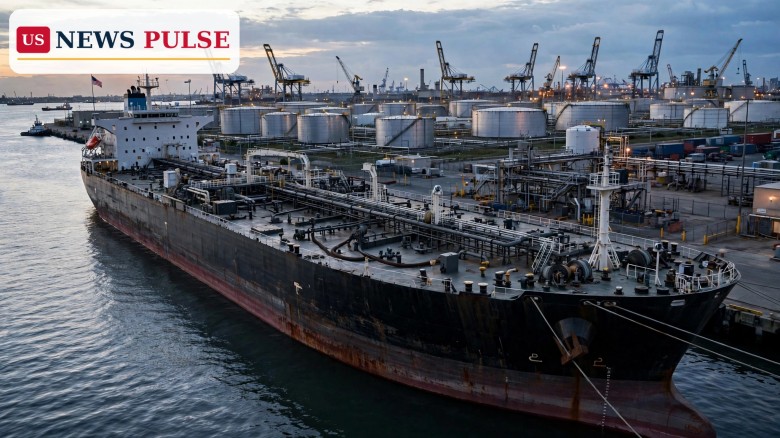
The Russian diesel deal has become a legal and political flashpoint one week before the midterm elections, after a bipartisan group of US lawmakers warned six of America's biggest banks and four major port authorities that handling Russian diesel could expose them to criminal and civil liability and to congressional investigations. The letters, dated October 24 and released by the Senate Foreign Relations Committee on October 26, ask the recipients to preserve every record connected to proposed or completed Russian diesel transactions and to confirm by October 28 that they will do so.
The warning lands just as the first cargoes are reported to be on the water. One tanker loaded about 40,000 tonnes of diesel at the Russian port of Primorsk on October 22, and vessel-tracking data first showed New York as its destination, while other ships have signalled Norfolk, Virginia, and Corpus Christi, Texas. President Donald Trump has defended the arrangement, saying it releases oil into world markets and protects Americans from being held hostage by the oil industry. His critics say it breaches a 2022 law banning Russian oil imports and risks sending revenue to Moscow while its war in Ukraine continues.
Key Points
- The Russian diesel deal warning was sent by seven lawmakers, including six senators and one House member, to six banks, four port authorities and fuel distributors.
- Recipients must preserve contracts, invoices, shipping and vessel records, payment information and communications from September 1, 2026, and confirm by October 28.
- The letters cite the 2022 Ending Importation of Russian Oil Act, Section 216 of the Countering America's Adversaries Through Sanctions Act, and two customs statutes.
- Trump announced the diesel arrangement with Russia on October 9, and the Treasury Department then issued General License 135, a six-month waiver covering diesel only.
- Tracking data shows diesel cargoes heading toward US ports, with arrivals reported as early as the end of October, but final discharge ports remain unconfirmed in several cases.
What Happened
According to reporting by Axios on October 26, first picked up in the wider coverage on October 27, Democratic senators Jeanne Shaheen, Ron Wyden, Sheldon Whitehouse, Chris Coons and Elizabeth Warren, Republican senator Thom Tillis and Democratic Representative Gregory Meeks wrote to the chief executives of JPMorgan Chase, Bank of America, Citigroup, Wells Fargo Bank, Goldman Sachs and Morgan Stanley. The same letters went to the heads of the port authorities of Houston, Corpus Christi and Beaumont in Texas and of New York and New Jersey. Fuel distributors also received letters, although the committee did not name them in its public statement.
The lawmakers did not accuse any bank or port of breaking the law. Their case is precautionary and documentary: preserve the paper trail now, so that Congress can examine it later if the political balance changes after November 3. The request covers contracts, invoices, shipping documents, vessel records, payment information and communications with suppliers, intermediaries and US government officials, including business-related records stored on personal devices. It applies to proposed transactions as well as completed ones, which means investigators could examine deals that were discussed even if no cargo ultimately arrived.
The timing is deliberate. October 28 is the confirmation deadline, less than a week before the November 3 midterms, and the first ships are reported to be approaching US waters around the same window. If Democrats win control of either chamber, several of the signatories hold senior positions on the committees that would run any investigation, including foreign affairs, banking, finance and judiciary. The letters therefore serve two purposes at once: a legal preservation notice and a political signal that the diesel arrangement will not be forgotten after election day.
Background and Context
The dispute begins with the 2022 ban on Russian energy imports, imposed after Russia's full-scale invasion of Ukraine. The lawmakers argue that the Ending Importation of Russian Oil Act generally bars Russian energy imports unless the president certifies to Congress that Russia has ceased all military hostilities in Ukraine and poses no immediate threat to NATO members. They say that certification has not been made, and that a Treasury licence cannot by itself satisfy the statutory requirements.
The administration's position is different. Trump announced on October 9 that he had agreed with Russian President Vladimir Putin to increase Russian diesel supplies to US and world markets. The Treasury Department then issued General License 135, described in the coverage as a six-month waiver covering diesel only. Trump said Russia would release more than 300,000 tonnes first, followed by a further 500,000 tonnes in November and one million tonnes after that. Russian Deputy Prime Minister Alexander Novak was reported as saying Russian companies could supply 500,000 tonnes in October alone.
Supporters of the arrangement argue from prices and supply. Diesel is the fuel of trucking, farming, construction and heating, and a larger global supply can ease costs for American businesses and households. Critics argue from law and security: diesel revenue, even when routed through world markets, can help finance the Russian state, and an exception for diesel undermines a ban that was meant to be comprehensive. That tension, between cheaper fuel at home and pressure on Moscow abroad, is the same tension that has run through US energy policy since 2022, and it is now sharpened by an election in which the cost of living is a central issue.
Russian Diesel Deal: The Tankers, the Licence and the Legal Test
The most concrete part of the story is on the water. The Malta-flagged Agioi Fanendes loaded about 40,000 tonnes of diesel at Primorsk on October 22, according to LSEG data cited in the reporting. Tracking data first showed New York as its destination, with arrival expected around November 7, but its signal later read "for orders", which leaves the discharge port unconfirmed. By October 26, the Vietnamese-flagged PVT Azura was signalling Norfolk, Virginia, as its destination, having sailed from St Petersburg on October 15 with about 109,000 barrels of diesel, roughly 14,600 tonnes. The Portuguese-flagged Iblea was signalling Corpus Christi, Texas.
Novak was reported by Reuters as saying three tankers were heading for North America, while Kremlin spokesman Dmitry Peskov confirmed that a first ship had sailed but did not say where it was bound. Other diesel cargoes are reported to be heading to Turkey, Brazil and North Africa, which underlines that the US-bound shipments are only part of a larger Russian export push. For the lawmakers, the tracking data matters because it turns an abstract legal argument into a dated, checkable fact: ships carrying Russian diesel were on course to reach Beaumont and the Port of New York and New Jersey as soon as the end of October.
The legal test the letters set out is narrow but serious. They cite the 2022 import ban, Section 216 of the Countering America's Adversaries Through Sanctions Act, which governs congressional review of sanctions changes, and two customs statutes, 18 U.S.C. Section 545 and 19 U.S.C. Section 1595a. Separately, House Judiciary Committee ranking member Jamie Raskin was reported to have written to oil companies warning that anyone who imports Russian diesel into the United States is violating federal law and may face civil and criminal penalties, including imprisonment for up to 20 years. That warning, reported by Politico and other outlets, is distinct from the bipartisan preservation letters, but it raises the stakes for any company considering handling a cargo.
Reactions and Quotes
"Any importation of Russian diesel into the US raises significant legal questions and may be subject to legal action, as well as congressional investigations. Companies that import products in violation of US law may expose themselves to both criminal and civil liability," the lawmakers wrote in the letters released by the Senate Foreign Relations Committee.
"Granting Moscow the ability to freely sell Russian diesel in global markets damages America's security interests and is a betrayal of the people of Ukraine, who are defending themselves against Russia's murderous, illegal war," they added. "Accordingly, we urge you not to facilitate the purchase, transportation, importation, unloading, storage, financing, or distribution of Russian-origin diesel in the United States, or any other transaction involving Russian diesel as described by General License 135, unless and until the relevant statutory requirements have been satisfied."
Trump defended the arrangement on Sunday before boarding Air Force One. "The only deal we made with Russia, frankly, they released oil into the world," he said. He added, "we're not gonna be hostage with the oil industry." The remark also referred to special envoy Steve Witkoff's trip to Moscow. The Treasury Department did not immediately respond to the lawmakers' letters, according to the coverage.
The reaction in other capitals is also part of the story. The diesel issue is being watched closely in New Delhi, where India became one of the largest buyers of Russian crude after the Ukraine war began, and where US policy on Russian energy has already been a sore point in India-US trade negotiations. Washington had earlier imposed additional tariffs on India over its Russian oil purchases. A US decision to allow Russian diesel into its own ports, even under licence, is therefore read abroad as a signal about how firmly the ban will be enforced elsewhere.
Why It Matters
This matters first because it tests whether a sanctions law passed with bipartisan support in wartime can be softened by executive action without Congress. If a general licence can open a diesel channel while the underlying ban remains on the statute book, future presidents will have a template for similar exceptions. If Congress or a court later finds the licence unlawful, companies that relied on it could face the liability the letters warn about, even if they acted in good faith at the time. That uncertainty alone may be enough to make some banks and ports steer clear of the cargoes, which is plainly part of the lawmakers' intention.
It matters second because of the election. The midterms will decide who chairs the committees that can subpoena records, hold hearings and publish findings. A Democratic House or Senate would have both the motive and the preserved paper trail to investigate the diesel deal in detail, including the roles of banks, ports, distributors and government officials. A Republican Congress would be far less likely to do so. The October 28 confirmation deadline therefore forces companies to take a position, in writing, before they know who will be asking the questions.
It matters third because diesel is not an abstraction. It moves food, goods and people, and its price feeds directly into inflation and household budgets. Voters who hear that Russian diesel might lower pump and heating costs may ask why their representatives oppose it, while voters who hear that it funds a war may ask why their president allowed it. Both arguments will be made in the final week of the campaign, and both will outlast it, because the licence runs for six months and the ships now at sea will not be the last.
What Happens Next
The first deadline is October 28, when the banks, ports and distributors are asked to confirm that they will preserve the requested records. No public confirmation had been reported in the coverage reviewed for this article, and any refusal or qualified reply is likely to become a story in itself. The second marker is the arrival window: cargoes reported to be heading for Beaumont, New York and New Jersey, Norfolk and Corpus Christi in late October and early November will either discharge, divert or wait for orders, and each outcome will be tracked publicly.
The third marker is November 3. The election result will determine whether the preservation letters become the foundation of a formal congressional investigation or remain a warning shot. A change in control would also affect the broader set of investigations Democrats have signalled, including into the Epstein files and other administration dealings, as reported alongside the diesel letters. A Republican hold would not end the legal questions, but it would shift them toward the courts and the executive branch rather than Congress.
Beyond the election, three questions remain open. Will the Treasury Department defend General License 135 in detail, or let the licence speak for itself? Will any company test the arrangement by unloading a Russian diesel cargo in a US port, and if so, will the Justice Department act? And will the administration seek a congressional certification or a legislative change that would put the diesel channel on a firmer legal footing? Until those questions are answered, the safest summary is the one the letters themselves give: the law is disputed, the records are being preserved, and the ships are already moving.
Frequently Asked Questions
What is the Russian diesel deal?
It is the arrangement announced by President Donald Trump on October 9, 2026, under which Russia would supply diesel to US and world markets, followed by a Treasury general licence, General License 135, described as a six-month waiver covering diesel only.
Who warned the banks and ports?
Senators Jeanne Shaheen, Ron Wyden, Sheldon Whitehouse, Chris Coons, Elizabeth Warren and Thom Tillis, and Representative Gregory Meeks. Six of the seven are Democrats; Tillis is a Republican, making the warning bipartisan.
What must the banks and ports do?
Preserve contracts, invoices, shipping and vessel records, payment information and communications relating to Russian diesel from September 1, 2026, and confirm by October 28, 2026, that they will do so.
Is importing Russian diesel illegal?
The lawmakers argue that it raises significant legal questions under the 2022 ban on Russian oil imports, which they say requires a presidential certification that Russia has ceased hostilities in Ukraine. The administration relies on General License 135. The dispute has not been settled by a court in the coverage reviewed.
When could Russian diesel reach US ports?
Tracking data cited in the reporting showed cargoes on course to reach Beaumont and New York and New Jersey as soon as the end of October, with other ships signalling Norfolk and Corpus Christi, although final discharge ports remained unconfirmed in several cases.
Related coverage on US News Pulse: Trump and Rubio visit a Venezuelan oil tanker in Port Arthur, Texas, dark money floods the 2026 midterms and the US-India trade deal nears the finish line.
© 2026 US News Pulse. All rights reserved.
 Print
 Save