
JetBlue Q3 Loss Widens to $257 Million as Fuel Costs Surge, Yet Shares Rebound
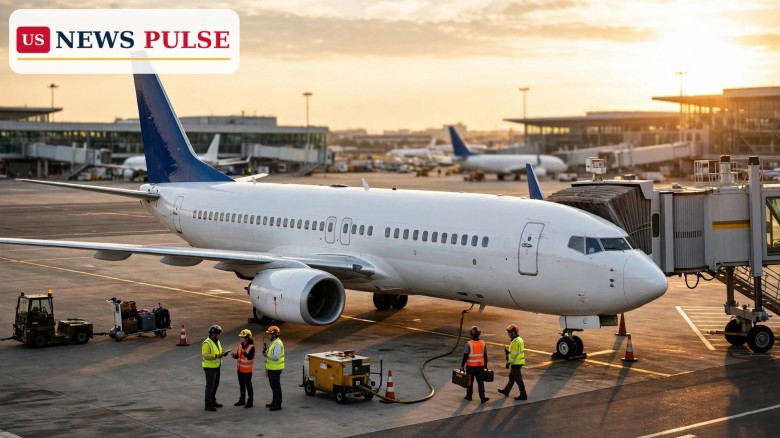
JetBlue Q3 loss widened sharply in the third quarter of 2026, even as the airline carried more passengers, raised fares and grew revenue by more than a fifth. The New York-based carrier reported a net loss of $257 million for the three months ended September 30, up from $143 million a year earlier, after its fuel bill jumped 61% to $868 million. Yet the stock rebounded from a record low, rising more than 10% in after-hours and pre-market trading, as investors focused on stronger-than-expected demand, a recovery of most of the fuel increase and management's insistence that a return to sustained profitability in 2027 remains on track.
The results, released late on Monday, October 26, a day earlier than JetBlue had originally scheduled, landed in the middle of a bruising month for the shares and a week of heavy corporate earnings. They also arrived days after a report that a group of senior creditors had hired a restructuring adviser, a disclosure that sent the shares to an all-time low on Monday before the earnings release steadied the mood. For an airline that has not recorded an annual profit since 2019, the quarter was less a verdict than a test: can higher fares and a growing premium and Florida business offset fuel prices that are rising faster than revenue?
Key Points
- JetBlue reported a Q3 2026 net loss of $257 million, wider than the $143 million loss a year earlier, on revenue of $2.81 billion, up 21% year on year.
- Fuel costs surged 61% to $868 million, but JetBlue said it recaptured roughly 87% of the increase through stronger demand and yields.
- Adjusted loss per share was $0.60, worse than the $0.55 loss analysts expected and the $0.40 loss a year earlier; revenue also came in slightly below consensus.
- Shares fell to a record low of $2.37 on Monday, then rebounded more than 10% in after-hours and pre-market trading after the release.
- JetBlue cut its 2026 outlook, now expecting an adjusted operating margin of negative 4.5% to negative 6.5%, but said it remains on track for sustained profitability in 2027.
What Happened
JetBlue announced its third-quarter results late on Monday, October 26, 2026, ahead of its scheduled reporting date and ahead of an earnings call with analysts at 10 a.m. Eastern Time on Tuesday. The headline numbers told two stories at once. Revenue rose 21.1% to $2.812 billion, from $2.322 billion in the third quarter of 2025, the strongest quarterly revenue total in a run of recent quarters tracked in the company's Securities and Exchange Commission filings. At the same time, the loss deepened, diluted loss per share widened to $0.68 from $0.39, and the operating loss grew to $144 million from $100 million, pushing the operating margin to negative 5.1% from negative 4.3%.
On the measure analysts most often track, the adjusted loss of $0.60 per share missed the consensus estimate of a $0.55 loss compiled by LSEG, a miss of 9.09% according to Zacks Investment Research. Revenue of $2.81 billion was also slightly below the $2.82 billion analysts had anticipated. Over the last four quarters, JetBlue has beaten earnings-per-share estimates only once, and it has topped revenue estimates three times in that period, a record that helps explain why a revenue gain of 21% was not enough to satisfy the market on the headline alone.
The market reaction, however, was not a simple sell-off. Shares had fallen more than 20% over the previous week and more than 40% during October, closing at $2.37 on Monday, an all-time low, after The Wall Street Journal reported on Friday that a group of senior creditors was working with restructuring adviser PJT Partners. After the release, the shares rose more than 10% in after-hours trading on Monday and were up more than 10% again in pre-market trading on Tuesday, according to Investopedia and Skift summaries of the move. One market-data summary put the subsequent close up 9.29% at $2.53, after a 38.14% slide over the prior 20 trading days. The different snapshots reflect different moments in a fast-moving rebound, but the direction was consistent: relief that the quarter was not worse, and that demand held up.
Background and Context
JetBlue's fuel problem is the clearest single explanation for the wider loss. A 61% increase in the fuel bill, to $868 million, overwhelmed a revenue gain that, in most quarters, would have been celebrated. Fuel is the airline industry's most volatile major cost, and it rises quickly when oil prices climb, while ticket prices, though they can be raised, take time to filter through bookings already sold. JetBlue said severe weather and air-traffic constraints also reduced capacity and increased costs during the quarter, a reminder that operational disruption, not just the oil price, feeds into the fuel line and into crew and compensation costs.
The revenue side of the story was genuinely strong. Revenue per available seat mile rose 18.4%, JetBlue said, and the airline recaptured roughly 87% of the higher fuel costs during the quarter. Passenger demand remained strong despite fares that have increased more than 20% this year, according to the company's earnings release as reported on Monday. Loyalty revenue grew about 20%, and the airline's new domestic first-class product, BlueFirst, is on sale across more than 30 routes, with service scheduled to begin in December 2026.
Fort Lauderdale, Florida, was the standout market. JetBlue said Fort Lauderdale revenue per available seat mile increased nearly 15% even as capacity grew more than 65%, and peak daily departures there are expected to exceed 150 in the fourth quarter. In October, the airline also completed its acquisition of 22 Spirit-operated slots at New York's LaGuardia Airport after receiving regulatory approval, a move that strengthens its position in the congested Northeast even as its broader growth strategy has been reshaped by court decisions.
That history matters. A proposed acquisition of Spirit Airlines was blocked after a federal judge ruled that the transaction was anticompetitive. A separate judge also blocked a regional partnership between JetBlue and American Airlines, which the carriers had argued would strengthen their ability to compete in the Northeast. JetBlue now maintains a partnership with United Airlines. The result is a smaller, more focused airline than the one it tried to build through mergers, and one that must prove it can make money on its existing network, with premium seats, loyalty and Florida growth doing more of the work.
The longer record underlines the challenge. JetBlue has not recorded an annual profit since 2019, before the COVID-19 pandemic. Analysis of its SEC filings shows net losses in six of the last seven reported quarters, with the sole profitable period in that run the second quarter of 2024, when it posted net income of $25 million. The losses in that sequence include $60 million in the third quarter of 2024, $208 million in the first quarter of 2025, $74 million in the second quarter of 2025, $143 million in the third quarter of 2025, $319 million in the first quarter of 2026 and $247 million in the second quarter of 2026, before the $257 million loss just reported. Revenue, by contrast, has trended higher this year, from $2.240 billion in the first quarter to $2.697 billion in the second and $2.812 billion in the third.
JetBlue Q3 Loss: Fuel, Fares and the Turnaround Test
The central question for investors is not whether JetBlue can grow revenue. It can, and in the third quarter it did, by a fifth. The question is whether growth, plus cost cuts and premium revenue, can outrun fuel and financing costs in a higher-rate environment. The 10-year Treasury yield stood at 5.0% on October 23, 2026, up from 4.96% a session earlier, while the two-year yield rose to 4.69% from 4.65%, according to Federal Reserve data cited in market coverage. Higher rates raise financing costs for capital-intensive carriers that lean on aircraft financing and leasing to fund their fleets, and JetBlue is no exception.
JetBlue's own outlook acknowledged that pressure. The airline cut its 2026 forecast and now expects an adjusted operating margin of negative 4.5% to negative 6.5%, compared with an earlier forecast of negative 2% to negative 5%. It expects to pay $4.64 a gallon for fuel in the fourth quarter, up from $3.91 in the third, a forecast that, if realised, will test the fare and recapture story again before the year is out. At the same time, the company pointed to a balance sheet that gives it time: it ended the third quarter with $2.2 billion in liquidity and an unencumbered asset base valued at $7 billion, including $2.8 billion in aircraft and engines.
That balance sheet is the bridge to management's 2027 pledge. JetBlue says it is on track to return to sustained profitability in 2027 and to meet its 2026 JetForward targets, the multiyear turnaround plan built around cost reduction and premium revenue. Chief Financial Officer Ursula Hurley said the airline has the cash and financing to reach at least $1 in earnings per share and positive free cash flow in 2028. Whether that bridge holds will depend less on one quarter's revenue growth than on whether fuel prices stabilise, whether Fort Lauderdale and premium demand keep growing, and whether the cost programme delivers savings faster than costs rise.
Reactions and Quotes
"Resilient demand and strong yields drove revenue well ahead of our initial expectations, allowing us to recapture more of the increase in fuel costs than we initially expected," Chief Executive Officer Joanna Geraghty said in JetBlue's earnings release. "That momentum has carried into the fourth quarter, and Fort Lauderdale continues to deliver exceptional results even as we significantly grow capacity."
Geraghty's emphasis on demand was echoed in market coverage on Tuesday morning. Investopedia noted that JetBlue "announced widening losses and reaffirmed its guidance late Monday, a day earlier than the company was scheduled to report results," and that shares were up over 10% in pre-market trading, "pointing to a relief rally." Skift's summary put it more bluntly: JetBlue "says it is on track to return to sustained profitability in 2027," even as the stock had fallen more than 20% over the past week before the rebound.
No statement from the senior creditors reported to have hired PJT Partners was included in the coverage reviewed for this article, and JetBlue has not, in the reports reviewed, confirmed a restructuring process. The distinction matters for travellers and investors alike: hiring an adviser to examine options is not the same as filing for bankruptcy protection, and the market's rebound suggests investors read the earnings release as evidence that the airline's operating story, at least for now, is stronger than the worst-case speculation that drove the shares to a record low.
Analysts on Tuesday's 10 a.m. earnings call were expected to press management on the long-term financial position, on the fourth-quarter fuel forecast, and on how much of the 2027 profitability pledge depends on fuel prices falling rather than on costs the airline controls. Those questions, more than the third-quarter loss itself, will set the tone for the shares into the winter travel season.
Why It Matters
JetBlue matters beyond its own shareholders because it is a test case for the middle of the US airline industry. The largest carriers have scale, global networks and large loyalty programmes to absorb fuel shocks. Ultra-low-cost carriers have stripped-down cost bases. JetBlue sits between those models: a full-service-leaning carrier with a strong Northeast and Florida presence, a growing premium product, and a cost base that has proved hard to shrink as fast as fuel has risen. If it can return to sustained profitability in 2027, it will show that the middle can work. If it cannot, consolidation pressure and creditor scrutiny will only intensify.
For travellers, the immediate implications are practical. Higher fares, up more than 20% this year, have not yet choked off demand, but they have changed the value calculation on routes where JetBlue competes with larger and cheaper rivals. The growth of BlueFirst and the Fort Lauderdale expansion suggest JetBlue is betting that some travellers will pay more for a better seat and a more convenient schedule, rather than simply chasing the lowest fare. That bet, if it works, could reshape the airline's network toward premium leisure and Florida flying and away from unprofitable capacity.
For the broader market, JetBlue's rebound on Tuesday was part of a wider earnings morning. Futures pointed higher after UPS, Royal Caribbean, Coca-Cola and Celestica posted better-than-expected earnings, and the Federal Reserve began a two-day meeting on Tuesday, with a decision on interest rates expected on Wednesday. Visa was due to report after the closing bell, along with Seagate Technology. In that context, JetBlue's story was not an isolated airline tale but a reminder that earnings season in late October 2026 is being driven, in part, by how well companies can pass higher costs to customers without losing them.
What Happens Next
The next data point is Tuesday's earnings call, where Geraghty and Hurley will face questions on fuel, on the 2027 pledge and on liquidity. The next financial marker is the fourth quarter, when JetBlue expects fuel at $4.64 a gallon and peak Fort Lauderdale departures above 150 a day. If demand holds through the holiday season and fuel does not rise further, the airline could narrow its loss and build credibility for the 2027 target. If fuel rises again, the recapture rate, not revenue growth alone, will be the number to watch.
Investors will also watch whether the creditor story develops further. A restructuring adviser's involvement does not, by itself, mean a filing is imminent, but it does mean creditors are preparing for scenarios in which the turnaround takes longer than management hopes. Any public statement from JetBlue or its creditors, any change in its financing terms, or any further cut to guidance would be read as a signal about that timeline.
For the full year, the question is whether JetBlue can stay inside its revised margin range of negative 4.5% to negative 6.5% while still investing in BlueFirst, in Fort Lauderdale and in the LaGuardia slots it just acquired. The airline's own history suggests the margin, not the revenue line, is where the turnaround will be won or lost. The third quarter proved it can grow. The fourth quarter, and 2027, will have to prove it can keep more of that growth.
Frequently Asked Questions
How much did JetBlue lose in Q3 2026?
JetBlue reported a net loss of $257 million for the third quarter of 2026, wider than the $143 million loss in the same quarter a year earlier. Adjusted loss per share was $0.60, against $0.55 expected by analysts.
Why did the loss widen if revenue rose 21%?
Fuel costs surged 61% to $868 million, overwhelming the revenue gain. Severe weather and air-traffic constraints also reduced capacity and raised costs, while the operating loss widened to $144 million.
Why did JetBlue shares rebound after a bigger loss?
Shares had fallen to a record low of $2.37 on Monday amid speculation about creditors hiring a restructuring adviser. The earnings release showed stronger demand, 87% fuel-cost recapture and a reaffirmed path to 2027 profitability, prompting a relief rally of more than 10%.
Is JetBlue filing for bankruptcy?
No filing has been reported in the coverage reviewed for this article. The Wall Street Journal reported that a group of senior creditors was working with restructuring adviser PJT Partners, which is not the same as a bankruptcy filing, and JetBlue says it remains on track for sustained profitability in 2027.
What should travellers watch next?
Watch the fourth-quarter fuel forecast of $4.64 a gallon, the December launch of BlueFirst domestic first class, and Fort Lauderdale growth. Those, plus Tuesday's earnings call, will shape fares and schedules into the holiday season.
Related coverage on US News Pulse: the Fed rate decision expected this week, Meta's $95 billion AI raise and US-India trade talks nearing a finish.
© 2026 US News Pulse. All rights reserved.
 Print
 Save