
Trump Brings Football Stars Manziel, McCoy and Amendola to Texas to Win Young Voters
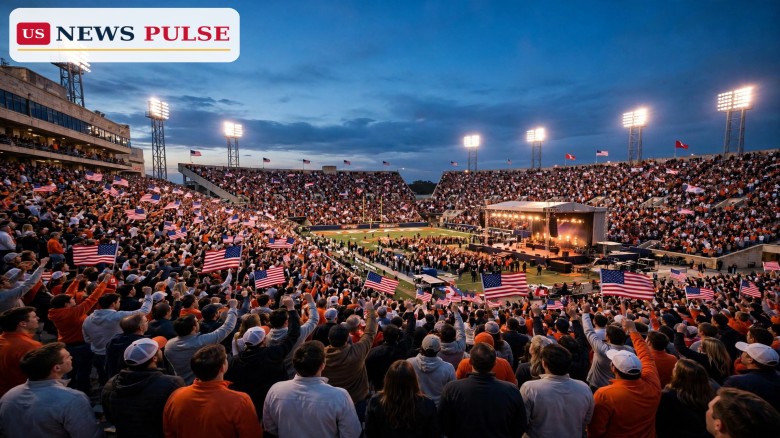
Donald Trump is taking Texas football to the campaign trail on Tuesday, October 27, 2026, bringing Johnny Manziel, Colt McCoy and Danny Amendola with him to Corpus Christi and Lubbock as Republicans fight to hold on to the young male voters who helped return him to the White House. The Trump football stars Texas tour is a deliberate play for a group that powered his 2024 victory but, according to fresh polling, is now drifting away from the party just seven days before the November 3 midterm elections.
According to an Axios report published on October 26, the three former football stars will join the president for campaign appearances in both Texas cities on Tuesday. Manziel, the former Texas A&M quarterback and 2012 Heisman Trophy winner; McCoy, the former Texas Longhorns star quarterback; and Amendola, the former Texas Tech wide receiver and two-time Super Bowl champion, cover three of the state's biggest college football fan bases in a single day.
Key Points
- Donald Trump will campaign in Texas on October 27 with Johnny Manziel, Colt McCoy and Danny Amendola, appearing in Corpus Christi and Lubbock.
- Trump speaks at the Port of Corpus Christi at 2 p.m. CT and at the Lubbock Memorial Civic Center at 6 p.m. CT, campaigning for Senate candidate Ken Paxton.
- Trump won men under 30 by 14 points in 2024, but the Harvard Youth Poll finds Democrats leading Republicans by 26 points among young men who say they will definitely vote.
- The football tour is part of a wider Republican strategy that includes millions of dollars in advertising during NFL and college football games.
- Texas has not elected a Democrat to statewide office since 1994, but the Paxton-Talarico Senate race is rated a dead heat.
What Happened
The president's Texas day begins in Corpus Christi, where doors opened at 10:30 a.m. CT and the programme begins at 12:30 p.m. CT ahead of his remarks at 2 p.m. CT at the Port of Corpus Christi. He then travels to Lubbock, where doors opened at 2:30 p.m. CT, the programme begins at 4:30 p.m. CT and his remarks are scheduled for 6 p.m. CT at the Lubbock Memorial Civic Center. The Lubbock rally is held in support of Republican Senate candidate Ken Paxton, who faces Democrat James Talarico on November 3.
The football guests are not a last-minute decoration. Axios reported that Manziel and McCoy, both better known for their college careers than their brief professional spells, and Amendola, who played 13 seasons across seven NFL teams and last played for the Houston Texans in 2021, will appear with Trump in both cities. The choice of names is geographically precise: Amendola starred at Texas Tech in Lubbock, Manziel became a legend at Texas A&M, and McCoy was a standout quarterback at the University of Texas. Between them, they give the campaign a hero in each of the state's three great college football tribes.
The visit is Trump's fourth trip to Texas in two months. He attended the Republican Midterm Convention in Dallas in September, visited a Peterbilt truck factory in Denton on October 1 and campaigned in San Antonio on October 7. The White House schedule also has the president visiting a newly arrived Venezuelan oil tanker at Port Arthur on Tuesday with Secretary of State Marco Rubio, blending governing and campaigning on the same day. It is the first time Rubio has joined Trump on the campaign trail, and the trip has already drawn attention because it is highly unusual for the nation's top diplomat to take part in political travel.
Background/Context
Football has become a recurring feature of Trump's autumn campaigning. He attended the Texas-Tennessee game in September and planned to attend the Georgia-Alabama showdown earlier in October before cancelling because of a hurricane. Former NFL coach Jon Gruden joined Trump at an Ohio rally this month, while former Georgia and NFL running back Todd Gurley accompanied him during a campaign stop in Georgia. Vice President JD Vance, a lifelong Cincinnati Bengals fan, visited the team's practice facility last week while campaigning in Ohio. Republicans are also pouring millions of dollars into advertisements during NFL and college football games, hoping to reach voters who might otherwise ignore traditional political campaigns.
The Texas Senate race explains why so much attention is landing on one state. Republicans now hold a 53-47 majority in the Senate, and a Talarico victory would narrow that margin and threaten Trump's legislative agenda and judicial confirmations for the final two years of his term. Texas has not elected a Democrat to statewide office since 1994, but Talarico and Paxton are in a dead heat according to an average of recent polling by Real Clear Politics. Talarico held his own rally in Corpus Christi on October 24 and has scheduled a competing rally in Lubbock on Tuesday, turning the president's visit into a head-to-head contest for the same voters on the same day.
The money behind the race underlines the stakes. Elon Musk, a key Trump ally who calls Talarico "a far left extremist", has supported Paxton with more than $150 million, while members of the Republican Bush political dynasty have sided with Talarico in their home state. Members of the Bush family backing a Democrat in Texas is one of the most striking signs of how polarising the contest has become.
Trump Football Stars Texas: A Play for Young Men
The numbers explain why Trump is making the move. According to a Tufts University analysis of AP VoteCast data cited by Axios, Trump won men under 30 by 14 points in 2024, taking 56 per cent of male voters under 30 against 42 per cent for Kamala Harris. That marked a dramatic reversal from 2020, when young men favoured Joe Biden, and it was particularly notable among young white men, 63 per cent of whom backed Trump in 2024. Even young Latino men supported the president by a narrow lead.
The Harvard Youth Poll, released on October 22, suggests much of that support has disappeared over the last two years. The survey of 2,024 Americans aged 18 to 29 found that 58 per cent of young men who say they definitely plan to vote in November will support Democratic candidates, against just 32 per cent for Republicans, a 26-point Democratic lead. Only 31 per cent of young men said they will definitely vote at all, a turnout warning for both parties. Across all voters aged 18 to 29, 63 per cent said they would cast their ballot to oppose Trump, while only 14 per cent said they would vote to support him.
The same poll found deep anxiety about the future. Some 62 per cent of voters in their twenties said the United States is heading in the wrong direction, while only 9 per cent said it is on the right track, the lowest figure ever recorded in Harvard's youth poll series. Respondents identified rising prices and the cost of living, cited by 79 per cent, the power of large corporations, cited by 68 per cent, and the trade war, cited by 68 per cent, as the most serious threats to their future financial stability. For the first time, more young voters, 27 per cent, expect to be financially worse off than their parents' generation than expect to be better off, at 25 per cent. Some 69 per cent expressed fear about America's future, against 26 per cent who expressed hope.
Reactions/Quotes
A Trump adviser defended the football strategy to Axios in terms that capture the campaign's thinking. "Trump has many bases. And football is one of them, college and pros," the adviser said. "The response is good. And the president loves the atmosphere. So why not?" The quote has become the unofficial slogan of the tour: football crowds are loud, loyal and, crucially, full of exactly the young men the campaign fears are slipping away.
Not everyone in Republican circles is comfortable. Reports based on the Axios story say the White House bristled at suggestions that the president is wasting time by including former athletes in his political strategy, and some Republicans have begun removing references to Trump from their campaign materials, a sign of internal tension as the party weighs how closely to tie itself to a president whose approval ratings remain historically low. The White House's sensitivity to criticism of its campaign tactics, even as it leans into unconventional outreach, shows how high the stakes feel inside the campaign with a week to go.
Democrats, meanwhile, have their own Texas story to tell. Talarico's competing rallies in Corpus Christi and Lubbock are designed to show that the Democratic candidate can draw crowds in the same cities on the same day, and his campaign has benefited from the split inside the state's Republican establishment. The race has become a national proxy fight: a test of whether star power, money and presidential attention can hold a state Republicans have owned for three decades, or whether a changing electorate is finally ready to break the pattern.
Why It Matters
The Texas football tour matters far beyond one Senate seat because it tests a theory about how elections are now won. Young men helped drive Trump's 2024 victory, but midterm elections are usually decided by who actually turns out when the president is not on the ballot. If football stars can turn excitement into votes, Republicans may have found a way to keep a coalition that polling says is fracturing. If they cannot, the party faces a painful lesson: celebrity draws a crowd, but a crowd is not a turnout operation.
The strategy also reveals what Republicans believe their problem is. The Harvard poll suggests young voters are not simply bored; they are anxious about prices, jobs and the cost of living, and 77 per cent of voters in their twenties said they do not support Trump's economic policies, a view shared by more than half of young Republican voters. Football can get a young man into a room, but it cannot answer his questions about rent, wages or whether artificial intelligence will replace the entry-level job he hoped to get after college. The campaign is betting that atmosphere and identity can carry voters the policy argument currently cannot.
For Texas itself, the visit is a reminder that the state is no longer a Republican formality. A dead-heat Senate race, a former president's dynasty splitting, $150 million from the world's richest man on one side and a Democratic challenger drawing rival crowds on the other: this is what a genuinely competitive Texas looks like. Whatever happens on November 3, the fact that Trump needs Johnny Football to help hold Texas tells its own story about how American politics has changed.
What Happens Next
Trump's Texas day ends with his departure from Lubbock back to the White House on Tuesday night, but the campaign does not slow down. Vice President JD Vance campaigns in Weatherford, Texas, later this week, and Trump has pledged to campaign for Republican candidates for the final stretch before the midterms. Early voting in Texas continues through October 30, and the final weekend will bring a last wave of rallies, advertising and turnout drives from both parties.
On November 3, Republicans will find out whether their football-centred strategy delivered results beyond the stadium. If Paxton holds Texas and young male turnout holds up, the Manziel-McCoy-Amendola tour will be remembered as a clever piece of political theatre. If Talarico wins, or if young men stay home in large numbers, it will be remembered as a warning that star power is no substitute for a message voters believe. Either way, the experiment will shape how both parties campaign to young men in 2028.
Frequently Asked Questions
Who is joining Donald Trump in Texas on October 27?
Johnny Manziel, the former Texas A&M quarterback and 2012 Heisman Trophy winner; Colt McCoy, the former Texas Longhorns quarterback; and Danny Amendola, the former Texas Tech wide receiver and two-time Super Bowl champion, are joining Trump in Corpus Christi and Lubbock.
Why is Trump bringing football stars on the campaign trail?
Trump won men under 30 by 14 points in 2024, but the Harvard Youth Poll finds Democrats leading by 26 points among young men who say they will definitely vote. The campaign hopes football stars can energise young male voters who might otherwise stay home in a midterm election.
What does the Harvard Youth Poll actually show?
Among 2,024 Americans aged 18 to 29 surveyed, 58 per cent of young men who definitely plan to vote back Democrats against 32 per cent for Republicans. Overall, 63 per cent of voters in their twenties said they would vote against Trump, and only 31 per cent of young men said they will definitely vote.
Is the Texas Senate race really close?
Yes. The Real Clear Politics average puts Ken Paxton and James Talarico in a dead heat, even though Texas has not elected a Democrat to statewide office since 1994. Republicans hold a 53-47 Senate majority, so the result could shape control of the chamber.
Where can I read more about the Texas midterm fight?
See our coverage of Trump's Texas rallies for Paxton and the Talarico surge, Trump's $5,000 dividend promise back in the spotlight, and the $1 billion in dark money flooding the midterm races.
© 2026 US News Pulse. All rights reserved.
 Print
 Save