
Washington Ballots Row: DOJ Demands 400 Suspected Noncitizen Votes Set Aside
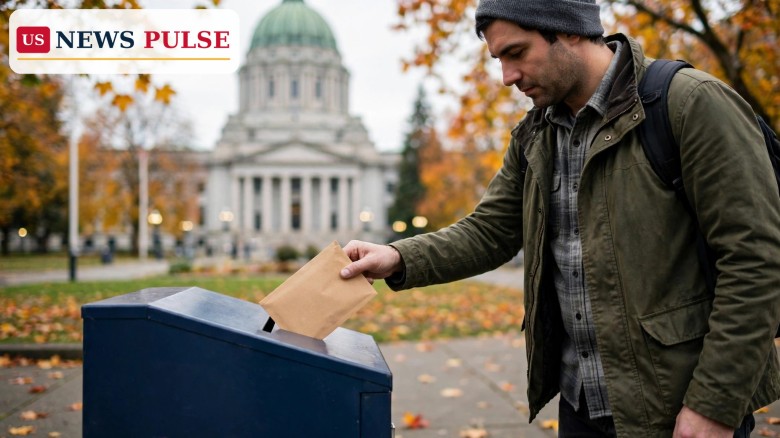
Washington state is facing a ballot fight one week before the midterm elections. On Monday, October 26, 2026, the United States Department of Justice asked Washington election officials to set aside any ballots cast by more than 400 people it says are registered to vote without United States citizenship, until the state can confirm each person's eligibility. The demand landed while all 39 of the state's county election offices were already processing mail ballots for the November 3 general election, and it has set up a direct clash between federal prosecutors and the state's chief election officer over who controls the voter rolls.
Key Points
- The Justice Department says it has identified more than 400 people in Washington who appear to be noncitizens registered to vote, who together cast about 1,500 votes in earlier elections.
- Federal prosecutors asked Secretary of State Steve Hobbs to segregate the listed voters' mail ballots until their citizenship can be confirmed, with a reply demanded by noon on October 28.
- Many of the people on the list are lawful permanent residents, or green card holders, who are legally in the United States but are not permitted to vote.
- Hobbs has not agreed to set any ballots aside. He says the request is under review, warns that the federal system frequently flags legitimate citizens, and calls the timing an attempt to cast suspicion on the results.
- The Justice Department says a second list from the Department of Homeland Security is coming, and it warns it will seek emergency relief in court if Washington does not cooperate.
What Happened
The demand arrived in two forms on Monday: a letter to Hobbs and a news conference in Seattle by the leaders of Washington's two United States Attorney's offices. Acting United States Attorney Neil Floyd said investigators had found people who were not citizens registered to vote and voting in the state. "We have identified over 400 non-citizens who are registered to vote and have voted in multiple elections. This is only the tip of the iceberg," Floyd said. "We will continue to investigate and identify those who are committing crimes by voting illegally."
First Assistant United States Attorney Pete Serrano, of the Eastern District of Washington, framed the request as protecting lawful voters. "Our purpose in sharing this data with the Secretary of State is to protect the sanctity of each citizen's vote," Serrano said. "Our goal in sharing this information with the State of Washington is to ensure that a Washington citizens' votes are protected in this and future elections."
According to the Justice Department's own announcement, many of those on the list are lawful permanent residents. The department also offered an explanation for how some may have been registered: it said it had heard from green card holders who were registered without their knowledge through Washington's Motor Voter programme, then received a ballot in the mail and assumed they were legally registered. "That simply is not the case," the announcement said.
The letter sets a hard deadline. It asks Washington to confirm by noon on October 28 that it will set aside the listed voters' ballots, and warns that if the state cannot implement the process by then, "the United States will have no choice but to seek emergency relief." It also says the department anticipates sending a second list of suspected noncitizens, drawn from Homeland Security data, before Election Day.
The letter itself contains errors that critics have seized on. It gives the general election date as November 2, when the election is actually on Tuesday, November 3. It also sets its deadline at noon Pacific Standard Time, although Pacific Daylight Time remains in effect in Washington until November 1. The errors do not change the substance of the demand, but state officials and election lawyers say they undermine confidence in a list that is supposed to decide whose ballot counts.
Background and Context
Washington votes almost entirely by mail. Every registered voter in the state, more than five million people, receives a ballot, and voting for the November general election began earlier in October. Ballots must be postmarked by Election Day or returned to a drop box or county elections centre by 8 p.m. on November 3. That is why a demand to separate ballots in mid-count is so disruptive: the ballots are already arriving, and county staff must decide, voter by voter, what to do with them.
The October 26 demand did not come out of nowhere. In July, the head of the Justice Department's Civil Rights Division wrote to Hobbs warning that the department was examining records to see whether noncitizens were registered in Washington. Since last month, Hobbs's office says it has received about 60 subpoenas from the Justice Department seeking voter information. Last month, a federal judge dismissed the department's lawsuit seeking Washington's complete voter registration database, including confidential personal information.
Washington is the second West Coast state to face this kind of demand in the final weeks of the campaign. In California, the Justice Department sought to require officials to sequester mail ballots from up to 20,000 people it suspects may not be citizens. California challenged that demand in court, and during rare Sunday arguments a panel of federal appellate judges questioned the timing, constitutionality and authority behind it. In a court filing, Los Angeles County Assistant Registrar-Recorder Monica Flores said staff who reviewed a sample of 200 records from the administration's California list found canceled or inactive registrations, people with no voting history, and voters who appeared to have been born in the United States.
The Washington demand also sits inside a much wider federal push on voter eligibility this autumn. The Justice Department has charged 48 noncitizens with illegal voting across five states, as reported in our earlier coverage of the five-state illegal voting charges. President Donald Trump has separately offered a $1 million reward for tips leading to the arrest and conviction of people for voter fraud, covered in our report on the $1 million voter fraud reward. And outside spending in the midterms has surged past $1 billion from dark-money groups, as detailed in our analysis of dark money in the 2026 midterms.
Washington Noncitizen Ballots: What the Evidence Shows
What is actually proven so far is narrower than the headlines suggest. The Justice Department has said it identified more than 400 people and about 1,500 votes cast in prior elections. It has not publicly named the individuals, published the full list, or released the underlying records that would let independent experts check each case. The state, for its part, has not confirmed or denied any individual case; it says it is reviewing the material.
Two facts in the state's response deserve attention. First, the Justice Department itself notes that some of the people it suspects registered without citizenship may since have become naturalized citizens, which would make them fully eligible voters today. Second, Hobbs's office says one of the roughly 400 records dates back to 1994, more than three decades ago, in a state where 113.5 million primary and general election ballots have been cast since that year.
Past checks of similar claims have repeatedly found far fewer cases than first alleged. In Nevada, the Trump administration alleged there were 1,500 potential noncitizen voters on the rolls; a subsequent investigation found zero. In Maricopa County, Arizona, the county recorder, a Trump supporter, announced 207 possible noncitizens on the rolls; the Republican county attorney determined there were actually eight. Those examples do not prove the Washington list is wrong, but they explain why election officials insist on verifying each name rather than setting ballots aside on the basis of a federal list alone.
The accuracy question cuts both ways. Noncitizen voting is a real federal crime, and a green card holder who votes can damage a future naturalization application and face felony charges carrying up to five years in prison. At the same time, the federal matching system at the heart of these lists is known to flag legitimate citizens, for example when names, birth dates or naturalization records do not line up across databases. Hobbs's office warns that the system "frequently flags legitimate U.S. citizens as noncitizens, jeopardizing their legal right to vote," and that it exposes voters' private data to a 10-year retention period.
Reactions and Quotes
Hobbs, a Democrat and Washington's chief elections administrator, offered the firmest pushback. "We take our responsibility to protect voter information seriously and will only respond to requests that follow due process," he said in an emailed statement. "We see what's happening in California and don't want Washingtonians to be harassed."
In his fuller response, Hobbs invoked the law that limits voter removals close to an election. "Federal law protects the right to vote by limiting the ability of states and counties to remove voters within ninety days of a federal election," he said. "Our office complies with federal and state law protections to ensure that eligible citizens have their ballots counted."
On timing, he was blunt: "The timing of this request — one week before the General Election — is no doubt intended to cast unfounded suspicion on the results." He added that Washington's elections are secure, that cases of voter fraud are incredibly rare, and that every voter attests to eligibility by signing the declaration on the ballot return envelope in every election.
Hobbs also pointed to a separate, documented problem with mail voting in Washington this year: delayed postmarks. In the August 2026 Top Two primary, just over 20,000 of 1.9 million returned ballots were rejected for late postmarks, compared with about 4,600 rejections out of four million returned ballots in the much larger 2024 general election. In some counties, he said, ballot rejections rose by 300 to 500 percent. "At a time when thousands of Washington voters already face ballot rejections due to delayed postmarks, our focus should be on ensuring every eligible voter can exercise their right to vote, not creating additional uncertainty about their eligibility," Hobbs said.
The Justice Department's position is that the state is now on notice and must act. "Washington is now on notice that non-citizens are voting. It is up to the state to take action to make sure that they are not allowing these non-citizens to vote illegally," its announcement said. It warned that people who knowingly lie under oath on a voter registration application, claiming citizenship, can face criminal charges, and that illegal voting can harm a later naturalization application, because applicants must swear they never claimed citizenship or voted illegally.
Why It Matters
The stakes go beyond 400 ballots. Washington is an all-mail state, so a federal demand to segregate ballots touches the core of how its elections work. If the state complies and some of the flagged voters turn out to be citizens, lawful votes could be held back or lost. If it refuses and some turn out to be noncitizens, unlawful votes could be counted. Either outcome feeds the suspicion the other side warns about, which is precisely why election administrators say these checks must happen name by name, with evidence, and not in the final week of voting.
The legal backdrop matters too. The Elections Clause of the United States Constitution gives state legislatures the power to set the time, place and manner of congressional elections, and federal law restricts removing voters within 90 days of a federal election. That is the framework California is already litigating, and it is likely to shape any court fight in Washington if the Justice Department follows through on its threat to seek emergency relief.
There is also a national signal. Washington follows California in a pattern: a federal list, a demand to set ballots aside, a deadline days before voting ends, and a warning of court action. With control of Congress at stake on November 3 and several competitive races still to be decided, similar demands in other states would land in the same heated final week. How Washington responds — and how quickly a court rules if the dispute is filed — may become the template.
What Happens Next
The first deadline is noon on October 28, when the Justice Department expects Washington to confirm it will set the listed ballots aside. If the state declines or does not reply in the form prosecutors demand, the department has said it will seek emergency relief, which could mean an urgent court filing asking a judge to order the segregation of ballots.
A second Homeland Security list is expected before Election Day, which could expand the number of voters affected. County election offices, meanwhile, continue to process ballots, and voters can still return ballots by mail or drop box through 8 p.m. on November 3. Anyone who believes they were wrongly flagged, or who is unsure about their registration status, should contact their county elections office or the Secretary of State's office promptly, rather than assuming a ballot will be counted.
Court action, if it comes, will probably move fast. The California case reached appellate arguments on a Sunday, an unusual step that shows how seriously courts are treating last-minute election disputes. A Washington ruling, whichever way it goes, would need to arrive before counting is complete to have any practical effect on this election — and it would almost certainly be appealed.
Frequently Asked Questions
Who are the more than 400 people on the Justice Department's list?
They are people the department says appear to be noncitizens registered to vote in Washington, many of them lawful permanent residents. The department has not publicly named them, and the state is reviewing the list. Some may since have become naturalized citizens.
Does setting a ballot aside mean it is thrown away?
Not necessarily. Segregating a ballot means holding it separately from counted ballots until eligibility is confirmed. If the voter is confirmed as a citizen, the ballot should count. If not, it would not. The dispute is over who decides, on what evidence, and how quickly.
Has Washington agreed to set any ballots aside?
No. As of Tuesday morning, Secretary of State Steve Hobbs said the request was under review and that his office would only respond to requests that follow due process and comply with state and federal law. The state has not agreed to segregate ballots.
Why do critics say the timing matters?
Federal law limits removing voters within 90 days of a federal election, and Washington's ballots were already being returned when the demand arrived. Critics, including Hobbs, argue that raising eligibility questions one week before Election Day risks casting doubt on results and confusing voters, even if individual cases turn out to be valid.
What should Washington voters do now?
Vote as normal and return ballots promptly, preferably to an official drop box or county elections centre, to avoid postmark delays. Voters who are unsure about their registration should check with their county elections office well before November 3.
© 2026 US News Pulse. All rights reserved.
 Print
 Save