
Dark Money Midterms 2026: $1 Billion in Secret Cash Floods US Races as Vote Nears
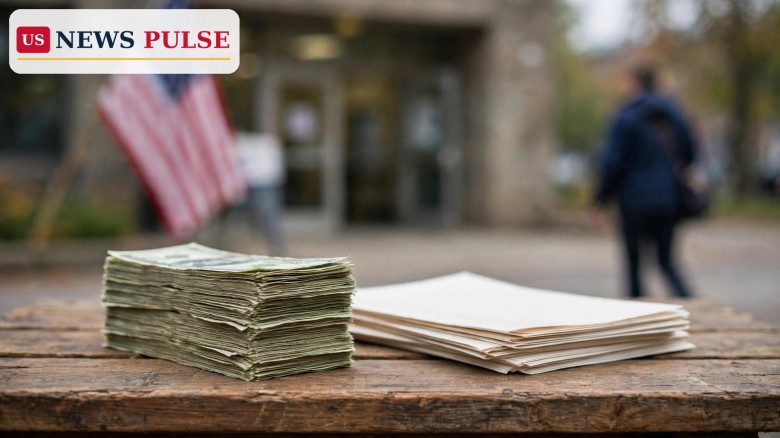
With seven days to go until Americans vote in the 2026 midterm elections, more than $1 billion in so-called dark money has already flooded into the campaign, an analysis of federal data shows, and roughly two-thirds of it is working in favour of Republicans. The scale of the secret spending, driven by a handful of billionaires led by Elon Musk, has shattered every previous record for a midterm cycle and turned the cost of American democracy itself into one of the defining issues of the final week.
Dark money is political spending by groups that do not have to disclose their donors. An Agence France-Presse analysis of Federal Election Commission data found that just five outside groups, significantly funded by undisclosed donors, accounted for nearly a third of all non-party spending in this election cycle as of October 25. The Brennan Center for Justice, tracking the same cycle, reports that independent spending by super PACs and other groups had already reached a record $2 billion by the end of September, up 51 percent on the last midterm cycle after adjusting for inflation.
At the centre of the surge stands Musk, the world's richest man and a close ally of President Donald Trump. The AFP analysis puts his giving to Republican groups at almost $450 million, including to the Senate Leadership Fund, the largest of the super PACs. Figures supplied by Musk's own team to The New York Times put his total giving to help Republicans so far this election at at least $366 million, itself a record: it beats the $290 million he gave in 2024 and the previous midterm record of $179 million given by financier George Soros in 2022.
Key Points
- Five dark-money-funded outside groups have poured more than $1 billion into the 2026 midterm campaigns, nearly a third of all non-party spending as of October 25.
- Three of the five groups lean Republican, and about two-thirds of the billion dollars benefits the GOP, fuelled by ultra-wealthy donors led by Elon Musk.
- Musk alone has given almost $450 million to Republican groups, including the Senate Leadership Fund, the cycle's biggest super PAC.
- Democrats still lead in direct donations to candidates and party committees, where individual gifts are capped at $3,500 per candidate.
- The Texas Senate race tops outside spending, with Democrat James Talarico facing more than $200 million in opposition spending, followed by Ohio at nearly $170 million against Sherrod Brown.
What Happened
The AFP analysis, published on October 26, landed just as early voting was under way across the country, with New Yorkers casting ballots from October 24. Its headline finding was stark: with just over a week until voting day, the records of what the agency called the notoriously expensive US election system had been shattered. Five groups, known as super PACs and hybrid PACs, had between them channelled more than $1 billion into the campaign, much of it from donors whose identities voters will never see.
Three of the five organisations favour Republican candidates. About two-thirds of the total spending benefits the Republican Party, the analysis found, driven by ultra-wealthy Republican-leaning donors. Musk's near-$450 million contribution to Republican groups makes him the single largest donor in the current cycle and the biggest donor of the modern era.
Democrats, by contrast, have kept an edge where the money is visible. Democratic candidates in competitive Senate and House races have consistently outraised their Republican counterparts in direct donations, and the party's national committees have also done better in direct fundraising. That, analysts say, points to a highly motivated small-donor base on the Democratic side, even if it cannot match billionaire-scale cheques.
The imbalance is built into the law. Direct contributions to a candidate's official campaign are capped at $3,500 per person, and donations to national party committees at $44,300. Super PACs, which by law must spend independently of candidates, face no such limits at all. The result is a system in which a single billionaire can legally outspend millions of small donors combined, while routing the money through secondary organisations that keep the original source hidden.
Background: How Dark Money Works
The machinery behind the billion-dollar flood did not exist before 2010. That year the Supreme Court ruled in Citizens United that the government cannot limit independent political spending by corporations, unions and other groups. A lower court decision that followed allowed those organisations to raise unlimited sums from donors, creating the super PAC: a committee that may accept unlimited contributions provided it does not coordinate directly with a candidate.
Dark money takes the model one step further. Donors give to nonprofit organisations that are not required to disclose their contributors, and those nonprofits then pass the money to super PACs. The super PAC reports the nonprofit as its donor, but the people behind the nonprofit stay anonymous. The Brennan Center notes that much of this year's dark money has been funnelled through super PACs with close ties to elected leaders, including the leadership-aligned groups of both parties in the House and Senate, which raised $198 million through their dark money affiliates by the end of June, more than ever before.
The separation between candidates and these groups is, in the Brennan Center's words, increasingly a legal fiction, with candidates and outside groups often working hand-in-glove. In one of the most brazen examples cited by the centre, President Trump has repeatedly referred to the hundreds of millions raised by his super PAC, MAGA Inc., as "his" money and made no secret that he controls it. In the last few weeks alone, MAGA Inc. and No Going Back Inc., another group reportedly controlled by Trump, have spent more than $150 million to help congressional Republicans.
The spending is also increasingly difficult to track. Super PACs and other groups are putting growing sums into online spending, including payments to influencers, which are often not covered by campaign disclosure rules and are easy to hide on finance reports. The influencers themselves do not have to disclose who is paying them.
Dark Money Midterms 2026: Where the Billion Went
The AFP analysis shows the money has flowed overwhelmingly into Senate contests, and largely into attack advertising. The Texas Senate election tops the list in terms of expenditure. Democrat James Talarico, attempting to become the first Democrat to win a Senate race in Texas since 1988, has faced more than $200 million in opposition spending from outside groups. Second is Ohio's special Senate election, where Democrat Sherrod Brown, trying to return to the Senate, has faced extensive outside spending against him of nearly $170 million.
The Brennan Center's donor breakdown shows where the biggest cheques came from. Beyond Musk, venture capitalists Marc Andreessen and Ben Horowitz, who invest in artificial intelligence, cryptocurrency, defence and gaming startups, gave $115 million to boost Republicans, according to FEC data through June. Financier George Soros and his family gave $103 million to support Democrats. They were trailed closely by hedge fund magnate and TikTok investor Jeff Yass, packaging magnates Richard and Elizabeth Uihlein, and casino owner Miriam Adelson, all of whom support Republicans.
A significant share of early super PAC spending went not to general-election battles but to shaping primary contests within the parties. Two leading artificial intelligence companies, OpenAI and Anthropic, directed more than $55 million to primary races for seats unlikely to change party hands, backing candidates aligned with each company's agenda. The pattern underlines a central feature of the new money politics: donors are not only choosing between parties, but choosing which candidates within a party survive.
The party committees themselves have also changed how they spend. A June Supreme Court decision, National Republican Senatorial Committee v. FEC, struck down limits on how much parties could spend in coordination with candidates. The Senate Republican committee has aggressively taken advantage, spending $48 million in coordination with its candidates by the end of August, the lion's share of the $63 million in coordinated spending this cycle from all four congressional committees. Leadership-aligned super PACs have not slowed down in response: together they spent $494 million through September, a tenfold increase since 2014, including $280 million from two groups tied to the Senate GOP, the Senate Leadership Fund PAC and Texas PAC.
Reactions and Analysis
Reform advocates say the numbers confirm a system operating without meaningful oversight. The Federal Election Commission, the agency charged with enforcing campaign finance law, has lacked a quorum for most of this election cycle and is unable to conduct investigations, issue penalties or make new rules. Only two of its six seats are currently occupied, most vacancies arising as commissioners left after their terms ended without replacements being nominated, and one resulting from President Trump summarily firing a Democratic commissioner.
Polling cited by the Brennan Center suggests the public mood is hostile to the new scale of spending. Nine in ten voters say that government prioritising the interests of billionaires and big corporations is corrupt, and majorities of both parties blame campaign donations. Leading Democratic Senate candidates have called for getting money out of politics and curbing the influence of billionaire megadonors, while Republican candidates have attacked Democrats for taking money from special interests. Both parties' advertising now routinely accuses opponents of profiting from government service, stock trades or travel paid for by special interests.
The Washington Post, cited by the Brennan Center, reported that the Republicans' half-billion-dollar spending blitz since the summer does not appear to have moved the polls. But super PAC activity is typically concentrated in the final weeks of a campaign, so its full impact may not yet be visible. With attack ads dominating the airwaves in the most competitive states, the final week's spending could still shape turnout and late-deciding voters.
The issue is also directly on the ballot in several states. In August, more than 70 percent of Alaskans voted for a measure restoring campaign contribution limits after courts struck down a prior law. This fall, Michigan votes on an initiative to prohibit utilities and state contractors from contributing to campaigns, Montana votes on whether to revoke the right of corporations doing business in the state to spend money on elections, and California decides whether to allow state and local governments to establish their own public financing programmes.
Why It Matters
The billion-dollar dark money flood matters for a reason that goes beyond who wins on November 3. When the largest donors in a cycle are concentrated in technology, finance, cryptocurrency and gambling, and when the biggest spender is also a presidential ally with vast business interests before the government, voters have legitimate reason to ask what the money buys. The Brennan Center's analysis puts it bluntly: with tech interests rivalling party-affiliated groups in spending, voters are right to worry that wealthy business interests are trying to buy favourable policies.
It matters, too, because the imbalance is structural rather than accidental. A voter may give $3,500 to a candidate; a billionaire may give $450 million to the groups supporting that candidate's opponent, anonymously, and no law requires the public to learn the donor's name. The Democrats' small-donor advantage in direct giving shows enthusiasm, but enthusiasm capped at $3,500 cannot compete with unlimited outside spending in the races that decide control of the Senate.
Finally, it matters because the referee is absent. An election conducted under rules that no functioning regulator enforces, in which the largest sums arrive through channels designed to hide their source, tests public confidence in the result itself. With the midterms deciding control of Congress for the final two years of Trump's second term, and with the president himself openly treating a super PAC's war chest as his own, the question of who funds American politics is no longer background noise. It is the story of the election.
What Happens Next
The final week will bring a last surge of outside spending, concentrated on television and digital attack ads in the handful of Senate races that will decide the majority, above all Texas and Ohio. Campaign finance disclosures filed after the election will eventually reveal more of the money's path, though the darkest channels will remain opaque by design.
Voters go to the polls on Tuesday, November 3, with early voting already under way in many states. After the results, the debate over reform is expected to return quickly: both parties campaigned this year on promises to fight corruption, and the Brennan Center notes the open question is whether that rhetoric will translate into concrete action once the winners take their seats.
For now, the most expensive midterm in American history is about to get more expensive. The billion dollars already spent is a floor, not a ceiling, and the final week's filings may push the total further into record territory before a single ballot is counted.
Frequently Asked Questions
What is dark money?
Dark money is political spending by groups that are not required to disclose their donors. Donors typically give to a nonprofit organisation, which then passes the money to a super PAC; the super PAC reports the nonprofit as its donor, so the original contributors stay anonymous.
How much dark money has been spent in the 2026 midterms?
An AFP analysis of federal data found that five outside groups significantly funded by dark money poured more than $1 billion into the 2026 midterm campaigns, nearly a third of all non-party spending as of October 25. Total independent spending by super PACs and other groups reached $2 billion by the end of September, according to the Brennan Center.
How much has Elon Musk given?
AFP puts Musk's giving to Republican groups at almost $450 million, including to the Senate Leadership Fund. Figures from Musk's own team, reported by The New York Times, put his total giving to help Republicans this election at at least $366 million, a record for any donor in the modern era.
Why can super PACs raise unlimited money while candidates cannot?
The Supreme Court's 2010 Citizens United ruling said the government cannot limit independent political spending by corporations, unions and other groups, and a later lower-court decision allowed those groups to raise unlimited sums. Direct gifts to candidates remain capped at $3,500 per person, and to national party committees at $44,300.
Which races have seen the most outside spending?
The Texas Senate race leads, with Democrat James Talarico facing more than $200 million in opposition spending from outside groups. Ohio's special Senate election is second, with Democrat Sherrod Brown facing nearly $170 million in spending against him.
Related coverage: Trump's $1 million voter fraud reward, the DOJ's Alaska Senate certification lawsuit and Trump's Texas rallies and the Talarico surge.
© 2026 US News Pulse. All rights reserved.
 Print
 Save