
Darwin's Cat Food Salmonella Alert: FDA Warns Two Lots After Cat Hospitalised
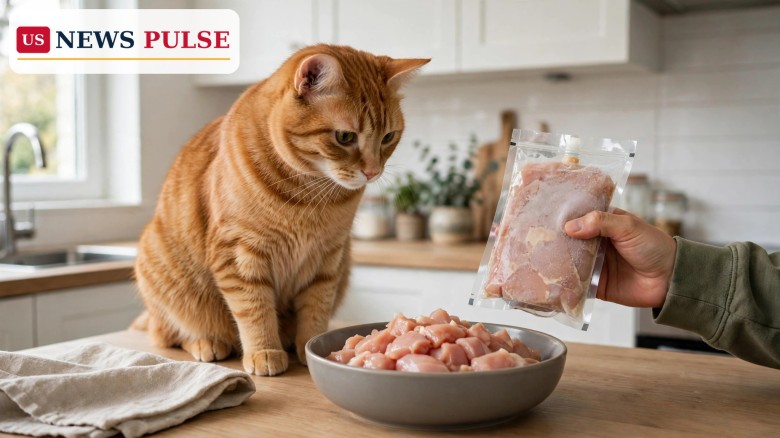
The U.S. Food and Drug Administration has warned cat owners across the United States to check their freezers immediately, after two lots of Darwin's cat food tested positive for Salmonella. The Darwin's cat food Salmonella alert, issued on October 26, 2026, follows a consumer complaint about two cats that fell ill after eating the raw chicken recipe, with one of the animals needing hospital treatment. Both cats recovered once the food was stopped, but the agency says the risk has not gone away, because the frozen product carries no expiry date and may still be sitting in homes today.
Key Points
- The FDA says two samples of Darwin's Natural Pet Products Natural Selections Chicken Recipe for Cats tested positive for Salmonella.
- The affected lots are Lot 12731, made July 8, 2026, and Lot 12493, made April 2, 2026.
- Two cats developed stomach illness after eating the food; one was hospitalised. Both recovered after the food was withdrawn.
- The FDA recommended a recall, but says the firm, Arrow Reliance Inc., has not yet carried out an adequate recall of the two lots.
- Owners are told to throw the food away in a secure container, never donate it, and disinfect bowls, surfaces and freezers. Freezing does not kill Salmonella.
What Happened
On October 26, 2026, the FDA published an advisory cautioning pet owners not to feed two lots of Darwin's Natural Selections Chicken Recipe for Cats. The agency said it had collected and tested samples after receiving a consumer complaint about two cats that developed gastrointestinal illness after eating the product. One cat was hospitalised after eating food from one of the two affected lots. The FDA said both cats recovered after they stopped eating the products.
The advisory is not a routine label update. It is a direct "do not feed" warning, and it comes with an unusually blunt line from the regulator: the FDA recommended that Arrow Reliance Inc., which does business as Darwin's Natural Pet Products, recall the two product lots that tested positive for Salmonella, and "to date, the firm has not initiated an adequate recall of the affected products." In plain terms, the agency is telling owners not to wait for a company recall notice to arrive, because the lots are already identified and the danger is already documented.
Darwin's products are sold online through a subscription service, rather than on supermarket shelves, which makes the warning harder to spot for some buyers. The food is sold frozen in 2-pound packages, each divided into four separate units, in white and clear plastic packaging with green and black labelling. Because the packages carry no expiration date, the FDA warns, affected food could still be in consumers' freezers months after it was made, long after the purchase has been forgotten.
Background and Context
Salmonella is a bacterium that can cause illness and death in humans and animals, especially in people who are very young, very old or have weakened immune systems. According to the Centers for Disease Control and Prevention, people infected with Salmonella can develop diarrhea, fever and abdominal cramps. Most people recover without treatment, the CDC says, but in some patients the diarrhea can be so severe that hospital treatment is needed, and the infection can spread from the intestines into the bloodstream and then to other parts of the body unless treated promptly.
Pets do not always show symptoms when they are infected, the FDA notes, which is part of what makes contaminated pet food so difficult for owners to judge. When signs do appear, they can include vomiting, diarrhea that may be bloody, fever, loss of appetite and reduced activity. The agency advises owners to contact a veterinarian promptly if a pet shows those signs after eating a suspect food.
Raw pet food carries a particular risk profile. Unlike kibble, which is cooked, raw diets are not heat-treated in a way that kills bacteria, and refrigeration and freezing do not solve the problem either. The FDA states this explicitly in its advisory: "Neither freezing nor refrigeration kills Salmonella." That point matters for this case, because Darwin's food is sold frozen and stored frozen, and a buyer could reasonably assume that the cold chain made it safe. It did not.
The wider food-safety picture this autumn underlines why regulators are moving quickly on recalls and warnings. In recent weeks, American shoppers have already faced a Walmart fruit cocktail recall of 44,064 cans over possible lead contamination and a beef jerky recall of about 1,000 pounds sold in seven states after the product bypassed federal inspection. Those cases involved human food; the Darwin's case is a reminder that the same supply-chain and inspection failures can reach the pet bowl, and from there, the family kitchen.
Darwin's Cat Food Salmonella: How to Check Your Freezer
The first step is to find the lot code. On Darwin's packaging, the lot code is printed on the front of the lower left unit of the package. The two affected lots are Lot 12731, with a manufacturing date of July 8, 2026, and Lot 12493, with a manufacturing date of April 2, 2026. Both are the same variety: Darwin's Natural Pet Products Natural Selections Chicken Recipe for Cats.
If you find either lot, the FDA's instruction is clear. Stop feeding the product to your pets and throw it away in a secure container where other animals, including wildlife, cannot reach it. Do not donate the food. If you no longer have the part of the package with the lot code, or you cannot read the code, throw the food away rather than taking a chance on it.
Cleaning matters as much as disposal. The FDA advises households that have had the listed products in their homes to clean and disinfect all pet supplies, including storage containers, bowls, utensils, food preparation surfaces, pet bedding, toys and floors, and any other surfaces the food or the pet may have touched, including the refrigerator or freezer. Pet faeces should be picked up promptly in yards, parks or anywhere people or other animals could be exposed, and hands should be washed thoroughly after handling the product or cleaning contaminated items.
Owners should also remember that a pet can carry Salmonella without looking ill. The FDA warns that infected pets can shed the bacteria in their faeces and saliva, further contaminating the household environment, other animals and sometimes people. That is why the agency stresses handwashing after touching a pet or its environment, and avoiding contact with a pet's saliva, even when the animal seems fine.
Reactions and Quotes
The FDA's advisory itself carries the strongest language in the case. On the missing recall, the agency wrote: "The FDA recommended that Arrow Reliance, Inc., doing business as Darwin's Natural Pet Products recall the two product lots that tested positive for Salmonella. To date, the firm has not initiated an adequate recall of the affected products." That sentence, published in full in the October 26 advisory, is the reason consumer groups and pet owners are being urged to act on the lot numbers directly rather than waiting for a company announcement.
On the risk to households, the FDA explained why pet food contamination is treated as a public health issue, not just an animal health issue: "Pet foods contaminated with Salmonella are of particular public health importance because they can affect both human and animal health. Pets can get sick from Salmonella and may also be carriers of the bacteria and pass it on to their human companions without appearing to be ill."
On symptoms, the agency repeated the CDC's guidance for people: "According to the Centers for Disease Control and Prevention (CDC), people infected with Salmonella can develop diarrhea, fever, and abdominal cramps." For pets, it added: "Pets do not always display symptoms when infected with Salmonella, but signs can include vomiting, diarrhea (which may be bloody), fever, loss of appetite and/or decreased activity level. If your pet has these symptoms, consult a veterinarian promptly."
At the time of writing, no statement from Darwin's addressing the two lots had been included in the FDA advisory, and the advisory does not record a company response. Owners who believe a pet has become ill after eating contaminated pet food should first contact a veterinarian, the FDA says, and complaints can be reported electronically through the FDA's Safety Reporting Portal.
Why It Matters
This warning matters for three reasons. First, it is specific and actionable: two lot numbers, two manufacturing dates, one product variety, and a clear disposal instruction. That is rare in food-safety news, where warnings are often broad and hard to apply at home. Any owner of Darwin's chicken recipe for cats can check a freezer in minutes and know whether they are affected.
Second, the "no adequate recall" line changes the stakes. When a company recalls a product, retailers and subscription services can pull stock and contact buyers. When a regulator says that has not happened adequately, the burden shifts to the consumer to find the warning, check the lot code and act. In a subscription model, where food arrives at the door and goes straight into the freezer, that gap is wider than it would be for a shop-bought product with a shelf recall notice.
Third, the case exposes a common misunderstanding about raw and frozen pet food. Freezing preserves food; it does not sterilise it. Salmonella survives freezing, and it survives refrigeration. A product that looks fresh, smells normal and has been kept frozen throughout can still carry bacteria that make a cat, and potentially a person, seriously ill. Food contaminated with Salmonella may look, smell and taste normal, the FDA has warned in other advisories, which is why lot numbers and laboratory testing, not appearance, decide safety.
What Happens Next
The immediate question is whether Arrow Reliance will now initiate a full recall of lots 12731 and 12493, and whether it will contact subscription customers directly with the lot numbers. The FDA's advisory puts that pressure on the company publicly, and consumer and veterinary groups will be watching for a recall notice that matches the agency's findings.
Owners should also watch for further FDA updates. If additional lots test positive, or if illness reports grow, the agency can expand the advisory. For now, the warning covers only the two named lots of the chicken recipe for cats, and no other Darwin's variety is named in the October 26 advisory. That scope could change, so owners who feed any Darwin's raw product should keep the lot-code habit: photograph the lower left unit before throwing packaging away, and keep that photo with the freezer stock.
Veterinarians, meanwhile, will be looking for the same pattern the FDA described: gastrointestinal illness in cats after eating the chicken recipe, with or without obvious symptoms in the household. Early veterinary advice and stopping the suspect food quickly were enough, in the two reported cases, for both cats to recover, which is a further reason to act at the first sign of illness rather than waiting to see if it passes.
Frequently Asked Questions
Which Darwin's cat food lots are affected?
Darwin's Natural Pet Products Natural Selections Chicken Recipe for Cats, Lot 12731 (made July 8, 2026) and Lot 12493 (made April 2, 2026). The lot code is on the front of the lower left unit of the 2-pound package.
What should I do if I have one of the affected lots?
Stop feeding it, throw it away in a secure container where animals cannot reach it, and do not donate it. Clean and disinfect bowls, utensils, surfaces, bedding, toys and the freezer, and wash your hands thoroughly.
Can freezing kill Salmonella in raw cat food?
No. The FDA states clearly that neither freezing nor refrigeration kills Salmonella. Frozen raw food can still carry the bacteria.
What are the symptoms of Salmonella in cats and people?
In cats: vomiting, diarrhea (which may be bloody), fever, loss of appetite and reduced activity, though infected pets may show no symptoms. In people: diarrhea, fever and abdominal cramps, sometimes severe enough to need hospital treatment. Contact a veterinarian or healthcare provider promptly if symptoms appear.
Has Darwin's recalled the affected lots?
According to the FDA's October 26, 2026 advisory, the agency recommended a recall, but the firm had not initiated an adequate recall of the two lots at the time the advisory was published. Owners should act on the FDA lot numbers directly.
© 2026 US News Pulse. All rights reserved.
 Print
 Save