
Melania Trump Ceasefire Brings Hope to Oleshky as Ukraine Aid Mission Begins
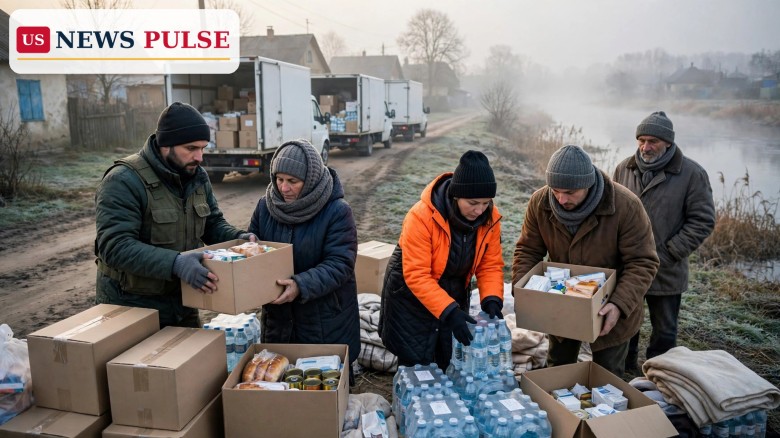
A Melania Trump ceasefire in Ukraine took effect early on Tuesday, opening a narrow but vital window for help to reach a town that war has cut off for years. The local pause in fighting began at 3 a.m. in southern Ukraine, ahead of a humanitarian mission into the Russian-occupied town of Oleshky later this week.
The ceasefire is local, not nationwide. It covers the Oleshky area, where the United Nations says up to 2,000 people remain stranded with dwindling food and medicine. For those residents, much may come down to whether this fragile pause holds through Saturday — and possibly longer.
According to her office, United States First Lady Melania Trump led talks with civilian negotiators from Russia and Ukraine after meeting United Nations officials who briefed her on conditions in the town. Russian and Ukrainian negotiators, as well as the two countries' militaries, confirmed in separate statements that the ceasefire had begun.
Key Points
- A local ceasefire brokered by Melania Trump began at 3 a.m. on Tuesday, October 27, 2026, in southern Ukraine.
- It is designed to allow an aid mission into Russian-occupied Oleshky later this week.
- Up to 2,000 people are stranded in Oleshky, facing shortages of food and medicine, according to the United Nations.
- Doctors, medicines, food and water are to go in first, before evacuation corridors are opened.
- The pause is due to last through Saturday, or longer, but fighting continued elsewhere — including fresh missile attacks on Kyiv.
What Happened
The local pause started at 3 a.m. Ukrainian time on Tuesday. Its immediate purpose is practical: to create enough safety for an aid operation to enter Oleshky, a town in the partially occupied Kherson region, about 550 kilometres (340 miles) south-east of Kyiv. The Dnipro River separates Russian and Ukrainian forces in the area, and that river line has shaped both the fighting and the difficulty of reaching civilians.
Negotiators involved in the mission said doctors, medicines, food supplies and water would be taken to Oleshky before evacuation corridors are opened. That sequence matters: where people cannot leave because of mines and drones, according to the United Nations, opening a road is not enough — supplies must arrive first, and the route must be trusted by both sides.
The ceasefire's limits were visible within minutes. At about the same time the pause began, multiple ballistic missile explosions shook Kyiv and air alerts sounded across parts of the country. Late on Monday, Russian ballistic missiles had damaged the grounds of a university in Kyiv, killing one person and leaving 10 injured, according to city officials. In Kharkiv, Ukraine's second-largest city, authorities said attacks late on Monday killed two people and injured four. The Oleshky pause, in other words, is a local exception — not a sign that the wider war has stopped.
Background and Context
Oleshky's recent history helps explain why a local ceasefire matters so much here. The town was captured by Moscow's forces on the first day of their full-scale invasion of Ukraine in 2022. Further calamity struck in June 2023, when floodwaters inundated the town after a dam collapse. Oleshky sits across the Dnipro River from the city of Kherson, the region's administrative capital. Russian forces seized Kherson in the early stages of the 2022 invasion but retreated across the river several months later, leaving the river as a front line.
That geography has left civilians in an especially hard position. A contested river line can be hard to supply, hard to leave and hard for outside monitors to reach — and, as the United Nations briefing indicates, mines and drones make movement dangerous even when no battle is under way.
The wider war has now lasted more than four and a half years. The Oleshky mission is planned ahead of a new round of United States-brokered talks between Russia and Ukraine expected next month, aimed at ending the fighting — and whether a small, local pause can build confidence for those talks is now an open question.
Melania Trump Ceasefire Ukraine: How the Oleshky Pause Was Arranged
The arrangement described by the First Lady's office followed a familiar humanitarian pattern, but with an unusual lead negotiator. Melania Trump met United Nations officials who briefed her on the situation in Oleshky, then led talks with civilian negotiators from Russia and Ukraine. The fact that both sides' negotiators and militaries confirmed the start of the pause in separate statements is itself significant: a humanitarian corridor only works if the people holding weapons on both sides accept the same terms.
Civilian negotiators, rather than generals, were at the centre of the talks described in the reporting. That may explain the mission's narrow scope: not a political settlement, but a defined humanitarian task — get doctors and supplies in, then open evacuation corridors. Narrow goals can be easier to agree on, and easier to verify, than broad ones.
Still, the reporting is careful about what is not yet known. It does not describe a signed, published agreement, a monitoring mechanism, or a guarantee beyond Saturday, and previous ceasefire attempts have been thwarted by deep mistrust between Russia and Ukraine. Those caveats will shape how aid agencies judge the risk of moving people and supplies.
Reactions and Quotes
Ukrainian President Volodymyr Zelenskyy responded to the overnight attacks on Kyiv shortly after the pause began, writing in an online post: "It is important that the world sees that Russia is showing nothing but a desire to kill and continue waging war." His message underlined the tension at the heart of Tuesday's news: a local humanitarian opening on one front, and deadly strikes on the capital on another.
The separate confirmations from Russian and Ukrainian negotiators and militaries that the ceasefire had begun were, in themselves, the most concrete reaction available on Tuesday morning. Neither side claimed the pause as a wider breakthrough; the emphasis remained on the humanitarian task in Oleshky.
For Oleshky residents, the reaction that matters most will not be a statement but a delivery: whether supplies actually arrive, and whether evacuation corridors open as negotiators said they would.
Why It Matters
Local ceasefires matter for two reasons. First, they can save lives directly, by letting food and medicine reach people who cannot otherwise get them. In Oleshky, where up to 2,000 people are described as stranded, even a short, well-kept pause could change the daily reality for families facing shortages.
Second, they test whether the two sides can still keep a limited agreement. If the Oleshky pause holds and aid arrives, negotiators will have a small example to point to before next month's talks; if it collapses, it will reinforce the scepticism that has thwarted previous attempts.
The timing also matters. A humanitarian success — or failure — just before a new round of talks can shape expectations, showing whether civilian-led negotiation can deliver results or whether local pauses remain isolated exceptions.
What Happens Next
The next step is the aid mission itself, planned for later this week. Doctors, medicines, food and water are to go into Oleshky first, with evacuation corridors to follow, and aid workers will watch whether both sides respect the pause along the route.
By Saturday, the first decision point arrives: whether the pause is extended. An extension would suggest the arrangement is holding; an early breakdown would put the evacuation plan at risk and deepen mistrust ahead of next month's talks.
Beyond Oleshky, the wider war continues. The fresh attacks on Kyiv and Kharkiv are a reminder that a local ceasefire does not protect other cities. The question for the coming week is narrow but urgent: can this one pause, in this one town, hold long enough to help the people it was made for?
Frequently Asked Questions
What is the Oleshky ceasefire? It is a local, temporary pause in fighting in southern Ukraine, brokered by Melania Trump, to allow a humanitarian mission into Russian-occupied Oleshky.
When did it start, and how long will it last? It began at 3 a.m. on Tuesday, October 27, 2026, and is due to last through Saturday, or longer, according to the reporting.
Who will benefit? Up to 2,000 people stranded in Oleshky, facing dwindling food and medicine and unable to leave because of mines and drone attacks, according to the United Nations.
What aid is planned? Doctors, medicines, food supplies and water are to be taken into Oleshky first, before evacuation corridors are opened.
Does this ceasefire end the war in Ukraine? No — it is a local humanitarian pause only. Missile attacks continued in Kyiv and Kharkiv around the same time, and the wider war has lasted over four and a half years.
Related coverage on US News Pulse: US-Iran strike plans: forces ready within 96 hours of a Trump order, reports say, Israel election 2026: Netanyahu fights for survival as Israel votes, and Jordan-Syria airstrikes kill 7 after church attack as border crossing shuts. Sources for this article: Associated Press via NPR, Mathrubhumi English and The New Indian Express, October 27, 2026.
© 2026 US News Pulse. All rights reserved.
 Print
 Save