
Israel Election 2026: Netanyahu Fights for Survival as Israel Votes Today
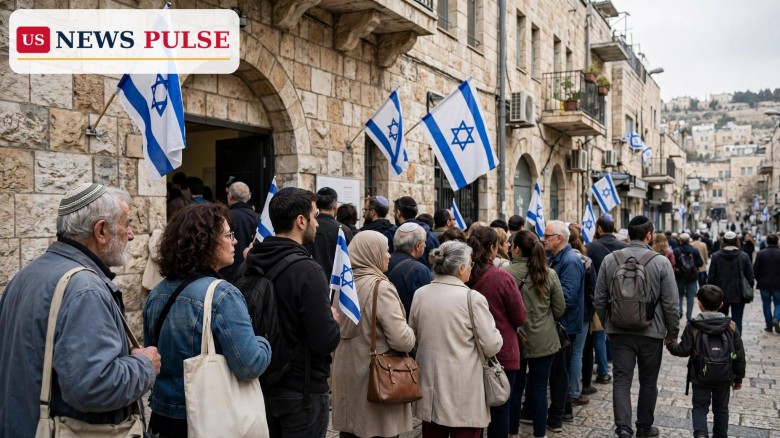
Israel Election 2026 is under way: Israelis are voting on Tuesday, October 27, in the first general election since Hamas's October 7, 2023, attack — a vote that could end Benjamin Netanyahu's long tenure or hand him another chance to govern. Polls close at 10 p.m. local time, when exit polls will offer the first indication of whether either camp has a path to power. Final polls pointed to deadlock: neither Netanyahu's coalition nor the opposition was projected to win the 61 seats needed for a majority in the 120-member Knesset.
Key Points
- Israelis are voting on Tuesday, October 27, 2026, in the first general election since the October 7, 2023, Hamas attack.
- Final television polls put Netanyahu's bloc at about 50 seats, 11 short of the 61 needed to govern, with the opposition bloc at 52 to 56 seats.
- Gadi Eisenkot's Yashar party led Netanyahu's Likud in the final polls, but the largest party does not automatically form a government.
- US President Donald Trump renewed his endorsement of Netanyahu, urging voters to "finish the job" against Iran.
- Polls close at 10 p.m. local time, with a final tally expected by October 30 and official results on November 4.
What Happened
Israel went to the polls on Tuesday for an election widely framed as a referendum on Netanyahu, the country's longest-serving prime minister, after three years of war and domestic turmoil. The vote elects the 26th Knesset under proportional representation: voters choose party lists, a party needs 3.25 per cent of the vote to enter parliament, and the leader who can command 61 of its 120 members becomes prime minister.
Final polls offered no clear winner. Surveys by Israel's three major television networks on Friday each put Netanyahu's bloc on 50 seats, the opposition at 52, 56 and 54 seats, and Arab-led parties separately at 14 to 16. In every survey, Eisenkot's Yashar ran ahead of Likud, at around 22 to 23 seats against 19 to 21 for Likud, down from 32 in the outgoing parliament.
The closeness of the race means smaller parties could decide who governs. The president gives the most promising candidate 42 days to build a coalition; if that fails, another candidate gets a chance, and a new election remains possible.
Background: Three Years After October 7
The election is the first since Hamas's October 7, 2023, attack, which triggered a three-year war in Gaza that reshaped Israeli politics and public life. Supporters frame the campaign around security gains and standing firm against Iran; critics frame it around accountability for the failures before October 7 and the conduct of the war since.
Domestic questions have run alongside security. Exemptions for ultra-Orthodox men from military service have divided voters during a long war, the cost of living has been a central issue, and Gaza's future remains unresolved. Netanyahu is also on trial for corruption, and an International Criminal Court arrest warrant against him has added to international scrutiny.
The opposition is led by former military chief Gadi Eisenkot and his Yashar party, alongside the Together alliance led by former prime ministers Naftali Bennett and Yair Lapid. Their challenge has been to turn a polling lead into a governing coalition, despite spanning parties that agree mainly on replacing Netanyahu.
Israel Election 2026: Trump's Endorsement and the Iran Question
No outside voice has loomed larger over the final days of the campaign than Donald Trump. The US president first endorsed Netanyahu on October 18, then renewed that endorsement on Sunday evening, days before the vote. In a post on Truth Social, Trump praised Netanyahu as an "outstanding Warrior Prime Minister" and wrote: "Vote for Bibi Netanyahu for Prime Minister, we have to finish the job that we started!"
Trump linked the endorsement directly to Iran. In the original October 18 message, republished on Sunday, he wrote: "As everyone is aware, including the enemy, Bibi and I have had a great relationship in winning together." He pointed to Operation Midnight Hammer, the US strikes on Iranian nuclear facilities in June 2025, and the wider 2026 campaign against Iran, and warned that if Israel chose the wrong leader, the United States would have to confront Iran alone.
Netanyahu's camp embraced the message. His foreign policy adviser, Ophir Falk, said ahead of the vote that the decisive question for Israelis was who would best work with Trump in the final two years of his presidency, asking: "Who will best cooperate and coordinate with the President to finish the job in Iran and expand peace in the region?" Falk added: "Removing the genocidal Ayatollah regime in Iran is in the best interests of America, Israel, and civilization."
Netanyahu suggested on the eve of the vote that Trump was ready to take further action against Iran — but only if he remained in power. The White House has said the United States will not attack Iran before the November midterms.
Reactions and Quotes
According to Axios, Netanyahu spoke with Trump twice in three days and requested additional endorsements, with one US source calling the lobbying a "sign of desperation." Likud denied that he had requested Trump's support.
Polling suggests the endorsement may have done Netanyahu limited good. A Channel 12 poll taken the day after Trump's October 18 announcement found that 64 per cent of respondents said it would not influence their decision, 17 per cent said it made them less likely to back Netanyahu, and about 12 per cent said it would reinforce their decision to vote for Likud. In the same poll, Eisenkot widened his lead over Netanyahu as the preferred prime minister, with 45 per cent against 33 per cent.
Opposition leaders have framed the election as a choice about Israel's future rather than about its alliance with Washington, arguing that a country that has endured three years of war needs new leadership. Netanyahu's supporters counter that only he can manage the security threats facing Israel and maintain the partnership with Trump.
Why It Matters
The result will shape Israel's approach to Iran as the United States weighs further military action, as well as Gaza's future and Israel's relationship with Washington. A Netanyahu government would press for a harder line on Iran; a new government could seek a different balance, though any leader would face the same security pressures.
For the United States, the timing is delicate. The Israeli vote comes one week before America's own midterm elections on November 3. Washington has signalled that it does not want a new military confrontation with Iran before those midterms, but recent reporting about US forces being ready to act has kept the question at the centre of both campaigns.
What Happens Next
When polls close at 10 p.m. local time, exit polls will give the first snapshot of the seat distribution, though party leaders are likely to wait for the real count. A final tally is expected by October 30, with official results due on November 4.
After that, the focus shifts to coalition negotiations. The president will consult the parties and hand a mandate to the candidate best placed to form a government, who will then have 42 days to assemble a coalition of at least 61 seats. Smaller parties could hold the balance of power, and their demands may prove decisive. If no candidate can build a majority, Israel could face yet another election.
For now, the decision belongs to the voters: after nineteen years of Netanyahu and three years of war, does Israel want continuity — or change?
Frequently Asked Questions
When is the Israel election 2026?
Israelis voted on Tuesday, October 27, 2026. Polls were open from 7 a.m. to 10 p.m. local time, with exit polls published at closing time.
Who is leading in the Israel election polls?
Final polls put Gadi Eisenkot's Yashar party ahead of Benjamin Netanyahu's Likud, but neither Netanyahu's bloc (about 50 seats) nor the opposition bloc (52 to 56 seats) was projected to reach the 61 seats needed for a majority.
What did Trump say about Netanyahu?
Donald Trump endorsed Netanyahu on October 18 and renewed the endorsement on October 25, calling him an "outstanding Warrior Prime Minister" and urging Israelis to "finish the job" against Iran.
When will the Israel election results be known?
Exit polls come out when voting ends at 10 p.m. local time. A final tally is expected by October 30, with official results on November 4, followed by coalition negotiations.
What happens if no party wins a majority?
Israel's president gives the most promising candidate 42 days to build a coalition of at least 61 seats in the 120-member Knesset. If no government can be formed, another candidate gets a chance — and a new election remains possible.
Related coverage: US Iran strike plans: forces ready within 96 hours of Trump order, reports say and Trump fires back at Obama over White House renovation jibe. More top stories are available on the US News Pulse homepage.
© 2026 US News Pulse. All rights reserved.
 Print
 Save