
Cornell Sexual Assault Investigations Move to New York State Police After Campus Case
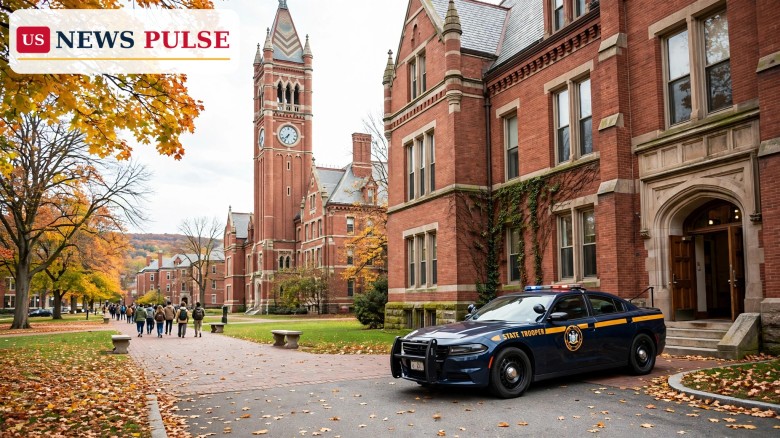
New York State Police will take over the criminal investigation of sexual offence complaints at Cornell University under an agreement announced on Thursday by Governor Kathy Hochul. The deal moves authority away from the university's own police department after months of criticism over its handling of a former student's allegation that she was drugged and sexually assaulted at a fraternity house in October 2024. Complaints that would normally fall to campus police will instead go to state police, unless the person reporting asks otherwise. The move brings no criminal charges by itself in the case at the centre of the controversy, but it changes who investigates the next complaint as Cornell's faculty vote on no confidence in the administration.
Key Points
- New York State Police will handle future sexual offence complaints at Cornell for criminal investigation, under an agreement announced by Governor Kathy Hochul on Thursday, October 29, 2026.
- Complaints go to state police unless the accuser requests otherwise, giving people who report an assault a route outside the university's own police department.
- The change follows Hochul naming Attorney General Letitia James as special prosecutor to reopen the Jane Doe criminal case, and a separate independent review led by former US Deputy Attorney General Sally Yates.
- Jane Doe alleges she was drugged and sexually assaulted by Chi Phi fraternity members in October 2024; no criminal charges have been filed, though Cornell expelled some students involved.
- Cornell's Faculty Senate is voting on a non-binding no-confidence resolution, with about 135 members able to vote from Friday until November 6.
What Happened
Hochul announced the agreement on Thursday, saying New York State Police and Cornell University had signed a deal shifting the criminal investigation of sexual offence complaints from campus police to the state agency. Such complaints at Cornell would ordinarily be handled by the Cornell University Police Department, a department of the university itself. Under the new arrangement, the university will refer them to state police, with an exception where the complainant asks otherwise.
"When someone reports sexual assault, they deserve to be heard, treated with compassion, and know their allegations will be taken seriously and thoroughly investigated," Hochul said. Calling the Jane Doe allegations "horrifying," she added: "Survivors should be able to trust the institutions responsible for protecting them. We cannot afford to let them down." Cornell President Michael Kotlikoff said the arrangement would remain in place throughout the independent review of the university's handling of Jane Doe's allegation, leaving its longer-term future open once that review ends.
Background and Context
The controversy centres on a civil lawsuit filed this year by a woman identified only as Jane Doe, who alleges she was drugged and sexually assaulted over several hours at the Chi Phi fraternity house in Ithaca, New York, in October 2024, while too intoxicated to consent. She arrived at the house at about 11 p.m. on October 19, 2024, and reported the alleged assault to Cornell police on November 8, 2024, a day after seeking a medical examination at an Ithaca emergency room. The suit names seven former students, plus Cornell University, Chi Phi organisations and her former sorority. Attorneys for the fraternity members deny the allegations; some say the sexual activity was consensual, while others dispute their clients' participation. The allegations have not been proven in court.
No criminal charges were filed, and why is the sharpest point of dispute. Tompkins County District Attorney Matthew Van Houten says his office reviewed a six-page sworn statement from Jane Doe's interviews with Cornell police on November 14 and 15, 2024, and decided within days that the conduct described did not support criminal charges. In September he said the statement described her participation in drug use and sexual activity as voluntary and consensual. Her attorney, Thomas Giuffra, argues authorities judged the case on that early statement without a thorough investigation, and told The Associated Press his client was led to believe campus police were still gathering evidence after prosecutors had decided against a case. Reporting by The New York Times, CNN and the Associated Press describes a Cornell police note saying an investigator contacted prosecutors on November 25, 2024, about further interviews and messages, and was told they had already decided against charges.
Campus crime records reviewed by NBC News, CBS News and the Cornell Daily Sun show Cornell police responded to the Chi Phi house at about 1:05 a.m. on October 19, 2024, hours before Jane Doe says she arrived, and made a drug-related arrest. A Title IX hearing decision also documented a ketamine overdose at the house on or about October 18. The crime log does not name the person arrested or the drugs involved, and it establishes no connection between that arrest and what Jane Doe alleges happened hours later. A formal Title IX investigation opened on January 14, 2025, with more than 50 interviews of 32 witnesses over 12 days of hearings; two men were expelled and others received suspensions, workshops or written assignments. The gap between campus sanctions and no criminal charges fuelled protests, including a seven-hour sit-in on October 7, 2026.
Cornell Sexual Assault Investigations: What Changes Now
The practical change is about independence. Cornell's campus police are university employees investigating complaints about a university community, and critics argue that creates at least the appearance of a conflict when the institution's reputation is at stake. State police have no institutional tie to Cornell, and will now gather evidence and present cases to prosecutors. The agreement preserves the complainant's choice and applies to future complaints, not the past: Jane Doe's criminal case is already with the special prosecutor. It does not replace Cornell's Title IX process, which handles university discipline separately from criminal justice.
Reactions and Quotes
Hochul has presented the state police agreement as the latest in a series of interventions, after naming James as special prosecutor to reopen the Jane Doe criminal investigation. James says there is now an active criminal investigation, and reports say a grand jury review is expected. The trustees' committee appointed Yates to review the university's response to sexual assault claims, a review still under way. The Faculty Senate's resolution reads: "The Faculty Senate has no confidence in the ability of the central administration to effectively address the ongoing crisis of sexual assault at Cornell University."
Giuffra has kept the focus on the original investigation, arguing the case was judged on Jane Doe's early statement, in which she described consenting to parts of the night, rather than on a full investigation. Van Houten stands by his office's reading of that statement. The accused men's lawyers continue to deny sexual assault.
Why It Matters
The agreement tests a structural answer to a familiar problem: who should investigate a sexual assault complaint when the alleged assailants, the complainant and the investigators all belong to the same institution? Supporters of campus policing say local officers know the campus and respond fastest. Critics say that closeness becomes a liability when the university itself faces scrutiny, and survivors may hesitate to report to officers employed by the school they accuse of failing them. A governor ordering state police into that role is rare and high-profile, and other universities will watch whether it becomes a model or stays a one-off.
What Happens Next
Several processes now run in parallel. The Yates review continues, and the state police agreement stays in place at least until it concludes. The special prosecutor's criminal investigation is active, with a grand jury review expected according to reports, though no timeline for a charging decision has been announced. The Faculty Senate vote runs until November 6; non-binding, it will still publicly measure faculty feeling.
Frequently Asked Questions
What exactly changes at Cornell?
Future sexual offence complaints normally investigated by Cornell's own police will go to New York State Police for criminal investigation, unless the person reporting asks otherwise. Cornell's separate Title IX process continues.
Does this affect Jane Doe's own case?
Not directly. The agreement covers future complaints. Jane Doe's criminal complaint is handled separately by Attorney General Letitia James, named special prosecutor by Governor Hochul.
Why were no criminal charges filed originally?
District Attorney Matthew Van Houten says his office decided within days, on Jane Doe's six-page sworn statement from November 2024, that the conduct described did not support charges. Her attorney disputes that the investigation was thorough.
What did Cornell's own process decide?
Its Title IX investigation, opened in January 2025 with more than 50 interviews, led to two expulsions, plus suspensions, workshops or written assignments for others. The Chi Phi chapter was suspended in November 2024 and barred from campus.
How long will the state police arrangement last?
President Michael Kotlikoff says it will remain throughout the independent review of the university's handling of Jane Doe's allegation. What happens after that review ends has not been announced.
Related coverage: ICE officer indicted in Houston after vehicle struck man, prosecutors say, Trump administration plans to deport 150 Afghans back to Taliban rule, and Riverside County refuses DOJ demand to hold 1,355 ballots.
© 2026 US News Pulse. All rights reserved.
 Print
 Save