
Whole Foods Ashwagandha Recall: Salmonella Risk Hits 365 Capsules Nationwide
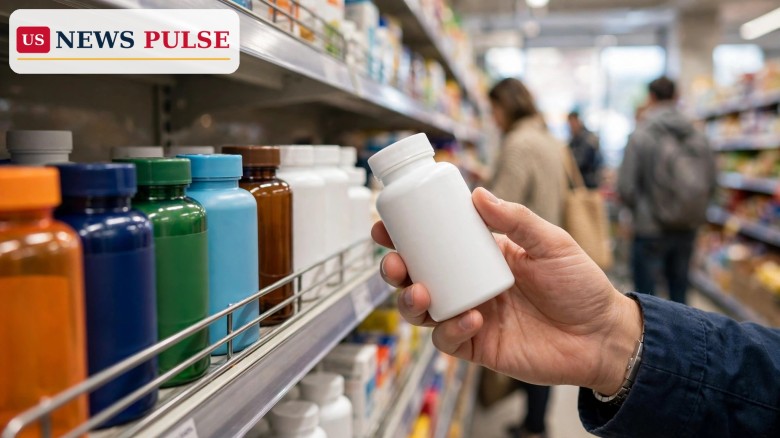
Vitality Works Inc. has recalled one lot of 365 Whole Foods Market ashwagandha capsules sold across the United States after routine sampling raised the possibility of Salmonella contamination, in a Whole Foods ashwagandha recall announced on October 30, 2026. The company says no illnesses have been reported to date, but customers who hold the affected lot should not take the capsules, should throw them away, and should not return them to a store.
The recall covers a single lot of 365 Whole Foods Market Standardized + Full Spectrum Blend Ashwagandha Capsules, 120 count, sold both in Whole Foods Market stores and online through Amazon.com. It is a narrow recall by lot number, not a recall of every ashwagandha product on the shelf — which makes checking the number printed on the bottom of the bottle the single most important step for shoppers.
Key Points
- Vitality Works Inc. of Albuquerque, New Mexico, recalled lot 2025-26227 of 365 Whole Foods Market Standardized + Full Spectrum Blend Ashwagandha Capsules, 120 count.
- The reason is potential Salmonella contamination, identified through routine sampling of a single retail unit, according to the company announcement published by the FDA on October 30, 2026.
- The lot was sold from November 24, 2025, through October 20, 2026, in Whole Foods Market stores in 32 states plus Washington, D.C., and online through Amazon.com.
- The bottle is white plastic, labelled 365 Whole Foods Market Standardized + Full Spectrum Blend Ashwagandha 120 count, with UPC 9948252099 and expiration date 10/13/2028, both printed on the bottom.
- No illnesses have been reported to date. Customers should discard the recalled product and not return it to the store; refunds are available at any Whole Foods Market store.
What Happened
On October 30, 2026, the U.S. Food and Drug Administration published a company announcement from Vitality Works Inc. recalling one lot of its 365 Whole Foods Market ashwagandha capsules. The announcement says the product has the potential to be contaminated with Salmonella, an organism that can cause serious and sometimes fatal infections in young children, frail or elderly people, and others with weakened immune systems.
For healthy people, the company lists the familiar symptoms of Salmonella infection: fever, diarrhea — which may be bloody — nausea, vomiting, and abdominal pain. In rare circumstances, it says, the organisms can enter the bloodstream and produce more severe illnesses, including arterial infections such as infected aneurysms, endocarditis, and arthritis. That warning is why the advice is unambiguous even though no illnesses have been reported: do not consume the recalled capsules.
The potential contamination was identified through routine sampling of a single retail unit. The announcement does not say how many bottles are in the lot, does not name a supplier or ingredient source, and does not describe a wider problem. Shoppers should therefore treat this as a lot-specific recall and check their own bottle rather than assuming that every supplement in the same range is affected — or, just as importantly, assuming that a bottle without the matching lot number is somehow covered by the same warning.
Background: How to Check Your Bottle
The recalled product is easy to confuse with other ashwagandha capsules, including a 60-count version of the same 365 brand that is not named in this announcement. The recall applies only when all of the identifiers line up. Start with the brand and product name: 365 Whole Foods Market Standardized + Full Spectrum Blend Ashwagandha Capsules, 120 count. Then turn the white plastic bottle over and look at the bottom, where both the lot number and the expiration date are printed.
The lot to look for is 2025-26227, and the expiration date on the recalled lot is 10/13/2028. The UPC is 9948252099. If your bottle shows a different lot number, it is not part of this recall as announced. If it shows lot 2025-26227, stop taking it. The company is explicit on the next step: discard the recalled product and do not return it to the store. That instruction matters because returning a potentially contaminated supplement to a shop counter would only move the risk somewhere else; instead, refunds are available at any Whole Foods Market store, and customers with questions can contact Vitality Works Inc. at (505) 268-9950, Monday to Friday, 8:00 a.m. to 5:00 p.m. Mountain Time.
The sales window is long — November 24, 2025, through October 20, 2026 — which means a bottle bought almost a year ago and kept in a bathroom cabinet or kitchen cupboard could still be the recalled lot. Supplements are often bought in bulk, used intermittently, and forgotten between courses, so this is one of those recalls where checking the cupboard matters more than remembering the shopping trip. The long window also explains why the geographic footprint is so wide: the lot reached Whole Foods Market stores in Arkansas, Arizona, California, Colorado, Connecticut, Florida, Georgia, Hawaii, Iowa, Illinois, Kansas, Maine, Maryland, Massachusetts, Michigan, Minnesota, Missouri, North Carolina, New Jersey, New York, Ohio, Oklahoma, Oregon, Pennsylvania, Tennessee, Texas, Utah, Virginia, Washington, and Wyoming, plus Washington, D.C., and was also sold online through Amazon.com.
Whole Foods Ashwagandha Recall: Why Salmonella in a Supplement Matters
Salmonella is most often associated with food — eggs, poultry, fresh produce — but dried botanical ingredients and finished supplements can carry the same risk when contamination occurs during growing, drying, handling, or manufacturing. Ashwagandha itself is a root traditionally used in Ayurvedic practice and now sold widely in the United States as a stress and sleep aid, and its popularity means a single lot can travel a long way through national retail and online channels before a sampling result catches up with it.
Dietary supplements in the United States are not approved by the FDA before they reach the market in the way prescription drugs are. Manufacturers are responsible for ensuring their products are safe and accurately labelled, and the FDA acts when a problem is reported or found through sampling and inspection. That system puts extra weight on exactly this kind of action: a company announcement, a published FDA notice, and a lot number that lets shoppers separate the affected bottles from the rest. Routine sampling — the method credited here — is one of the quieter safeguards in that system, and in this case it caught a potential problem before any illness was linked to the product.
For vulnerable shoppers, the stakes are higher than a stomach bug. Young children, older adults, pregnant people, and anyone with a weakened immune system face a greater risk of severe illness from Salmonella, including bloodstream infection. That is why public-health advice around a supplement recall is the same as around a food recall: when in doubt about the lot, do not take it, and do not pass it on to someone else. A bottle that looks, smells, and tastes normal can still be contaminated, because Salmonella does not change a capsule's appearance.
Reactions and What Shoppers Should Do
There has been no separate statement from Whole Foods Market in the company announcement itself, which is issued in Vitality Works' name as the recalling firm. The practical guidance for shoppers comes from that announcement, and it is short: do not consume the recalled product, discard it, and claim a refund at any Whole Foods Market store. Customers who bought the capsules through Amazon.com and hold the recalled lot should follow the same discard instruction rather than returning the bottle through the mail, and can use the Vitality Works contact number for questions.
Anyone who has taken capsules from lot 2025-26227 and develops fever, diarrhea, nausea, vomiting, or abdominal pain should contact a healthcare provider and mention the recall, so the clinician can consider Salmonella testing and, if needed, report the case. Keeping the bottle — or at least a photograph of the lot number and expiration date on its base — can help if a refund is claimed later or if a doctor asks which product was taken. If no symptoms appear, there is nothing further to do beyond discarding the bottle and checking any other bottles of the same product in the household.
Households should also check the usual hiding places for supplements: travel bags, office drawers, gym bags, and relatives' medicine cabinets, especially if a bottle was bought as a gift or shared between family members. Because the lot was sold online as well as in stores, a bottle does not need to have come from a Whole Foods shop to be affected; the Amazon.com sales channel is explicitly included in the announcement.
Why It Matters
This recall is small in scope — one lot, one product, no illnesses reported — but it illustrates how supplement safety actually works in practice. A single retail sample, tested as part of routine monitoring, triggered a nationwide notice covering more than 30 states and the District of Columbia. Without the lot number, that notice would be useless; with it, a shopper can settle the question in seconds by turning a bottle over.
It also lands in a week crowded with consumer-safety alerts, which makes careful reading more important, not less. The same October 30 recall roundup that carried the ashwagandha notice also included a children's sensory swing recall over a detachable ceiling hook and a smoked-fish recall over botulism risk — different products, different hazards, different lot numbers. Conflating them helps no one. The ashwagandha recall stands on its own facts: one lot, one organism, one clear instruction.
For the wider supplement market, the episode is a reminder that “natural” does not mean sterile. Botanical powders are agricultural products before they are capsules, and the supply chain that turns a root into a finished supplement has the same contamination points as any food chain. Testing, lot traceability, and prompt public notice are the controls that keep a single-lot problem from becoming a wider outbreak — and this recall shows all three working, with no illnesses reported at the time of the announcement.
What Happens Next
The immediate next step belongs to shoppers: check the bottle, discard lot 2025-26227, and claim a refund at Whole Foods Market if applicable. Retailers will remove any remaining stock of the lot from shelves, and the company and the FDA will monitor for any illness reports linked to it. If illnesses emerge, the notice may be expanded or updated; if none do, the recall will stand as a precautionary, sampling-driven action.
Shoppers who take ashwagandha regularly may want to ask their pharmacist or clinician about alternatives or about whether to pause supplementation while they check their supply — particularly if they take other medicines, are pregnant, or have a thyroid condition, areas where ashwagandha use is commonly discussed with healthcare professionals. That conversation is separate from the recall itself, but a recall is a natural prompt to review what is in the cabinet and why.
US News Pulse will update this article if Vitality Works or the FDA expands the recall, reports illnesses, or publishes further lot details.
Frequently Asked Questions
Which ashwagandha product is recalled? One lot — 2025-26227 — of 365 Whole Foods Market Standardized + Full Spectrum Blend Ashwagandha Capsules, 120 count, in a white plastic bottle with UPC 9948252099 and expiration date 10/13/2028.
Why is it recalled? Because of potential Salmonella contamination, identified through routine sampling of a single retail unit. No illnesses have been reported to date.
Where was it sold? In Whole Foods Market stores in 32 states plus Washington, D.C., and online through Amazon.com, from November 24, 2025, through October 20, 2026.
What should I do if I have it? Do not consume it. Discard it — do not return it to the store — and claim a refund at any Whole Foods Market store. Questions: Vitality Works Inc., (505) 268-9950, Monday–Friday, 8 a.m.–5 p.m. Mountain Time.
What are the symptoms of Salmonella? Fever, diarrhea (which may be bloody), nausea, vomiting, and abdominal pain. In rare cases the infection can enter the bloodstream and cause more severe illness. Seek medical advice if symptoms develop after taking the recalled lot.
Related coverage: Darwin's cat food Salmonella alert: FDA warns two lots after cat hospitalised, Virginia oysters Salmonella outbreak: 27 sick in 12 states after recall, and Smoked fish recall: 560 pounds of Haifa sprats pulled over botulism risk.
© 2026 US News Pulse. All rights reserved.
 Print
 Save