
Trump Legal Challenges Escalate Against States as Election Day Nears
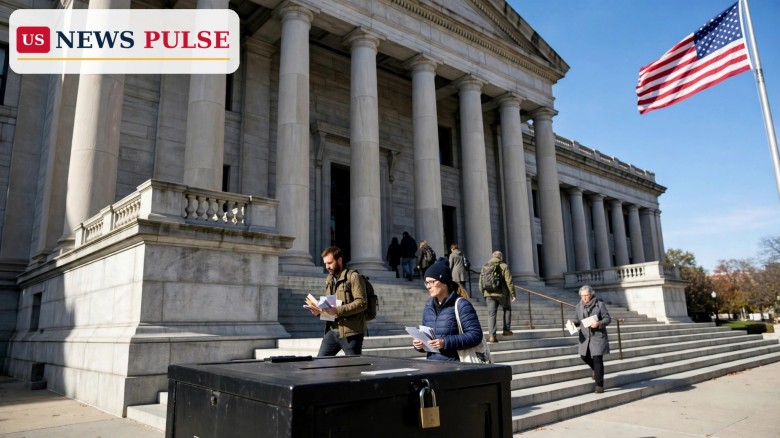
Trump legal challenges against US states are escalating sharply in the final days before the midterm elections, with the Justice Department pressing a revised lawsuit in Alaska and a criminal inquiry in California while more than 44 million Americans have already cast ballots. The moves amount to an extraordinary federal intervention in elections that the Constitution leaves largely to states and local officials to run, and election administrators across the country say they are bracing for still more legal action from Washington before Tuesday.
Key Points
- The Justice Department filed an amended lawsuit in Alaska on Thursday seeking to block certification of the Senate result if the Republican incumbent loses narrowly.
- In California, the Los Angeles County elections office received grand jury subpoenas last week as part of a federal probe into alleged voting by non-citizens.
- More than 44 million Americans had already voted by Thursday evening, less than two million short of the entire 2022 midterm total.
- President Donald Trump has cancelled weekend rallies in Kansas and Iowa and will instead hold about 20 virtual campaign appearances before Tuesday.
- Trump campaigns in Florida on Friday, while former Vice President Kamala Harris rallies for Democrats in Atlanta the same day.
What Happened
In Alaska, the Justice Department's amended lawsuit asks a court to prevent certification of the results in the state's Senate race in the event of a narrow Republican defeat. The filing rests on a New York Times report published on Wednesday that said operatives linked to Democratic candidate Mary Peltola's campaign helped recruit a candidate with the same name as the Republican incumbent, Senator Dan Sullivan, in what the department describes as an effort to siphon votes away from him.
The department's revised filing says operatives working for Peltola orchestrated what it calls a sham campaign designed to mislead voters in Alaska. Peltola's campaign did not immediately respond to the amended complaint, but has previously said it had no involvement with either Sullivan campaign. The Democratic Senatorial Campaign Committee has denied involvement and accused Republicans of backing spoiler candidates of their own in other races. Daniel J. Sullivan, the second Sullivan on the ballot, has previously denied that his aim was to cause confusion or divert votes from Dan S. Sullivan.
Separately, in California, the Los Angeles County Registrar-Recorder's office received grand jury subpoenas last week connected to a Justice Department investigation into alleged non-citizen voting, according to copies of the documents seen by Reuters on Thursday. The subpoenas are part of a wider pressure campaign against state election officials that has intensified as Election Day approaches.
Alaska's election officials pushed back in a court filing on Thursday night, calling the amended lawsuit meritless and arguing that it had cast a cloud over the state's election that runs contrary to the public interest. Republican Governor Mike Dunleavy has ordered a state investigation and said in an interview that any finding of illegality could affect whether someone is seated in the US Senate.
Background/Context
Alaska is home to one of about ten highly competitive Senate races that will decide whether Republicans keep control of the chamber. Democrats need a net gain of four seats to win back the majority, and the Alaska dispute could leave control of the Senate unclear for weeks if the result is close and certification becomes the subject of litigation. The Senate contest has drawn national attention because early voting was already under way when the spoiler-candidate report emerged, with nearly one in ten registered Alaska voters having cast ballots by the time the story broke.
The federal government's role in elections is limited by design. The Constitution assigns the administration of elections principally to the states, with local officials running polling places, counting ballots and certifying results. That is why the Justice Department's twin moves in Alaska and California have drawn such attention: one seeks a court order that could halt certification, while the other uses grand jury subpoenas to demand records from a county elections office in the middle of voting.
The California inquiry fits a broader pattern. The Trump administration has issued scores of subpoenas seeking voter records in multiple states and has sued states that refused to hand over voter rolls, according to reporting summarised this week. Courts have so far ruled against the department in the voter-roll cases, and studies cited in that reporting describe proven non-citizen voting as exceedingly rare. A Justice Department spokesperson declined to comment on the California subpoenas but said California and the federal government agree that non-citizen voting is properly addressed through criminal law.
The stakes on Tuesday go well beyond two states. All 435 House seats are on the ballot, along with about a third of the Senate. Republicans currently hold 53 of the Senate's 100 seats and 218 House seats. If Democrats capture one or both chambers, they could open investigations into the Trump administration and increase pressure on the president over the war in Iran. Trump has also said he fears Democrats would try to impeach him for a third time if they win majorities in both houses.
Trump Legal Challenges: A New Front in the Final Days
The legal escalation is unfolding alongside a sudden change in the president's own campaign schedule. Trump will campaign in Florida on Friday, hoping to energise supporters in a state he won comfortably in 2024 but where early voting has tilted toward Democrats. It follows campaign stops earlier this week in Mississippi and South Carolina, states Republicans usually expect to win.
But the president has cancelled planned weekend rallies in Kansas and Iowa. Instead, the Republican National Committee says he will take part in about 20 virtual campaign appearances before Tuesday, in what party chairman Joe Gruters calls a 72-hour sprint. The tele-rallies will be broadcast to nearly 20 states, including battlegrounds such as Michigan, Alaska, Texas and Iowa, where competitive Senate races are unfolding.
Kansas illustrates why even safe Republican territory is suddenly in play. The state has not elected a Democrat to the Senate since 1932, yet Republican Senator Roger Marshall faces a tight race against Democrat Adam Hamilton, a megachurch pastor. A CNN poll released on Thursday put Hamilton ahead by four points, at 49 percent to Marshall's 45 percent. Trump, asked about skipping Kansas after a rally in South Carolina on Thursday, replied that he did not feel he had to go to the state.
His Friday rally in Daytona Beach, Florida, will go ahead as planned. Daytona Beach sits some 320 kilometres up the coast from his Mar-a-Lago resort, and the event is intended to rally the base in a state where Democrats have made early-voting gains. Former Vice President Kamala Harris, whom Trump defeated in 2024, will rally for Democrats in Atlanta on Friday, after telling a crowd in Macon, Georgia, on Thursday that the campaign had now reached a phase where supporters could make a real difference.
Reactions/Quotes
Los Angeles County Registrar-Recorder Dean Logan issued a sharp statement on Thursday, saying the Justice Department had taken a confrontational and adversarial approach at every step, and insisting that election officials are acting in accordance with state and federal law. His office is at the centre of the California subpoena dispute, and his remarks underline how strained relations between federal prosecutors and local administrators have become.
In Alaska, the reaction has been split along familiar lines. Governor Dunleavy has demanded a state investigation, while state election officials have told the court the federal case lacks merit. Alaska-based elections attorney Scott Kendall offered a cooler assessment, saying the second Sullivan's presence on the ballot was likely to hurt Peltola more than help her, but adding that with so few undecided voters left, the revelations were unlikely to change the outcome.
Voters themselves are watching the legal fight with a mixture of frustration and determination. Julie Wyatt, a 62-year-old logistics manager in Juneau, said such manoeuvres were nothing new in Alaskan politics and that she still planned to vote for Peltola, writing that if Republicans were that desperate, Peltola must have them on the ropes. In Columbus, Ohio, where Senate and governor's races are both highly competitive, election official Antone White said turnout was about twice as high as in 2022. Sadirah Simmons, a senior citizen on a fixed income waiting to vote there, said the economy was not getting any better and that people had to go out and vote if they wanted change.
On the campaign trail, Trump struck an upbeat note despite the schedule changes, telling reporters after his South Carolina rally that Republicans were going to have a strong Tuesday night. Gruters argued that the virtual appearances would be more efficient than in-person rallies, saying voters across the country want to hear from the president before Election Day and that the sprint would be a huge boost in the closing days.
Why It Matters
The combination of litigation and campaign retrenchment matters because it could shape both the result and the aftermath of the midterms. A court fight over certification in Alaska could delay clarity about Senate control for weeks, during which both parties would be mobilising lawyers as well as voters. A criminal probe that reaches into a county elections office during voting risks chilling local officials and confusing voters, even if no charges follow.
The early-vote numbers show why both sides are fighting so hard over process. With more than 44 million ballots already cast, the electorate is voting at a pace close to the last midterm cycle, and in places such as Columbus turnout is running well ahead of 2022. That means legal challenges filed now land on an election that is already substantially decided in the ballot box, raising the stakes of any attempt to contest the count after the fact.
There is also a wider institutional question. If federal lawsuits and subpoenas become a routine feature of the final days of a campaign, the balance between Washington and the states in running elections could shift, and local officials may face legal pressure simply for doing their jobs. Supporters of the Justice Department's actions argue that protecting the integrity of the vote justifies aggressive enforcement; critics say the timing and the targets suggest politics, not law enforcement, is driving the effort.
What Happens Next
The immediate test comes on Friday, when Trump rallies in Daytona Beach and Harris rallies in Atlanta, and the tele-rally programme begins rolling out across nearly 20 states. Early voting continues through the weekend in most states, and both parties will be watching daily turnout figures for signs of which side's voters are turning out in greater numbers.
In Alaska, the court will have to decide whether the amended lawsuit has enough merit to proceed, and whether any order affecting certification is warranted if the Senate race is close. In California, Los Angeles County officials will have to decide how to respond to the grand jury subpoenas while continuing to run an election in the country's most populous county.
On Tuesday, November 3, voters will decide all 435 House seats and about a third of the Senate. If the Alaska race is decided by a narrow margin, expect the certification fight to move to the centre of the national story, with control of the Senate potentially hanging on a courtroom as much as on the ballot box. Either way, the legal challenges filed in these final days are unlikely to be the last word: the losing side in any close race now has a ready-made template for contesting the result.
FAQ
What did the Justice Department file in Alaska?
An amended lawsuit on Thursday seeking to block certification of the Senate result if the Republican incumbent, Dan Sullivan, loses narrowly, based on a report that operatives linked to Democrat Mary Peltola helped recruit a candidate with the same name as Sullivan.
What is happening in California?
The Los Angeles County elections office received grand jury subpoenas last week as part of a federal criminal probe into alleged voting by non-citizens. County Registrar-Recorder Dean Logan called the department's approach confrontational and adversarial.
How many Americans have already voted?
More than 44 million had voted by Thursday evening, according to the University of Florida's Election Lab, less than two million short of the total turnout in the 2022 midterms.
Why has Trump cancelled rallies in Kansas and Iowa?
The Republican National Committee says he will instead hold about 20 virtual appearances before Tuesday, reaching nearly 20 states more efficiently. Trump said he did not feel he had to go to Kansas, where a CNN poll puts Democrat Adam Hamilton four points ahead of Republican Senator Roger Marshall.
What happens if the Alaska Senate race is close?
Control of the Senate could remain unclear for weeks if certification is contested in court, and Democrats need a net gain of four seats nationally to win back the majority.
Read more on US News Pulse: Trump's Texas rallies and the tightening Senate race and Trump's $5,000 dividend promise back in the spotlight before the midterms. For the wider election picture, see tens of thousands of observers set to watch the polls on November 3.
© 2026 US News Pulse. All rights reserved.
 Print
 Save