
Seven Governor Races 2026 to Watch as Trump, Economy Shape Midterms
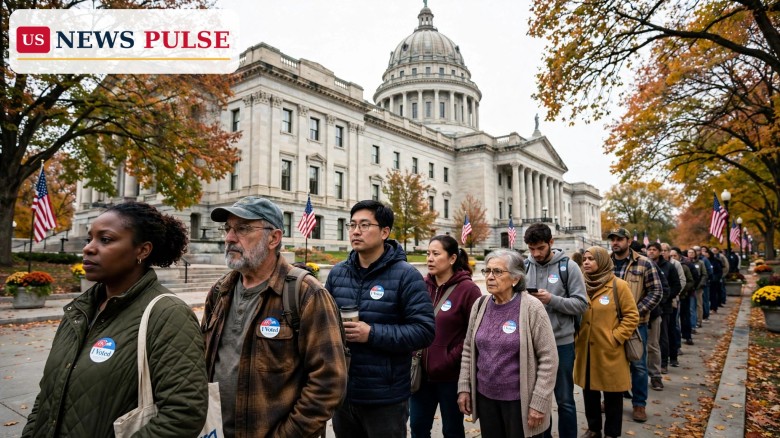
With four days to go until Election Day, the governor races 2026 may decide more than who runs 36 statehouses. Voters in Arizona, Michigan, Georgia, Ohio, Iowa, Nevada and Wisconsin go to the polls on Tuesday, November 3, in contests where President Donald Trump’s unpopularity, the cost of living and abortion rights collide with intensely local issues — from water in drought-hit Arizona to cancer rates in Iowa and data centres in Nevada. Democrats hold 24 governorships and Republicans 26, and a net Democratic gain of two seats would give Democrats a majority of governorships for the first time since 2010.
The stakes run beyond state capitols. Governors sign or veto abortion laws, election rules, tax packages and school funding, and Georgia’s race is already read as an early test of voter sentiment ahead of the 2028 presidential election. With more than 44 million Americans already having voted as of Thursday evening, according to the University of Florida’s Election Lab, the final weekend is less about persuading undecided voters than about turning out the ones each side has already won.
Key Points
- Thirty-six governor’s races will be decided on November 3, including 19 open-seat contests with no incumbent running.
- Democrats hold 24 governorships and Republicans 26; a net Democratic gain of two would flip the national balance for the first time since 2010.
- Arizona, Michigan, Georgia, Ohio, Iowa, Nevada and Wisconsin are the seven races drawing the closest national attention, Reuters reports.
- The cost of living and President Trump’s standing dominate nationally, while water, cancer rates, data centres and abortion rights dominate locally.
- Georgia Democrat Keisha Lance Bottoms would become the first Black woman ever elected governor in the United States if she wins.
What Happened
Reuters published its guide to the seven governor races to watch on Friday, October 30, as the campaigns entered their final four days. It lands as Trump has cancelled weekend rallies in Kansas and Iowa in favour of telephone rallies across nearly 20 states, former Vice President Kamala Harris was due to rally for Democrats in Atlanta on Friday, and Trump himself was scheduled to campaign in Daytona Beach, Florida, on Friday evening.
The early-vote numbers underline how much of the election is already decided. More than 44 million ballots had been cast as of Thursday evening, less than two million short of the entire total from the 2022 midterms. National polling points the same way: Democrats lead Republicans by 51.4 percent to 43.2 percent in the RealClearPolling average, and a Marquette Law School poll conducted in Wisconsin from October 14 to 22 and released on October 28 put Trump’s approval rating at 37 percent, with disapproval at 61 percent.
Background/Context
Governors’ races rarely follow a single national script, and 2026 is no exception. Nineteen of the 36 races are open seats, created by term limits or retirements, so nearly half the map has no incumbent advantage at all. Open seats tend to be more volatile: without a record to defend, challengers can define themselves, but they can also be defined by their opponents, as the bitter Ohio campaign has shown.
The national mood favours Democrats on paper, but governorships are won state by state, and several of the seven key races are in states Trump carried in 2024. That tension — a Democratic-leaning national environment against Republican-leaning state terrain — is what makes Arizona, Georgia, Nevada and Wisconsin genuinely competitive. Local issues also cut across party lines: Arizona voters approved a constitutional amendment protecting abortion rights in 2024, yet water and border politics pull in different directions, while Iowa’s cancer debate and Nevada’s data-centre fight rarely fit a national message.
Seven Governor Races 2026 to Watch
Arizona. Democratic Governor Katie Hobbs seeks re-election against Republican US Representative Andy Biggs, a former head of the right-wing House Freedom Caucus, which has pushed for deep cuts in federal spending. Water is a central issue in the drought-hit state, alongside the cost of living and immigration, and Hobbs has sought to position herself as tougher on border security than many national Democrats. Abortion rights have featured prominently: Hobbs supports them and Biggs has a long record as an opponent.
Michigan. Democrat Jocelyn Benson, the state’s top election official, faces Republican US Representative John James in one of the cycle’s most competitive contests, to succeed term-limited Democratic Governor Gretchen Whitmer. Michigan is a closely divided swing state that Trump won in 2016 and 2024 while Democrat Joe Biden carried it in 2020, and neither party has elected back-to-back governors there since the 1960s.
Georgia. Republican Rick Jackson, a billionaire healthcare executive, runs against Democrat Keisha Lance Bottoms, the former Atlanta mayor, to succeed Republican Governor Brian Kemp. A Bottoms win would make her the first Black woman elected governor in the US and the first Democrat elected governor of Georgia in more than a quarter century. Jackson, who has spent more than $100 million of his own money on the race, has generally aligned himself with Trump’s agenda, while Bottoms has sought to mobilise the diverse Democratic coalition that helped Biden win the state in 2020. Bottoms rose to national prominence in 2020 guiding Georgia’s largest city through protests, civil unrest and the COVID pandemic, and her base is the fast-growing Atlanta metro area.
Ohio. The race between Republican entrepreneur Vivek Ramaswamy and Democrat Amy Acton, a physician, has drawn national attention over an attack ad featuring Acton’s estranged mother. In a video run by the Ramaswamy campaign, Donna Arthur disputes Acton’s account of a childhood marked by homelessness and sexual abuse and urges Ohioans not to vote for her. Acton, a former director of the Ohio Department of Health who led the state’s COVID-19 response, has said she was sexually abused by her stepfather, who died in 2004 after fleeing the state when charged with raping his stepdaughter and never stood trial. Ohio’s swing-state reputation faded after 2016, when Trump won it with strong working-class support and turned it reliably Republican; Democrats have won just one of the state’s last nine gubernatorial elections, and the race is watched as a test of whether they can turn economic dissatisfaction into votes.
Iowa. Iowa holds its first open governor’s race since 2006, after Republican Governor Kim Reynolds said she would not seek re-election. State Auditor Rob Sand, the only Iowa Democrat currently holding statewide elected office, faces Republican businessman Zach Lahn. The state’s cancer incidence, the second-highest rate in the country behind Kentucky, has emerged as a major topic alongside the cost of living, fuelled by worries that nitrates, pesticides and other contaminants may be contributing. Sand has campaigned as an independent watchdog critical of Republican fiscal management and the private-school voucher programme; Lahn has embraced lower taxes, school choice and a more conservative approach to social issues.
Nevada. In a contest centred on affordability, Republican Governor Joe Lombardo is neck-and-neck with Democratic challenger Aaron Ford, the state’s attorney general. Residents have voiced concerns over tariffs, a tourism slowdown and high gas prices, giving Ford an opening despite Lombardo’s 2-1 fundraising advantage. Data centres are also central: Ford proposes a halt to new data-centre tax abatements, wants developers to shield residents from higher energy costs, and calls for strong regulations to protect jobs from artificial intelligence. Lombardo, while restricting some of the incentives that lured the industry, has generally championed data centres as an economic driver.
Wisconsin. The central question is whether voters who backed Trump in 2024 and Biden in 2020 want a governor aligned with the Republican president. Republican Tom Tiffany, a three-term US Representative endorsed by Trump, has played down that connection, while Democratic opponent David Crowley, the Milwaukee County Executive, has sought to link Tiffany to Trump’s agenda. Tiffany has backed gun rights and lower taxes and co-sponsored federal legislation that would have banned most abortions after about six weeks; Crowley supports abortion rights. Wisconsin bans abortion after 20 weeks and requires a 24-hour waiting period and parental consent for minors.
Reactions/Quotes
The campaigns have responded to the final-week squeeze in sharply different ways. The Republican National Committee confirmed Trump’s switch from in-person rallies in Kansas and Iowa to telephone rallies, with chairman Joe Gruters arguing that the virtual appearances will be more efficient and reach more voters than on-the-ground stops. Trump’s Friday rally in Daytona Beach, about 200 miles up the coast from his Mar-a-Lago resort, was proceeding as planned.
In Ohio, the Ramaswamy campaign’s ad featuring Acton’s estranged mother has become a campaign issue in its own right, with Acton’s personal history — and who gets to tell it — now central to the race’s closing days. In Nevada, Ford’s challenge to the data-centre tax-break model has forced Lombardo to defend an industry he has championed while tightening some of its incentives. Democrats, meanwhile, argue in state after state that a Democratic governor is a check on Trump where his agenda is felt most directly, on abortion access, tariffs and prices, and election administration. Republicans counter that governors’ races are about state management, not Washington.
Why It Matters
Governors matter more in a midterm year than the national conversation usually admits. They control election machinery in many states, sign budgets that set school funding, Medicaid rules and tax rates, and are the first line of response on abortion access after the end of federal protection. A Democratic majority among governors would also change the map for 2028: governors are the most credible presidential launching pads, and the party holding most statehouses holds most of the farm team.
The seven races are also a real-world test of the parties’ theories of the election. Democrats believe economic dissatisfaction and Trump’s unpopularity can win even in states Trump carried; Republicans believe voters separate state government from Washington and will reward incumbents and business-friendly challengers on competence and taxes. Tuesday will show which theory survives contact with voters.
What Happens Next
Polls close across the seven states on Tuesday, November 3, with results expected through the night and, in the closest races, potentially for days afterwards. Early voting has already banked tens of millions of ballots, so election-night reporting will mix early votes counted first with Election Day votes counted later, a sequence that can make early leads misleading. Watch whether Democrats net the two seats they need for a governorship majority, whether Georgia produces a history-making result, and whether Ohio ends with a Democratic breakthrough or another Republican win confirming the state’s realignment. Legal challenges, already a feature of this cycle in Alaska and California, cannot be ruled out in any narrowly decided race. Winners take office in January 2027, and the 2028 presidential jockeying begins almost immediately.
Frequently Asked Questions
How many governor’s races are on the ballot in 2026?
Thirty-six governor’s races will be decided on November 3, 2026, including 19 open-seat contests where no incumbent governor is running.
Which seven governor races are closest?
Reuters identifies Arizona, Michigan, Georgia, Ohio, Iowa, Nevada and Wisconsin as the seven key governor races to watch, based on competitiveness and national significance.
What would a Democratic gain of two governorships mean?
Democrats hold 24 governorships and Republicans 26. A net gain of two would give Democrats a majority of governorships for the first time since 2010.
Why is the Georgia governor race historic?
If Keisha Lance Bottoms wins, she would become the first Black woman ever elected governor in the United States and the first Democrat elected governor of Georgia in more than 25 years.
When will we know the results?
Polls close on Tuesday, November 3. Most races should be called on election night, but the closest contests could take days as mail and provisional ballots are counted.
Related coverage: Ohio governor race: Acton and Ramaswamy make final pitch in ugly campaign; Wisconsin governor poll: Crowley leads Tiffany 51-44 in final Marquette survey; Early voting surge: 43 million ballots cast as Texas smashes records before midterms.
Sources: Reuters (Helen Coster) via SRN News, October 30, 2026; Al Jazeera US midterms live coverage, October 30, 2026; University of Florida Election Lab early-vote figures via Reuters. Image: original illustration for US News Pulse; featured image carries the US News Pulse logo at the top left.
© 2026 US News Pulse. All rights reserved.
 Print
 Save