
Exxon Q3 Profit Beats Estimates as Refining Surge Lifts Earnings to $17.5 Billion
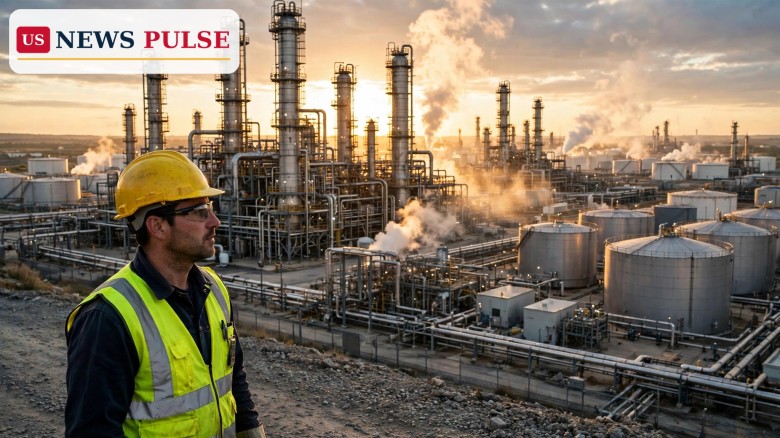
ExxonMobil beat Wall Street expectations for third-quarter profit on Friday, October 30, 2026, as soaring refining margins driven by the war in the Middle East and strikes on Russian refineries turned its fuel-making business into the company's biggest earner. The Exxon Q3 profit report showed adjusted earnings of $17.5 billion, comfortably ahead of the $16.6 billion analysts had expected, in a quarter when refining did what oil production could not.
Adjusted earnings per share came in at $4.23, above the $4.08 average analyst estimate compiled by LSEG. The beat caps a remarkable week for Big Oil: Chevron also topped forecasts on Friday morning, while Shell, TotalEnergies and BP all reported stronger-than-expected results in the previous two days. For Exxon, the largest United States oil producer by market capitalisation, the standout was a fuel business that now earns more money than its upstream oil and gas division for the first time in at least six years.
Key Points
- ExxonMobil's adjusted earnings reached $17.5 billion in Q3 2026, beating the $16.6 billion LSEG consensus; adjusted earnings per share were $4.23 against a $4.08 estimate.
- Adjusted downstream earnings totalled $9 billion, a 120% surge from the previous quarter, as war-driven refining margins boomed.
- Adjusted upstream earnings fell 20% from Q2 to $7.3 billion as benchmark Brent crude prices eased from the prior quarter.
- Exxon produced 4.5 million barrels of oil equivalent per day, roughly flat with the second quarter, and cut debt by $8 billion in the quarter.
- The company paid $4.3 billion in dividends, repurchased $5.1 billion of shares, and announced a $20 billion buyback programme for 2027, unchanged from 2026.
What Happened
ExxonMobil released its third-quarter results before the market opened on Friday, October 30, 2026, with a conference call for analysts scheduled later in the morning. The headline numbers told a story of two businesses moving in opposite directions. Upstream, where Exxon pumps oil and gas, earnings slipped as crude prices came off their highs. Downstream, where it refines crude into gasoline, diesel and jet fuel, earnings more than doubled from the second quarter.
The refining boom has a clear cause. The United States-Israeli war on Iran and the conflict between Russia and Ukraine have disrupted global energy markets, knocked out fuel-making capacity and sent gasoline and diesel prices higher. The effective closure of the Strait of Hormuz and recent attacks on refineries in Saudi Arabia and Russia squeezed fuel supplies worldwide, lifting the margins refiners earn on every barrel they process. Exxon ran its refineries hard to meet that demand: its United States Gulf Coast plants reached the second-highest diesel production level on record and operated at 100% crude-unit utilisation.
Specialty products added to the strength, earning $1.3 billion on an adjusted basis, up 32% from the previous quarter. Exxon itself had flagged the shape of the quarter two weeks earlier: in earnings considerations published on October 16, it said lower oil prices would cut upstream earnings by about $1.3 billion versus the second quarter, while higher refining margins would add about $4.5 billion in energy products and $0.5 billion in specialty products. Friday's results landed broadly where that preview pointed.
Background and Context
The third quarter was one of the most volatile for oil markets in years. Benchmark Brent crude swung from as low as $68 a barrel to a high of $132 during the quarter, according to Chevron chief financial officer Eimear Bonner, before settling near $115 a barrel in the final week of October. Brent closed at $113.88 on October 27 and $115.32 on October 28, published market data showed.
Exxon came into the quarter off a softer second quarter, when it reported earnings per share of $3.52 on July 31, just missing the $3.56 consensus. The third quarter reversed that disappointment in dramatic fashion, with refining more than compensating for weaker crude prices. Production of 4.5 million barrels of oil equivalent per day was roughly flat with the second quarter, a steady performance in a period when Exxon has a higher share of production located in the Middle East than its rivals.
The company has also been repositioning for the longer term. Last month it signed an agreement to explore, develop and produce shale in Azerbaijan, and it has held talks about a possible return to Venezuela. At home, Exxon is investing more in its refineries, including its Baytown complex in Texas, to increase fuel production, and it has leaned on its trading team to direct supplies to where they are needed most around the world.
Exxon Q3 Profit: Refining Now Out-Earns Oil Production
The most striking line in Friday's report is the changing balance inside Exxon itself. Adjusted downstream earnings of $9 billion against upstream earnings of $7.3 billion mean refining, traditionally the smaller and steadier of the two businesses, is now the larger profit engine. That has not happened for at least six years, and it underlines how completely war and supply disruption have reshaped energy economics in 2026.
Chevron's results told the same story. Its third-quarter downstream earnings also reached their highest point over the same timeframe, with adjusted earnings per share of $5.28. Chevron said it has opportunities to increase efficiency at its United States Gulf refineries and could grow capacity by 7% at its Pascagoula refinery in Mississippi by the end of the decade. Across the industry, the pattern is consistent: companies that can turn crude into fuel at scale are capturing the windfall, while pure producers face softer crude prices.
The cash windfall is being used conservatively. Rather than raising dividends sharply or launching bigger buybacks, the two American majors are paying down debt and strengthening their balance sheets. Exxon reduced debt by $8 billion during the third quarter, while Chevron has cut net debt by nearly $14 billion compared with the end of 2025. Exxon said it would repurchase $20 billion of shares in 2027, the same amount as in the previous two years, and it plans to stick to its approach of a sustainable and growing dividend over the long term.
Reactions and Quotes
Exxon chief executive Darren Woods struck a confident note on the results, saying: "We continued to rise to the challenge of meeting global energy needs, drawing on unmatched scale, integration and technical capabilities." The comment reflects a company presenting itself as a supplier the world can rely on while fuel markets remain tight.
Chief financial officer Neil Hansen acknowledged the other side of the refining boom in an interview, saying: "It's important to acknowledge that these higher fuel prices put real pressure on families and businesses. The most meaningful response ... that we can offer as a company is to pull every lever that's available to us to increase supply." Hansen also confirmed the $8 billion debt reduction and the plan to keep the dividend sustainable and growing.
Chevron's Bonner defended the industry's cautious use of the windfall, telling Reuters: "We think in decades, not quarters. We need that (strong) balance sheet through high prices and low prices." That long-horizon message is likely to feature again on the earnings calls later on Friday, when executives from both firms could face questions about when they might increase shareholder distributions or invest higher profits in new or existing projects.
Why It Matters
Exxon's results matter far beyond its shareholders because fuel prices have become a political flashpoint days before Tuesday's midterm elections on November 3. Diesel and gasoline costs are adding to voter frustration, and a recent Pew Research Center survey found that 84% of early voters cited the economy as their biggest concern. United States gas prices rose 9.1% in September alone, according to official figures, a burden felt most sharply in car-dependent states such as Florida.
The industry has so far avoided some of the toughest measures floated in Washington, including a possible diesel export ban that President Donald Trump had considered in September before saying in early October that he would not impose it. But the tension between record refining profits and household fuel bills is unlikely to fade while the war continues to squeeze supplies, and it gives both parties a ready-made argument in the final days of campaigning.
For investors, the results also sharpen the Big Oil story of 2026. After a week in which every Western major beat expectations, the question is no longer whether the refining boom is real but how long it lasts, and whether companies will spend the windfall on new capacity, debt reduction or returns to shareholders. Exxon's answer, for now, is balance: steady dividends, a flat buyback and a stronger balance sheet.
What Happens Next
Executives will take analyst questions on the earnings call later on Friday, where guidance on fourth-quarter refining margins, production and capital spending will be closely watched. Investors will also look for any update on Exxon's Middle East exposure and its talks over Venezuela, both of which could shape production in 2027.
Beyond this week, the path of fuel prices will depend heavily on the war and on whether the Strait of Hormuz remains effectively closed. Any easing of supply disruption could compress refining margins quickly, while further escalation would keep them elevated and keep political pressure on the industry high. The next set of results, due early in 2027, will show whether refining can hold its new position as Exxon's biggest earner.
Frequently Asked Questions
How much profit did ExxonMobil make in Q3 2026?
ExxonMobil reported adjusted total earnings of $17.5 billion for the third quarter of 2026, beating the average analyst estimate of $16.6 billion compiled by LSEG. Adjusted earnings per share were $4.23, above the $4.08 consensus.
Why did Exxon's refining business surge?
Adjusted downstream earnings totalled $9 billion, up 120% from the previous quarter, because the war on Iran and strikes on Russian refineries knocked out fuel-making capacity and lifted refining margins. Exxon's United States Gulf Coast refineries ran at 100% crude-unit utilisation.
Did Exxon's oil production grow in Q3?
No. Exxon produced 4.5 million barrels of oil equivalent per day, roughly flat with the second quarter, while adjusted upstream earnings fell 20% to $7.3 billion as Brent crude prices eased.
What is Exxon doing with the extra cash?
Exxon paid $4.3 billion in dividends and repurchased $5.1 billion of shares in the quarter, reduced debt by $8 billion, and announced a $20 billion share repurchase programme for 2027, the same as in 2026.
How do Exxon's results compare with Chevron's?
Both American majors beat expectations on Friday. Chevron reported adjusted earnings per share of $5.28, with its downstream earnings also at their highest in at least six years, and it has cut net debt by nearly $14 billion since the end of 2025.
Related coverage on US News Pulse: Chevron Q3 earnings beat Wall Street estimates as refining margins soar, BP Q3 profit soars to $8.46 billion as refining margins hit an 18-year high, and Exxon and Chevron earnings Friday: Big Oil profits set to surge.
© 2026 US News Pulse. All rights reserved.
 Print
 Save