
Trump AI Executive Order Targets State AI Laws in Federal Power Grab Before Midterms
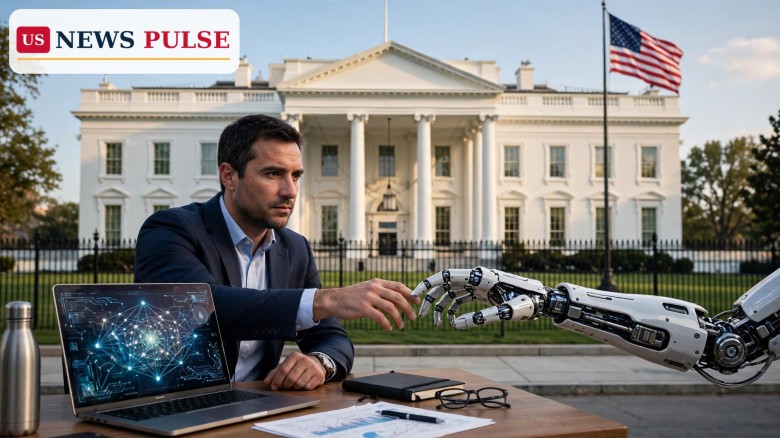
President Donald Trump has signed an executive order aimed at curbing state-level regulation of artificial intelligence, launching the most direct federal challenge yet to the patchwork of AI laws spreading across the United States just five days before the November 3 midterm elections. The Trump AI executive order directs federal agencies to challenge state AI laws in court and to use broadband funding as leverage against states that refuse to fall in line, in a bid to replace dozens of different state rules with a single national standard.
At the Oval Office signing event on Thursday, Trump argued that companies building AI cannot be expected to seek approval from dozens of separate state governments. "You have to have a central source of approval when they need approval," Trump said. "They can't go to California, New York and various other places." The order, pushed inside the administration by White House AI adviser David Sacks after months of lobbying by major AI companies, is the administration's answer to a problem it has failed to solve in Congress.
Key Points
- Trump signed an executive order on Thursday, October 29, 2026, aimed at curbing state AI regulation across the United States.
- The order directs Attorney General Pam Bondi to create an AI Litigation Task Force within 30 days to challenge state AI laws in federal court.
- The Commerce Secretary must publish a review of state AI laws within 90 days, flagging rules deemed "onerous" for AI companies.
- States with flagged laws could face conditions on Broadband Equity, Access and Deployment (BEAD) broadband funding.
- Critics say the order benefits Big Tech by wiping out bipartisan state safeguards, while supporters say 50 different AI regimes would strangle innovation and hand China an edge.
What Happened
Trump signed the order at the White House on Thursday, in a move reported the same day by multiple outlets covering the signing. The directive does not, by itself, repeal any state law. Instead, it mobilises the federal government against state AI rules on several fronts at once: litigation, funding conditions and a push for new federal legislation.
First, the order directs Attorney General Pam Bondi to establish an AI Litigation Task Force within 30 days, whose sole job is to challenge state AI laws in court, including on grounds that they unconstitutionally burden interstate commerce, are pre-empted by existing federal regulation, or are otherwise unlawful. Second, it orders the Secretary of Commerce, in consultation with other officials, to publish a review of existing state AI laws within 90 days, identifying laws that require AI models to alter their truthful outputs or compel disclosures that could violate the First Amendment.
Third, the order ties money to compliance. The Commerce Secretary must issue a notice setting out the conditions states must meet to remain eligible for funding from the Broadband Equity, Access and Deployment programme, the federal broadband expansion scheme. States whose AI laws land on the administration's list could see their share of broadband funds put at risk. Fourth, it directs Sacks, the White House adviser for AI and crypto, together with the assistant to the president for science and technology, to work with Congress on a legislative proposal for a uniform federal AI framework.
The order's stated goal is a "minimally burdensome national standard — not 50 discordant State ones." It carves out some protections from the pre-emption push, including state child-safety measures and rules governing state governments' own use of AI.
Background/Context
The fight over who writes America's AI rules has been building for years, and the states have not waited for Washington. With Congress never having passed a comprehensive federal AI law, state legislatures have filled the vacuum at speed. By July 1, 2026, states had passed more than 100 AI laws despite months of White House pressure, according to analyses of the state AI landscape.
Four states — California, Colorado, Texas and Utah — have passed laws requiring transparency from AI companies, limiting certain data collection, and addressing AI risks such as discrimination in hiring, lending and healthcare decisions. Other states regulate AI's use in elections and in nonconsensual content. California's transparency requirements and Colorado's algorithmic-discrimination provisions are singled out in the administration's arguments as the kind of rules it wants challenged.
The executive order follows two failed attempts to achieve the same goal through Congress. A proposal to pause state AI laws was rejected by the Senate in July by a 99-1 vote, and Trump officials and Republican lawmakers also failed earlier in October to include similar language in a must-pass defence bill. With the legislative route blocked, the administration has turned to executive action — a route that carries its own legal limits.
Legal experts note a crucial caveat: an executive order cannot repeal state law on its own. Only Congress can pre-empt state law, and state AI requirements remain legally enforceable until a court issues an injunction or a final judgment against them. That means the order opens a new phase of litigation rather than settling the question, and the first lawsuits could take months or years to resolve.
Trump AI Executive Order: What It Actually Does
Stripped to its mechanics, the Trump AI executive order is a three-track strategy. Track one is the courtroom: a dedicated Justice Department task force built to sue states over their AI laws, arguing that rules written in Sacramento or Denver unconstitutionally burden a national, interstate technology. Track two is the purse: broadband funding conditions that give states a financial reason to soften or drop their AI rules even before any judge rules. Track three is Congress: a legislative proposal for a single federal AI framework that would, if enacted, do what the order alone cannot — actually pre-empt conflicting state laws.
The order's supporters, including the AI companies that lobbied for it, argue the current trajectory is unsustainable. A start-up selling one AI product into 50 markets faces 50 sets of definitions, effective dates and enforcement bodies. The administration argues that this patchwork slows American innovation and lets China gain an edge in the global AI race — the same argument Trump made at the signing when he insisted companies need one central source of approval.
The order's critics see the same facts and reach the opposite conclusion. They argue that state laws on transparency, bias and discrimination are the only safeguards Americans currently have, precisely because Congress has passed no federal AI law, and that the order would strip those protections without replacing them. The administration's own order concedes the gap: it calls for a federal framework to be built, but that framework does not yet exist.
Reactions/Quotes
Trump's own words at the signing framed the order as a matter of practicality. "You have to have a central source of approval when they need approval," he said. "They can't go to California, New York and various other places."
Consumer and civil-liberties advocates reacted sharply. "Big Tech has successfully leveraged those around the president to pass a federal moratorium that aims to wipe out bipartisan AI safeguards," said Liana Keesing of Issue One, a campaign-finance and democracy reform group. Children's advocacy groups also warned that the order could put younger generations at risk in an AI-driven world, even though the order says child-safety protections are excluded from its pre-emption proposal.
State officials signalled they will not simply comply. Colorado Attorney General Phil Weiser and California state lawmakers have signalled they will sue if the order is enforced, and Connecticut leaders plan to continue advancing state AI regulations regardless of the federal pressure. The stage is set for a state-versus-federal court fight that could run well past the midterm elections.
The order was pushed inside the administration by David Sacks, the White House AI czar, after months of lobbying by major AI companies including OpenAI, Google and venture firm Andreessen Horowitz, according to reporting on the order's origins. Those companies have long argued that state-by-state AI rules threaten their ability to deploy models nationally.
Why It Matters
This order matters because it decides, in practice, who governs the technology reshaping American work, elections, healthcare and hiring. If the administration's litigation strategy succeeds, state rules on AI transparency and bias could be struck down or frozen before they ever bite — leaving AI largely governed by the companies building it. If the states win in court, the patchwork the White House deplores will harden into the permanent shape of American AI regulation, with California and Colorado effectively setting national standards by virtue of their market size.
It also matters politically. The order lands five days before midterm elections in which AI, jobs and the cost of living are all live issues, and it puts the White House squarely on the side of the AI industry against state regulators — including regulators in Republican-led states such as Texas and Utah that have passed their own AI laws. The Senate's 99-1 rejection of a state AI moratorium in July showed that scepticism about federal pre-emption crosses party lines, and the order tests whether the administration can achieve by executive action what it could not achieve by legislation.
For ordinary Americans, the stakes are concrete: whether an AI system used to screen a job application, approve a loan or deny an insurance claim must explain itself, be checked for bias, or be reviewed by a human — and whether those protections depend on which state you live in.
What Happens Next
Three deadlines now drive the story. Within 30 days, the Justice Department must stand up its AI Litigation Task Force, and the first lawsuits against state AI laws could follow soon after. Within 90 days, the Commerce Department must publish its review naming the state AI laws it considers onerous, and issue the broadband funding conditions tied to that list. Both steps are likely to draw immediate legal challenges from states and advocacy groups.
Meanwhile, Sacks and the White House science adviser are to prepare a legislative proposal for a uniform federal AI framework with Congress. Whether that proposal gains traction in a Congress reshaped by the November 3 midterms is an open question — and the Senate's near-unanimous July vote suggests the path will not be easy.
States, for their part, are unlikely to pause. Connecticut leaders have said they will keep advancing state AI rules, and new state AI laws with 2027 effective dates are already on the books in several states. The result is a legal collision course: federal lawsuits and funding threats on one side, and state legislatures and attorneys general on the other, with the courts — and possibly the Supreme Court — as the eventual referee.
Frequently Asked Questions
Does Trump's executive order cancel state AI laws?
No. An executive order cannot repeal state law by itself. State AI laws remain enforceable until a court blocks them or Congress passes a federal law that pre-empts them. The order directs federal agencies to challenge the laws and to attach funding conditions, but it does not erase them.
Which states have AI laws targeted by the order?
California, Colorado, Texas and Utah have passed AI laws covering transparency, data collection and discrimination in hiring, lending and healthcare. California's transparency requirements and Colorado's algorithmic-discrimination provisions are specifically highlighted in the administration's arguments.
What is the AI Litigation Task Force?
It is a Justice Department team the order directs Attorney General Pam Bondi to create within 30 days, tasked solely with challenging state AI laws in court on Commerce Clause, pre-emption and other legal grounds.
Could states lose broadband funding over AI laws?
Potentially. The order directs the Commerce Secretary to set conditions for Broadband Equity, Access and Deployment funding, so states whose AI laws are flagged as onerous could see their broadband money put at risk. Legal experts expect that funding threat to be challenged in court.
What happens next for a national AI law?
The order directs the White House AI adviser and the president's science adviser to prepare a legislative proposal for a uniform federal AI framework with Congress. Any such law would need to pass both chambers — a steep climb given the Senate's 99-1 rejection of a state AI moratorium in July 2026.
Related coverage on US News Pulse: Anthropic's IPO filing tests a $2 trillion AI bet, Claude and the Georgia vote-data scandal, and Big Tech's earnings test on AI spending.
© 2026 US News Pulse. All rights reserved.
 Print
 Save