
FDA Impella Heart Pump Recall: 900 Controllers Pulled in Class I Alert
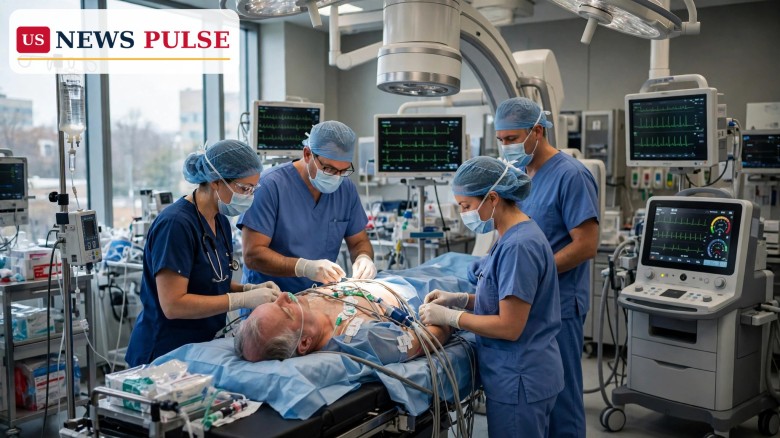
The US Food and Drug Administration has confirmed a Class I recall of 900 Impella heart pump controllers, the agency's most serious recall classification, after finding that some units need hardware, firmware or software updates to fix faults that can delay life-saving heart support. The Impella heart pump recall covers three controller models made by Abiomed, now part of Johnson & Johnson MedTech, and follows a September warning in which the company told hospitals to pull affected units from where they are used or sold until they can be serviced.
Class I is the FDA's gravest recall category, reserved for situations where there is a reasonable probability that use of a product will cause serious adverse health consequences or death. In this case, however, the FDA has stressed an important qualifier: as of September 8, 2026, Abiomed had reported no serious injuries or deaths associated with this particular controller issue. The recall is preventive — aimed at fixing the controllers before a fault harms a patient in a cardiac emergency, where minutes can decide an outcome.
Key Points
- The FDA has classified Abiomed's recall of Impella heart pump controllers as Class I, its most serious recall type, Cardiovascular Business confirmed on October 29, 2026.
- A total of 900 controllers are affected: 428 Automated Impella Controllers, 179 Impella Optical Controllers and 293 Impella Connect Optical controllers.
- The faults include a failure to recognise the purge cassette during setup or change, a sticking or unreliable button, start-up instability and other software defects.
- Without the updates, patients could face delayed therapy or inadequate or lost haemodynamic support, the FDA warned.
- As of September 8, 2026, Abiomed had reported no serious injuries or deaths linked to this controller issue, and hospital stock can still be used if absolutely necessary for patient care.
What Happened
The story began in September, when the FDA issued an early alert about a heart pump controller issue from Abiomed. On September 18, 2026, Abiomed sent a letter to all affected customers recommending that certain Automated Impella Controllers be removed from where they are used or sold while awaiting service from the company. The FDA's early alert explained that a retrospective review of servicing records had identified certain Impella controllers that require hardware, firmware and/or software updates to address quality issues with the potential for safety implications.
On October 29, 2026, the FDA formally categorised the action as a Class I recall, the step reported by Cardiovascular Business that same day. The confirmation covers specific lots of three devices, all described as the primary user control interface for the Impella catheter, a catheter-based heart pump. The Automated Impella Controller, packaged, accounts for 428 units. The Impella Optical Controller, packaged, accounts for 179 units. The Impella Connect Optical AIC, packaged, accounts for 293 units. Together, the three lines total 900 controllers.
The instruction to hospitals is carefully worded, because these are not devices sitting on a warehouse shelf. Impella controllers are used in intensive care units and cardiac catheterisation laboratories, where they run temporary mechanical heart pumps for patients in severe heart failure or cardiogenic shock. The FDA says affected devices should be removed from where they are used or sold until they can be serviced — but adds that, if absolutely necessary to ensure a patient receives care, they can still be used. The FDA's early alert puts it the same way: while awaiting service from Abiomed, hospital inventory can continue to be used to ensure continuity of care.
Background/Context
To understand why a controller recall matters so much, it helps to understand what Impella does. The Impella system is a catheter-based heart pump that provides temporary mechanical circulatory support: it helps move blood around the body so a weakened heart has time to recover, typically in patients with severe heart failure or after a major heart attack. The Automated Impella Controller is the console that runs the show — it controls the Impella catheter and monitors it for alarms. If the console cannot be set up promptly, or if its controls cannot be operated reliably, the pump cannot do its job when a patient needs it most.
The FDA's early alert lists four quality problems behind this recall. First, a potential failure of the controller to recognise the purge cassette during setup or change — the purge system is part of how the pump is prepared and kept running, so a recognition failure can stall deployment. Second, a sticking, unreliable button that could affect the operator's ability to select and confirm menu entries, with possible loss of control of the console. Third, an instability that could result in start-up failure. Fourth, other software defects. Without the hardware, firmware and/or software updates, the FDA said, patients could face various problems such as delay of therapy, inadequate or loss of haemodynamic result, and other serious issues.
The Impella line has a long and closely watched safety history. Johnson & Johnson acquired Abiomed in 2022 for approximately $16.6 billion, and in 2024 Abiomed began operating under the name Johnson & Johnson MedTech. Since then, the company's controllers have been linked to a string of recalls and safety alerts: Cardiovascular Business counts AIC-related recalls in July 2025, September 2025, two in October 2025, one in December 2025, one in May 2026, one in August 2026 and one in September 2026, alongside separate recalls for leaking purge cassettes in April, introducer kits in June and introducer sheaths in early August. The company has said this pattern partly reflects its policy of constantly reviewing service records so problems are addressed quickly — a claim that cuts both ways, since it means problems keep surfacing.
One earlier recall must not be confused with this one. In March 2024, Abiomed recalled more than 66,000 Impella left-sided blood pumps — the pump catheters themselves, not the controllers — after the FDA linked them to a risk of perforating the wall of the heart's left ventricle. That recall, also classified Class I, was associated with 129 serious injuries and 49 reported deaths. The current recall is narrower and different: it concerns the controllers that operate the pumps, it covers 900 units, and as of September 8, 2026, no serious injuries or deaths had been reported in connection with it. Keeping the two apart matters for patients and hospitals deciding how urgently to act.
Impella Heart Pump Recall: What Hospitals Must Do
For hospitals, the practical steps are straightforward but urgent. First, check inventory against the affected models and lots: Automated Impella Controller (428 units), Impella Optical Controller (179 units) and Impella Connect Optical AIC (293 units), in their packaged configurations. Second, remove affected units from where they are used or sold and arrange servicing with Abiomed. Third, where a controller is the only option for a patient who needs support now, the FDA and the company both allow continued use under existing alarms, monitoring and mitigation actions — continuity of care takes precedence over a blanket ban.
For patients and families, the message is more reassuring than the Class I label might suggest. The recall does not mean Impella pumps already implanted or in use are being switched off, and it does not mean every Impella device is affected — only specific lots of three controller models. Anyone scheduled for Impella support, or with a loved one in acute heart failure care, should ask the clinical team whether the controller to be used has been checked against the recall and serviced. And as with any cardiac emergency, worsening shortness of breath or chest pain should always prompt an immediate call for emergency care, regardless of any recall.
Reactions/Quotes
Johnson & Johnson provided a statement when the issue was first announced, and confirmed to Cardiovascular Business that the statement has not changed. "Our commitment to quality, safety, and reliability is the foundation of everything we do at Johnson & Johnson," the company said. "Working closely with the FDA, we conducted retrospective reviews to implement quality system improvements for AIC. This includes a voluntary medical device recall of certain AICs after identifying some units require specific hardware and/or software updates."
The company added a continuity-of-care assurance that mirrors the FDA's own wording: "To ensure continuity of care, with existing alarms, monitoring and mitigation actions, hospital inventory can continue to be used as we work directly with affected customers to implement the necessary updates." In other words, the fix is being rolled out customer by customer, hospital by hospital, rather than through a sudden withdrawal of every controller from service.
The FDA, for its part, has said it will keep the public informed and update its early alert page as significant new information becomes available. That commitment matters because the current picture still has gaps: the agency has not published a full list of affected lot numbers in the summaries read for this article, and it has not said how long servicing will take or how many of the 900 units have already been updated. Hospitals holding affected stock should verify their units directly with Abiomed rather than waiting for a general update.
Why It Matters
This recall matters for three reasons. First, it involves the sickest cardiac patients — people in cardiogenic shock or acute heart failure, for whom a delay in mechanical support can mean the difference between recovery and decline. A controller that fails to recognise its purge cassette, or whose buttons cannot be trusted, or that will not start reliably, is a failure at the worst possible moment. Second, it is the latest in a long run of Impella safety actions, and regulators, hospitals and patients will ask whether the pattern points to a deeper quality problem or simply to unusually diligent surveillance. Third, it is a test of how the recall system handles a device that cannot simply be taken off the market: when the treatment itself is life support, the FDA must balance the risk of a faulty controller against the risk of having no controller at all — and here it has chosen a middle path, remove and service, but keep treating.
For American readers, the story is also a reminder of how medical device safety works in practice. Class I sounds alarming, and it is meant to be: it signals the highest level of regulatory concern. But a Class I recall is not a finding that patients have been harmed. In this case the FDA is explicit that none had been, as of early September. The system worked as designed — a retrospective review found a problem, the company told customers, the FDA alerted the public, and the recall was classified at the highest level to make sure hospitals act. The question now is whether the servicing programme closes the gap quickly.
What Happens Next
Watch for four developments. First, Abiomed's servicing programme: how fast the 900 controllers receive their hardware, firmware or software updates, and whether any hospital reports difficulty getting a serviced unit. Second, any update to the FDA's early alert page, including lot-level detail or a change in the injury count from the September 8 baseline of zero serious injuries or deaths. Third, whether the recall expands — previous Impella actions have grown as reviews widened, and the company's own history of repeated AIC recalls means further lots cannot be ruled out. Fourth, the broader regulatory picture: with Impella devices under repeated scrutiny, expect hospitals to tighten their own device checks and expect the FDA to keep this product line under close watch.
Patients with questions about a specific device should contact their cardiology team or the hospital's biomedical department, which can verify a controller's status with Abiomed. The FDA's medical device recall pages and early alert notices remain the authoritative public sources as the servicing programme proceeds.
Related coverage on US News Pulse: Toothpaste recall: 43 million tubes pulled nationwide — check your cabinet now, Trader Joe's E. coli outbreak ends as FDA closes case that sickened 50 people, and Virginia oysters salmonella outbreak: 27 sick in 12 states after recall.
Frequently Asked Questions
What is being recalled?
Specific lots of three Impella heart pump controllers: 428 Automated Impella Controllers, 179 Impella Optical Controllers and 293 Impella Connect Optical controllers — 900 units in total. The controllers are the consoles that operate Impella catheter-based heart pumps.
Why were they recalled?
Some units need hardware, firmware or software updates to fix a failure to recognise the purge cassette during setup or change, a sticking or unreliable button, start-up instability and other software defects. Without the updates, patients could face delayed therapy or inadequate or lost haemodynamic support.
Has anyone been hurt by this controller issue?
As of September 8, 2026, Abiomed had reported no serious injuries or deaths associated with this issue, according to the FDA. The separate March 2024 recall of Impella pump catheters, linked to 49 deaths, is a different recall and should not be confused with this one.
Should hospitals stop using the controllers immediately?
Affected units should be removed from where they are used or sold until serviced — but if a controller is absolutely necessary to ensure a patient receives care, the FDA says hospital inventory can continue to be used, with existing alarms, monitoring and mitigation actions in place.
What should patients do?
Ask your cardiology or hospital team whether the controller to be used has been checked against the recall and serviced. Do not delay emergency care for worsening shortness of breath or chest pain, and verify any specific device's status with the hospital's biomedical team or Abiomed.
© 2026 US News Pulse. All rights reserved.
 Print
 Save