
Noncitizen Voting Fight: Judge Orders Trump Team to Name Every State Pressured
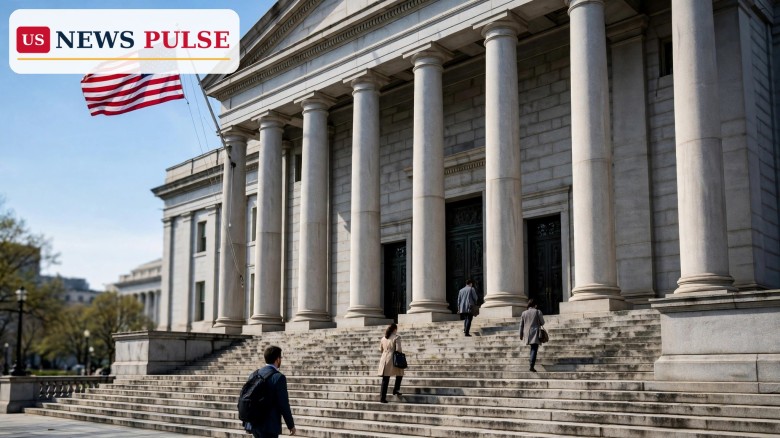
The noncitizen voting fight reached a new turning point on Thursday, October 29, 2026, when a federal judge ordered the Trump administration to name every state it contacted in its campaign against alleged voting by noncitizens. Chief Judge James Boasberg of the US District Court in Washington, D.C., told the government to hand over the list by Friday, October 30, and said he plans to rule by Monday, November 2, the day before the November 3 midterm elections.
The order came in a lawsuit filed on October 20 by Democratic Party leaders, including Senate Minority Leader Chuck Schumer and House Minority Leader Hakeem Jeffries, along with the Democratic Senatorial Campaign Committee, the Democratic Congressional Campaign Committee and the Democratic Governors Association. The plaintiffs want the court to block what they call unlawful federal pressure on state voter lists, and to stop any move to remove legally registered voters, block states from issuing ballots, or stop officials from counting ballots.
On the same day, Reuters reported that the Justice Department had escalated its California campaign with federal grand jury subpoenas served last week on the Los Angeles County Registrar-Recorder's office, seeking records about how the county detects "unlawful voting by aliens" and prevents such ballots from being counted. Together, the two developments put the administration's nationwide voter-fraud push under court scrutiny at the very moment early voting is under way across the country.
Key Points
- Chief Judge James Boasberg ordered the Trump administration to list, by Friday, October 30, 2026, every state whose officials received Justice Department letters about noncitizen voting.
- Boasberg plans to rule by Monday, November 2, on the Democrats' request to block the federal pressure campaign before Election Day on November 3.
- The Los Angeles County Registrar-Recorder's office received federal grand jury subpoenas last week seeking records on detecting "unlawful voting by aliens" and on its response to Justice Department letters.
- Acting Deputy Attorney General Trent McCotter said on Thursday that the Justice Department has charged 156 immigrants with voting or registering to vote unlawfully in a pre-midterm push.
- Los Angeles County Registrar-Recorder Dean Logan said the Justice Department has taken a "confrontational, adversarial approach" and that election officials are acting in accordance with state and federal law.
What Happened
At a hearing in Washington, Boasberg pressed both sides on the scope of the case. He questioned whether the Democratic groups have legal standing to bring the challenge at all, telling them, "I don't doubt you have legitimate concerns. The harder question for me is your standing to do it." But he also moved the case forward at unusual speed, setting a Friday deadline for the states list and a Monday ruling date that keeps the dispute live right up to Election Day.
The judge said the administration could end the dispute by filing notice, and he directed it to produce the list showing which state officials received Justice Department letters. The judge and the plaintiffs focused in particular on whether states beyond California and Washington were contacted. The letters warned officials of criminal prosecution for knowingly keeping noncitizens on statewide voter lists, according to the court reporting of the hearing.
Justice Department attorney Christian Dibblee argued that the letters did not force any state to act. "That's up to them. That's their own choice," Dibblee said. "It just notifies them of a potential violation of federal law." The administration also argued that the Democrats' request was too broad and unclear, and it questioned the plaintiffs' standing to sue over how states run their own elections.
Plaintiffs' lawyer Uzoma Nkwonta urged the judge to stop federal interference, arguing that the pressure campaign threatened state control of elections and the rights of registered voters. The named defendants include President Donald Trump, the Justice Department and Attorney General Todd Blanche, as well as the Department of Homeland Security and its secretary, Markwayne Mullin.
Background/Context
The lawsuit is the latest chapter in a months-long federal campaign over noncitizen voting, an issue the Trump administration has made central to its pre-midterm message. Studies have repeatedly shown that voting by noncitizens is rare and has no impact on election results, but the administration has intensified its focus on the issue as the midterms approach, using lawsuits, letters and subpoenas to state and local election officials.
California has become the main battleground. The Justice Department filed a civil lawsuit against the state, sent a series of letters this month warning election officials that they risk criminal exposure if they do not verify voters' citizenship status, and, according to Reuters, served grand jury subpoenas on Los Angeles County last week. The subpoenas also seek records related to the county's response to those letters. It was not immediately clear whether Logan's office itself was the focus of the criminal investigation.
On Wednesday, October 28, a federal judge in California rejected the Justice Department's request to temporarily block the state from counting mail-in ballots from a list of more than 20,000 voters the administration alleges are likely noncitizens. The Justice Department has appealed that ruling and asked the appeals court to decide by Friday, October 30. Before ruling against the department, US District Judge David Carter told agency lawyers at a hearing on Tuesday that the "court believes that it would be wise that any threats to state and county election employees cease immediately."
Lawyers for California have questioned the reliability of the Trump administration's immigration data and argued that the federal government does not have the authority to intervene in its elections. Under the US Constitution, states administer elections, not the federal government, a principle that runs through both the California case and the new Washington lawsuit.
Noncitizen Voting Fight: Why the States List Matters
The noncitizen voting fight now turns on a deceptively simple question: how far did the federal pressure campaign actually reach? The Democrats' case, as filed on October 20, was built around California and Washington, the two states where federal action was most visible. Boasberg's order forces the administration to say, on the record, whether other states received the same letters, and if so, which ones.
That disclosure matters for two reasons. First, it will show whether the campaign was a targeted intervention in a handful of states or a nationwide effort that touched election offices far beyond the headlines. Second, it will shape the judge's Monday ruling: a narrow, California-focused campaign is easier for the government to defend as ordinary law enforcement, while a sweeping, multi-state letter campaign looks more like the coordinated pressure the plaintiffs describe.
The Los Angeles subpoenas add a sharper edge. Until now, much of the California dispute has been civil: a lawsuit, warning letters, and a fight over whether 20,000 ballots should be set aside. Grand jury subpoenas signal a criminal investigation, and they demand not just voter records but the county's own internal account of how it detects unlawful voting and how it answered the government's letters. For election officials, that is a different kind of pressure, and Logan's public response made the county's view plain.
"At every step, the US Department of Justice has taken a confrontational, adversarial approach," Logan said in a statement on Thursday. "Election officials are acting in accordance with state and federal law." A Justice Department spokesperson declined to comment on the latest subpoenas but said that California and the federal government "agree that noncitizen voting is properly addressed through criminal law."
Reactions/Quotes
Boasberg's own words at the hearing captured the tension in the case. He did not dismiss the Democrats' concerns, saying, "I don't doubt you have legitimate concerns," but he warned that standing, the legal right to bring the case, was the harder question for the plaintiffs to clear. That framing suggests the Monday ruling could turn as much on who can sue as on what the administration did.
The Justice Department's position, put by Dibblee, was that the letters were notifications, not orders. "That's up to them. That's their own choice," he said of state officials. "It just notifies them of a potential violation of federal law." The plaintiffs, through Nkwonta, argued the opposite: that the letters, backed by the threat of criminal prosecution and by subpoenas and lawsuits elsewhere, amounted to federal interference with state election procedures.
McCotter's Thursday figure, 156 immigrants charged with voting or registering to vote unlawfully, is the administration's headline number for the campaign. The department says it has used subpoenas to state and local election officials to build such cases. Critics, including the Democratic plaintiffs, argue that the scale of the enforcement push, set against the rarity of proven noncitizen voting, is itself evidence that the campaign is about sowing doubt ahead of an election that will decide control of Congress.
Boasberg himself is no stranger to clashes with the White House. Appointed by Democratic President Barack Obama, he faced strong criticism from Trump and his allies last year after blocking use of the Alien Enemies Act, a ruling that stopped deportation flights of Venezuelan migrants to El Salvador. Trump and his allies called for his impeachment then. The new case, by contrast, turns on election administration, standing, and a fast timetable, not on immigration enforcement powers.
Why It Matters
The case matters because it tests where federal power over elections ends. The Constitution gives states the primary role in running elections, and both the California judge and now Boasberg have been asked to police that boundary. If Boasberg blocks the pressure campaign, even temporarily, it would be the second judicial rebuke of the administration's voter-fraud push in a single week. If he finds the plaintiffs lack standing, the campaign would continue unchecked through Election Day, with the states list as the only public record of its reach.
It also matters for voter confidence. The administration argues it is protecting elections from unlawful votes; Democrats argue the campaign itself threatens confidence by implying, without proven widespread fraud, that the rolls are full of ineligible voters. With the midterms deciding control of the House and Senate, and with Republicans holding narrow majorities in both chambers, 53 seats in the Senate and 218 in the House, the stakes of that argument are unusually high.
Finally, the timing matters. A Monday ruling, one day before Election Day, leaves almost no room for appeal or for election officials to adjust. Whatever Boasberg decides, counties will be counting ballots under intense scrutiny, and the losing side is likely to cite the ruling, or the standing decision, in post-election disputes. The Friday states list, by contrast, is a fact both sides will have to reckon with before the polls close.
What Happens Next
The immediate next step is the Friday deadline. The administration must file its list of contacted states, and the plaintiffs will have a chance to respond before Boasberg rules on Monday. If the list shows contacts beyond California and Washington, expect the Democrats to argue that the campaign was broader than the government admitted. If it shows only those states, expect the government to argue that the case is narrow and that the plaintiffs have overstated the threat.
Separately, the California appeals court is weighing the Justice Department's request for a ruling by Friday on the 20,000-ballot dispute, after opposing parties were given until 9 a.m. Friday to respond. A ruling there could change how California counties handle the disputed ballots in the final days of voting, or leave Judge Carter's order in place.
In Los Angeles County, officials will be preparing their response to the grand jury subpoenas while continuing to run an election already under way. Logan's statement suggests the county will defend its procedures as lawful, but the subpoenas themselves will remain a live criminal matter beyond Election Day. And in Washington, whatever Boasberg decides on Monday, the underlying lawsuit over federal pressure on voter lists is likely to continue, with standing and the merits still to be litigated in full.
Frequently Asked Questions
What did Judge Boasberg order? He ordered the Trump administration to list, by Friday, October 30, 2026, every state whose officials received Justice Department letters about preventing noncitizen voting, and said he plans to rule by Monday, November 2, on the Democrats' request to block the campaign.
Who brought the lawsuit? Democratic Party leaders, including Chuck Schumer and Hakeem Jeffries, plus the Democratic Senatorial Campaign Committee, the Democratic Congressional Campaign Committee and the Democratic Governors Association. It was filed on October 20 in federal court in Washington, D.C.
What are the Los Angeles County subpoenas about? Federal grand jury subpoenas served last week seek records about how the county detects "unlawful voting by aliens," prevents such ballots from being counted, and responded to Justice Department letters. It is not yet clear whether the county office itself is the focus of the investigation.
How many people has the Justice Department charged? Acting Deputy Attorney General Trent McCotter said on Thursday that 156 immigrants have been charged with voting or registering to vote unlawfully in the pre-midterm push, with subpoenas to election officials used to build cases.
Does the ruling change how ballots are counted? Not yet. Boasberg has not yet ruled on the request to block the campaign; his decision is due Monday, the day before Election Day. The separate California ballot dispute is before the appeals court, which was asked to rule by Friday.
Related coverage on US News Pulse: California Ballots Appeal: DOJ Asks Court to Rule by Friday on 20,000 Votes; Trump Noncitizen Voter Subpoenas Hit 100 in a Dozen States Before Midterms; DOJ Charges Green Card Holders With Illegal Voting in 5 States Ahead of Midterms
© 2026 US News Pulse. All rights reserved.
 Print
 Save