
California Ballots Appeal: DOJ Asks Court to Rule by Friday on 20,000 Votes
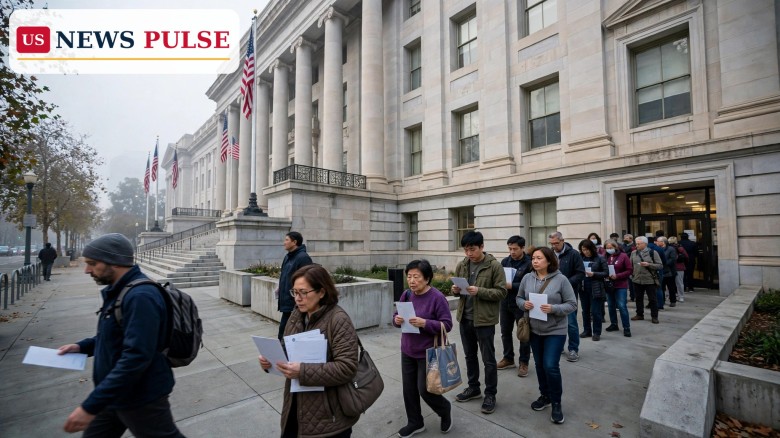
The California ballots appeal has put the fate of more than 20,000 mail-in ballots back before a federal appeals court, just four days before the November 3 midterm elections. The Justice Department appealed on Wednesday, October 28, 2026, after a federal judge refused to order California to set aside ballots from voters the government suspects are not United States citizens, and it asked the court to rule by Friday, October 30. The appeals court gave the other side until 9 a.m. Friday to respond, setting up a decision that could land on the final weekend before Election Day.
At the centre of the fight is a simple but high-stakes question: should ballots cast by voters on a disputed federal list be counted normally, or held apart while officials check citizenship? The government says segregation is a temporary safeguard. The judge who rejected that request said it would do lasting damage to voters and to trust in the election itself. With early voting already under way and millions of ballots already returned in California, the appeal is now the latest test of how far the federal government can go in shaping how a state runs its own election.
Key Points
- The Justice Department appealed Judge David O. Carter's October 28 ruling, which rejected its bid to set aside more than 20,000 California mail ballots.
- The department asked the appeals court to rule by Friday, October 30, 2026; opposing parties were given until 9 a.m. Friday to respond.
- In Riverside County alone, the dispute covers 1,355 voters whose ballots the Justice Department asked the county to hold pending citizenship checks.
- Judge Carter also scheduled a November 13 hearing on a preliminary injunction and motions to dismiss, and appointed a technical expert to examine the reliability of the federal voter list.
- California officials say the state already has safeguards against noncitizen voting, and the judge found the government unlikely to succeed on the merits.
What Happened
The appeal followed hours after Judge Carter issued a 26-page order on Wednesday, October 28, refusing the Justice Department's request for a temporary restraining order. The department had asked the court to force California to segregate mail ballots from voters it identified as likely noncitizens until their citizenship could be verified. Carter found that the government was unlikely to succeed in its legal challenge and had failed to show why a court needed to intervene so close to Election Day.
The Justice Department filed its notice of appeal on Wednesday evening, and on Thursday it asked the appeals court to decide by Friday, October 30. The court gave the opposing parties until 9 a.m. Friday to file their response, a timetable that keeps the case moving at unusual speed. The case had already travelled to the appeals court once before, when Carter had not yet ruled; the 9th Circuit Court of Appeals sent it back, saying the appeal was premature, while two judges in the majority also indicated they believed the department's arguments for segregating ballots were likely to fail on the merits.
Separately, Carter issued another order on Thursday scheduling a November 13 hearing to consider the Justice Department's request for a preliminary injunction and motions to dismiss the lawsuit. He also appointed a technical expert to help examine how reliable the federal government's voter list actually is, a question that has run through the case since the lawsuit was filed on October 15.
Background/Context
The lawsuit began on October 15, when the Justice Department sued California over claims that thousands of noncitizens were on the state's voter rolls. The department said it had matched California's voter list against other government data and produced a list of more than 20,000 people it described as likely noncitizens. It delivered the list to Los Angeles County on a thumb drive, and gave the state 48 hours to act before filing suit.
That list was itself a narrowed version of a much larger claim. The Department of Homeland Security had initially suggested in July that as many as 190,832 noncitizens might be registered to vote in California. Secretary of State Shirley Weber questioned those findings, and the federal government later produced the list of just over 20,000 names. Local election officials who examined early samples of the list found that a significant share of the names were either not on their rolls or were in a suspended status, meaning those people would not receive a mail ballot. They also reported indications that some people the department identified as likely noncitizens were in fact born in the United States, a point federal officials disputed in court filings.
California mails a ballot to every registered voter, and the state began mailing ballots on October 5. By the time the case reached a hearing on October 27, voting was already well under way. Carter heard three hours of argument that day, and issued his ruling the following day. His order stressed that federal and California law already prohibit noncitizens from voting, and that the government can prosecute illegal voting and remove ineligible voters from the rolls through existing channels.
The California case is part of a broader federal push. Since filing the California lawsuit, the Justice Department has presented a similar list to election officials in Washington state, and earlier in the year it made sweeping claims about noncitizens registered to vote in three other Democratic-led states. The department has also charged dozens of people with illegal voting in separate cases, and it is deploying federal election monitors to polling places across the country for the November 3 vote.
California Ballots Appeal: What the DOJ Is Asking the Court to Do
In the California ballots appeal, the Justice Department is asking the appeals court to reverse Carter's refusal and order the ballots held apart while citizenship is checked. The department's argument, as set out in its lawsuit, is that counting ballots from people who may not be eligible risks diluting lawful votes, and that segregation would preserve the status quo until the question can be resolved. It has framed the request as temporary: the ballots would be set aside, not discarded, while verification takes place.
Carter rejected that framing. He found that the government's own lawsuit acknowledged it could not investigate thousands, let alone tens of thousands, of suspected voters before the election ended, which meant segregation could effectively keep lawful ballots from being counted. He also found that the emergency was, in his words, of the government's own making, because it had waited months before seeking a court order. In his order he wrote that the requested remedy would violate the state's right to run its own election and compromise decades of voting and civil rights protections.
The department's appeal does not, on its own, change the status quo. Unless the appeals court grants emergency relief, California counties continue to process ballots under state law while the case proceeds. That is why the Friday deadline matters: a ruling in the department's favour before the weekend could change how counties handle the disputed ballots in the final days before Tuesday's election, while a ruling against it would leave Carter's order in place.
Reactions/Quotes
Judge Carter's language in the October 28 order was unusually blunt. He warned that the government's request would "wreak havoc and disrupt the election" and could prevent eligible voters in California from having their votes counted. "Eroded trust in our democracy is irreparable," he wrote. "Once a vote is segregated, lasting harm has occurred. If the Executive can discount votes and threaten an ongoing election due to unproven allegations, then our democracy is in danger. This Court declines to be a party to such process."
Carter also wrote: "Never before in American history has the federal government, on the eve of an election, sought to coerce a state and local government to abandon their own Constitutional elections procedures and bend to the will of the Executive Branch. But California and its people are sovereign, too." And he added: "Individuals who have met the requirements of California's voter registration laws must not be deprived of a core right merely because of unfounded allegations stemming from a procedure rife with uncertainty and errors."
On the ground in Riverside County, officials have been careful in their public statements. Registrar of Voters spokesperson Elizabeth Florer said the county "will comply with all applicable laws and regulations governing ballot processing." She did not clarify whether the county had responded to the Justice Department's demands or set aside any ballots from the 1,355 voters identified by federal authorities. Democratic Representatives Raul Ruiz, Norma Torres and Mark Takano toured the Riverside County ballot processing centre on October 29 to review election security measures and meet county election officials.
Why It Matters
The appeal matters for three reasons. First, it tests the balance between federal and state power over elections. The Constitution gives states the primary role in running elections, and Carter's order leaned heavily on that principle, including the Elections Clause. If the appeals court backs the department, it would give the federal government a powerful new tool to intervene in state ballot counting on the eve of an election. If it does not, it would confirm that such intervention needs far stronger evidence than the department has so far produced.
Second, the case turns on the reliability of government data. The department's list is the foundation of its entire claim, yet local officials' early checks raised serious questions about it, and Carter has now appointed a technical expert to examine it. How that expert's work comes out could shape not only this case but the department's similar efforts in other states, where officials have received comparable lists and comparable warnings.
Third, the timing is itself part of the story. With Election Day on Tuesday, November 3, any ruling that changes ballot handling now would land on election workers already processing millions of ballots under intense scrutiny. Carter warned that the request would "create a chilling effect on election workers and voters alike, and discount the votes of United States citizens." Supporters of the department's approach argue the opposite: that failing to act risks counting votes that should never have been cast. The appeals court's decision will have to weigh those competing harms in a matter of days, not months.
What Happens Next
The immediate next step is the appeals court's response to the department's request for a ruling by Friday, October 30. Opposing parties had until 9 a.m. Friday to respond, after which the court could rule quickly, seek further briefing, or let Carter's order stand for now. Any emergency ruling would likely be followed by further appeals, and the underlying lawsuit continues regardless of what happens this week.
Beyond Friday, the calendar points to November 13, when Carter will hear arguments on a preliminary injunction and on motions to dismiss the case. That hearing, which will take place after the election, could decide whether the lawsuit survives at all and whether any longer-term order against California is justified. The technical expert's examination of the voter list will also feed into that hearing, and could become central to the case.
Meanwhile, county election offices across California continue to process ballots. In Riverside County, about 1.48 million vote-by-mail ballots had been issued as of October 28, of which roughly 259,877 had been returned and classified as "good." How many of the 1,355 voters flagged by the department have returned ballots is not yet clear, and the county has not said whether any of their ballots have been set aside. Voters in California can check the status of their own ballot through their county registrar, and the state's certification of results will follow the election in the usual course.
Frequently Asked Questions
What is the California ballots appeal about? The Justice Department is appealing a federal judge's refusal to order California to set aside more than 20,000 mail ballots from voters the government suspects are noncitizens. It asked the appeals court to rule by Friday, October 30, 2026.
How many ballots are involved? The statewide dispute covers more than 20,000 ballots. In Riverside County alone, the Justice Department identified 1,355 voters and asked the county to hold their ballots pending citizenship verification.
What did Judge Carter decide? On October 28, Judge David O. Carter refused a temporary restraining order, finding the department unlikely to succeed, the remedy likely to violate federal voting laws, and the request likely to "wreak havoc and disrupt the election."
What happens on Friday, October 30? The appeals court gave opposing parties until 9 a.m. Friday to respond to the department's request for a ruling by Friday. The court could then rule quickly, ask for more briefing, or leave Judge Carter's order in place.
Does the appeal stop ballots from being counted? No, not by itself. Unless the appeals court grants emergency relief, counties continue to process ballots under California law while the case proceeds, with a further hearing set for November 13.
Related coverage on US News Pulse: California Ballots Ruling: Judge Rejects DOJ Bid to Set Aside 20,000 Votes; California Ballots Hearing: Judge Questions DOJ Bid to Block 20,000 Votes; Alaska Senate Lawsuit: DOJ Wants Certification Blocked if Sullivan Loses.
© 2026 US News Pulse. All rights reserved.
 Print
 Save