
Boulder Firebomber Pleads Guilty to Federal Hate Crimes, Faces Life Plus 50 Years
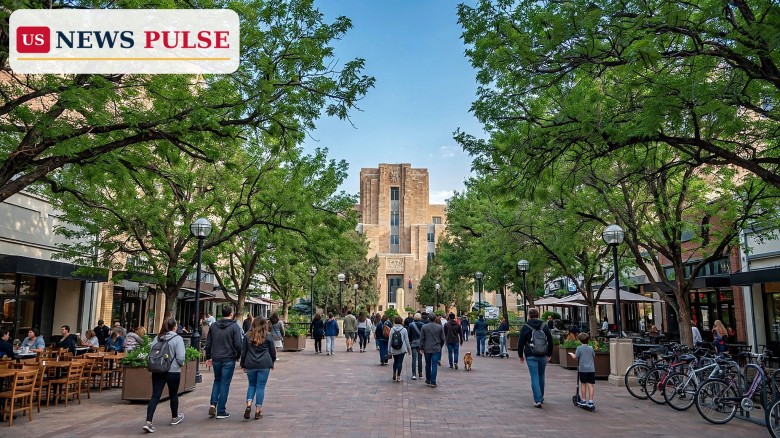
The Boulder firebomb guilty plea closed the federal chapter of one of the most shocking hate-crime cases in recent American history on Thursday, October 29, 2026. Mohamed Sabry Soliman, 46, stood handcuffed and shackled in a Denver federal courtroom and pleaded guilty to 12 federal charges, including nine hate-crime counts and three explosives charges, for the gasoline-bomb attack on a peaceful march in Boulder, Colorado, that killed one woman and injured more than a dozen people. Under the plea deal, federal prosecutors are seeking a sentence of life in prison plus 50 years, a punishment that would run on top of the life sentence without parole he is already serving on state charges.
The hearing, before Senior Judge John Kane, lasted about an hour. Soliman answered the judge's questions calmly through a translator, according to reports from the courtroom, admitting that he threw two Molotov cocktails at people taking part in a weekly Run for Their Lives gathering on June 1, 2025, and that he targeted the demonstrators because of their real or perceived religion or national origin. Prosecutors have declined to seek the death penalty in the federal case, even though Soliman himself once asked for it. He will be sentenced on January 7, 2027, when victims are expected to address the court and the defendant directly.
Key Points
- The plea: Mohamed Sabry Soliman, 46, pleaded guilty on October 29, 2026, to nine federal hate-crime counts and three explosives charges in Denver federal court.
- The sentence sought: Prosecutors want life in prison plus 50 years, and asked that the federal term run consecutively to his state life sentence. Judge John Kane has not yet decided.
- The attack: On June 1, 2025, Soliman threw gasoline bombs at a Run for Their Lives march on Boulder's Pearl Street Mall, injuring more than a dozen people. Karen Diamond, 82, later died of her injuries.
- Already serving life: Soliman pleaded guilty in May to more than 100 state charges, including first-degree murder, and is serving life in prison without parole.
- What is next: Sentencing is set for January 7, 2027, when victims are expected to speak in court.
What Happened
The federal hearing brought a formal end to a prosecution that began within days of the attack. Prosecutor Melissa Hindman told the court that the plea deal asks for a sentence of life in prison plus 50 years, the Denver Post reported. Federal prosecutors asked that the federal sentence be served consecutively to the state sentence, meaning it would begin only after the state term, but Judge Kane said he had not made up his mind on that question yet.
Kane was candid with both sides about the uncertainty ahead. He told prosecutors and defence lawyers that he had "not made up my mind about the sentence," noting that the sentencing guidelines are offered to him "as advice" and that "sometimes I follow that advice and sometimes I don't." He added: "I don't know what the sentence will be and I won't until I study … everything thoroughly." That careful, open-ended answer means the January hearing, not Thursday's plea, will decide how the federal punishment fits alongside the state sentence Soliman is already serving.
One of the most striking features of the federal case is what prosecutors chose not to do. Soliman had previously asked for the death penalty himself. At his state sentencing in May, speaking through an Arabic interpreter, he said: "I wish that this state offered the death penalty but given that this state does not carry the death penalty, but rather it could be a possibility in my federal case, I ask the prosecution from the federal case to impose death penalty cause I find that to be the justice for Mrs. Diamond." Federal prosecutors declined to seek it, and the charges to which he pleaded guilty are punishable by life in prison.
Background and Context
The attack took place on the afternoon of June 1, 2025, outside a municipal courthouse in the heart of Boulder's popular Pearl Street shopping district. The victims were taking part in a weekly Run for Their Lives march, a peaceful gathering held in solidarity with hostages seized by Hamas militants who stormed Israeli villages from Gaza on October 7, 2023. Prosecutors said Soliman yelled "Free Palestine" as the gasoline bombs he lobbed at the crowd burst into flames, setting fire to several people.
Police and prosecutors said Soliman had plotted the attack for months and deliberately targeted the march because he felt it would hurt "Zionist" participants. He dressed like a gardener to avoid raising suspicion as he approached the group, wearing a light-coloured shirt under a yellow vest with "1187" scrawled on it with a marker, a number he later told police referred to the year 1187. Investigators said that as part of his planning he took a class in concealed weapons to learn how to fire a gun, but discovered that his immigration status prevented him from buying one. Without a gun, he told investigators, he turned to gasoline and glass bottles, along with a backpack sprayer of the kind landscapers use to dispense pesticide or fertiliser.
Soliman is an Egyptian national who lived in Kuwait with his family for more than 10 years before coming to the United States. Federal officials have said he entered the country in late 2022 on a tourist visa and later requested asylum. He, his now ex-wife and their children lived in Colorado Springs, about 100 miles south of Boulder, where he worked as an Uber driver. In the aftermath of the attack, federal immigration officials tried to deport his family, but a judge halted that effort, ruling that the family could not be immediately deported because of their pending asylum claim. Soliman withdrew motions related to requests to block the removal of his family before changing his federal plea, according to court records.
The human cost of the attack is measured in the victims. More than a dozen people were injured in the June 1 violence, and Karen Diamond, 82, later died of her injuries. Her death turned a mass-injury hate crime into a murder case, and it is her name that Soliman himself invoked when he asked for the death penalty at his state sentencing. In May, he pleaded guilty to all the state charges read aloud to him, asked for forgiveness, and denied some of the accusations against him, including that he is antisemitic. The state court sentenced him to life in prison without the possibility of parole, and the federal plea now adds a second, parallel judgment to that record.
Boulder Firebomb Guilty Plea: What the Plea Deal Means
The plea deal matters for three reasons. First, it removes any doubt about the federal record: Soliman has now admitted in open court, under oath, that he targeted the marchers because of their religion or national origin, and that admission will stand as the formal federal account of the attack. Second, it spares victims and their families a federal trial, with its testimony, cross-examination and the risk of an acquittal on any count, while still delivering a sentence prosecutors describe as life plus 50 years. Third, it leaves the one genuinely open question, consecutive or concurrent sentences, to Judge Kane, who has signalled that he will study the full record before deciding.
That last point is worth understanding. A consecutive federal sentence would mean the federal punishment only begins after the state life term, which, for a man already serving life without parole, is largely symbolic but legally significant: it creates a second, independent life sentence that would survive even if the state conviction were ever disturbed. A concurrent sentence would run at the same time as the state term. Kane's refusal to commit on Thursday is normal judicial caution, not a sign of disagreement with the plea, and both sides will argue the point at sentencing.
The case also sits in a wider national context. Federal hate-crime prosecutions are among the most serious tools the Justice Department has for attacks motivated by bias, and the Boulder case, with its combination of a public march, a religious and national-origin motive, and a death, has been watched closely by civil-rights groups and by Jewish communities across the country. The guilty plea, coming almost 17 months after the attack, closes the question of guilt in both the state and federal systems, leaving only the final shape of the punishment to be decided.
Reactions and Quotes
The most consequential words in the courtroom on Thursday came from the judge. "I don't know what the sentence will be and I won't until I study … everything thoroughly," Kane said, a reminder that the plea, however complete, is not the sentence. Prosecutor Melissa Hindman set out the government's position plainly: the plea deal asks for life in prison plus 50 years, served consecutively to the state term.
Soliman's own earlier words continue to frame the case. At his state sentencing, he pleaded guilty to every charge read to him, asked for forgiveness, and denied some accusations, including that he is antisemitic, even as he admitted the facts of the attack itself. His request that the federal prosecution impose the death penalty, because he believed it to be "the justice for Mrs. Diamond," was not granted. Prosecutors in the federal case declined to seek the death penalty, and the plea agreement reflects that decision.
Beyond the courtroom, the attack has left a lasting mark on Boulder. The Pearl Street Mall, one of Colorado's best-known pedestrian streets, was the scene of a peaceful weekly march that became a target precisely because it was public, regular and visible. The Run for Their Lives gatherings, held in cities around the world to keep attention on the hostages taken on October 7, 2023, continued after the attack, and the federal plea is a formal recognition by the justice system that the Boulder marchers were attacked for who they were and what they stood for.
Why It Matters
This case matters because it tests how the American justice system answers a hate-driven murder committed in public, against people exercising their right to gather peacefully. The answer, in Boulder, has now come twice: a state life sentence without parole, and a federal guilty plea carrying a recommended life-plus-50-years term. Together, they send a message that attacks on peaceful demonstrators will be pursued to the fullest extent of both state and federal law, and that the motive, targeting people because of their religion or national origin, will be named in court, not left as background.
It also matters for the victims and their families. A guilty plea avoids a trial, but it does not avoid the sentencing hearing, where victims are expected to speak. That hearing, on January 7, 2027, will be the first time many of them address the court and the defendant in the federal case, and their statements will form part of the record Judge Kane studies before deciding the sentence. For Karen Diamond's family, and for the more than a dozen people injured on Pearl Street, that day will be the final public chapter of a case that began with a march and ended in fire.
What Happens Next
Soliman will be sentenced on January 7, 2027, in Denver federal court. Judge Kane will decide whether the federal sentence runs consecutively to or concurrently with the state life sentence, after hearing from victims and studying the full record. Soliman remains in custody, serving his state life sentence without parole in the meantime. No further hearings are expected before sentencing, and the plea agreement means there will be no federal trial.
The wider story does not end with the sentence. The Run for Their Lives marches continue, the hostage question that motivated the original gatherings remains part of the national conversation, and Boulder's recovery from an attack on its most public street is still under way. But the legal story, the question of what the courts would do with the man who threw gasoline bombs at a peaceful march, will be settled in January, when Judge Kane pronounces the federal sentence.
Frequently Asked Questions
Who is Mohamed Sabry Soliman?
Mohamed Sabry Soliman, 46, is an Egyptian national who lived in Colorado Springs and worked as an Uber driver. He entered the United States in late 2022 on a tourist visa and later requested asylum.
What did Soliman plead guilty to?
On October 29, 2026, he pleaded guilty in Denver federal court to nine hate-crime counts and three explosives charges, 12 federal charges in total, for the June 1, 2025, firebomb attack in Boulder.
How many people were hurt in the Boulder attack?
More than a dozen people were injured when Soliman threw gasoline bombs at a Run for Their Lives march on Boulder's Pearl Street Mall. Karen Diamond, 82, later died of her injuries.
What sentence are prosecutors seeking?
Prosecutors are seeking life in prison plus 50 years, and asked that the federal sentence run consecutively to his state life sentence. Judge John Kane has not yet decided on that question.
When will Soliman be sentenced?
Sentencing is set for January 7, 2027, in Denver federal court, when victims are expected to address the court.
Related coverage on US News Pulse: the Justice Department's voter-fraud charges across five states and the third criminal case against former FBI chief James Comey.
© 2026 US News Pulse. All rights reserved.
 Print
 Save