
Oshkosh Teacher Deported: Award-Winning Educator Removed to Costa Rica
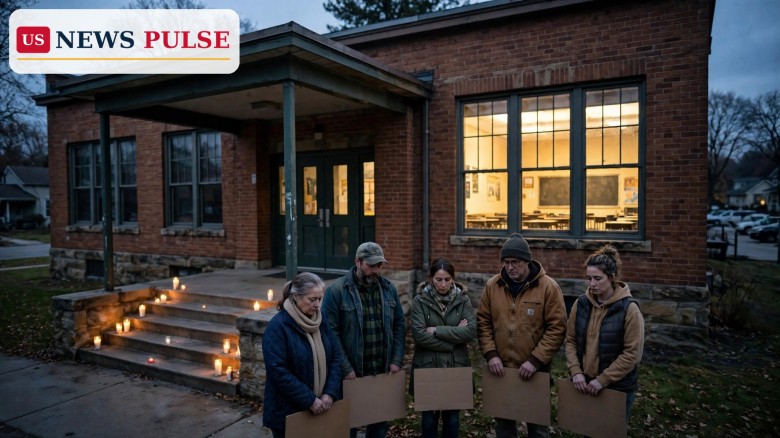
An Oshkosh teacher deported to Costa Rica this month has become the latest flashpoint in America's immigration debate, after an award-winning middle school educator was removed from the country she had called home for six years. Wendy Mendez, a Spanish teacher at Vel Phillips Middle School in Oshkosh, Wisconsin, was detained by federal immigration authorities on October 14 and deported on October 22, according to the U.S. Department of Homeland Security, leaving behind a classroom, a husband and two sons, and a community now planning vigils and daily protests in her name.
Mendez was recognised as one of eight Employees of the Year by the Oshkosh Area School District for the 2024-25 school year, an honour the district itself celebrated with a photograph of a visibly moved Mendez covering her face in joy as colleagues presented her with a congratulations balloon in front of her students. This week, that same district told families she is on unpaid leave, in good standing, and out of the classroom for the foreseeable future. The contrast between those two images — celebrated teacher, then deported mother — is why the case has travelled far beyond Winnebago County.
Key Points
- Wendy Mendez, a Spanish teacher at Vel Phillips Middle School in Oshkosh, Wisconsin, was arrested by ICE in Milwaukee on October 14 and deported to Costa Rica on October 22, according to the Department of Homeland Security.
- DHS says Mendez entered the United States legally on August 10, 2020, on a temporary basis, failed to leave by February 9, 2021, and was ordered removed on September 9, 2026, after failing to appear for immigration proceedings.
- A friend, Deb Nez, says Mendez never knew about the hearings because court notices were mailed to a former Chicago address the family had not used in more than three years, and that her lawyers had filed evidence of the error before she was removed.
- The Oshkosh Area School District says Mendez remains an employee in good standing on unpaid leave, and stresses her absence was not a school safety or performance issue.
- The community response includes daily protests outside the school and a candlelight vigil at Opera House Square in downtown Oshkosh from 6 to 7 p.m. on October 30.
What Happened
Mendez originally moved to Oshkosh from Costa Rica in 2020 with her husband and two young sons, the Milwaukee Journal Sentinel reported. She built a life there as a Spanish teacher at Vel Phillips Middle School, and during the 2024-25 school year the Oshkosh Area School District named her one of its eight Employees of the Year. Friends describe her as a teacher and psychologist with three master's degrees who had lived in Wisconsin for six years.
On October 14, U.S. Immigration and Customs Enforcement officers arrested Mendez in Milwaukee. According to her friend Deb Nez, writing on Facebook, Mendez was then moved among six detention centres in eight days, with stops in Wisconsin, Illinois, Kentucky, Louisiana and Texas. Nez alleged that Mendez spent three days in solitary confinement and slept on concrete floors and beds covered in mould, and wrote that she had barely slept during the ordeal. Those detention claims come from Nez's account; the Department of Homeland Security statements reported so far do not address them.
On October 22, according to DHS, Mendez was deported to Costa Rica. One local student newspaper, citing an anonymous source, had put the removal a day earlier, on October 21; the Journal Sentinel and other outlets reporting the department's confirmation give October 22, and this article follows the DHS date. Nez wrote on October 22 that Mendez had been deported without appearing before a judge to show the alleged notification error, adding: "I know my friend is safe now that she is out of the custody of ICE and their inhumane tactics. This experience has been eye opening to me as an American citizen. Where is the humanity? Where is the justice? I will not stop fighting for justice."
The personal cost, as Nez tells it, falls hardest on Mendez's family. Nez wrote that Mendez's 13-year-old son has Down syndrome, that Mendez is his primary caregiver, and that he cannot understand why his mother is not home. "Every time that he comes back from school, he sees her car and starts yelling that Mommy is home," Nez wrote in an earlier post. The Journal Sentinel said it had reached out to Nez for an interview but had not received a response as of publication.
Background and Context
The Department of Homeland Security's account of the case is short and legalistic. The department said Mendez legally entered the United States on a temporary basis on August 10, 2020, but remained beyond her authorised departure date of February 9, 2021. She was placed into removal proceedings on February 18, 2026, DHS said, and an immigration judge ordered her removal on September 9, 2026, after she failed to appear for her proceedings. The agency did not specify what type of visa or immigration authorisation Mendez held when she entered the country.
Nez disputes the circumstances, not the dates on the removal order itself. In an October 22 Facebook post, she said Mendez and her family were unaware of the immigration hearings because notices had been mailed to a former Chicago address they had not used in more than three years. Nez said U.S. Citizenship and Immigration Services had received the family's updated address within days of their move, and wrote: "This was not the first time that USCIS had made that mistake." According to Nez, Mendez's lawyers submitted evidence of the alleged notification error to the immigration court and filed a motion about the case, and the motion had been accepted by the court — but Mendez was deported before a judge could review the alleged error.
That claim — a missed hearing caused by a mailing error — is the heart of the dispute. DHS, in its statement, said Mendez "received due process and will remain in custody pending her removal," and defended its enforcement practices while encouraging people without legal status to leave voluntarily through the federal government's self-deportation programme. "Being in detention is a choice," the department said. "We encourage all illegal aliens to take control of their departure with the CBP Home App." The agency said the government was offering $3,000 and a free flight to people who voluntarily leave the United States.
Local reporting found no sign of a criminal record: a check of online court records turned up only divorce proceedings linked to Mendez, according to reporting by Civic Media and its partners. That detail matters to her supporters because President Donald Trump campaigned on sending immigration officers after "the worst of the worst." Wisconsin state Senator Chris Larson, a Milwaukee Democrat, made exactly that point in an October 27 Facebook post criticising the administration's enforcement practices: "This Administration continues to target immigrants who are pillars of their communities for enforcement action they once claimed would be reserved for 'the worst of the worst'."
Oshkosh Teacher Deported: A Community Responds
The Oshkosh Area School District moved quickly to reassure families — and to draw a line around what Mendez's absence is not. In an October 26 letter to families, the district wrote: "Due to unforeseen circumstances, Mrs. Mendez is currently out of the classroom for the foreseeable future. She is an employee in good standing and has been placed on an unpaid leave of absence. At no point was this a school safety or performance-related issue. The district is working through the process of obtaining more details and will provide more information if we are able."
The district added: "We know this situation brings heartbreak, frustration, and worry for many in our community. Additionally, whenever a sudden absence occurs, it naturally brings up questions or concerns for students. Our primary responsibility is to ensure every student feels safe, supported, and grounded." According to OshkoshToday, Superintendent Bryan Davis and Principal Amanda Patza told families that students in Mendez's classes had been informed, that school counsellors and student support staff were available to help them, and that dedicated classroom coverage had been arranged so coursework and routines continue without disruption. The district said it does not comment on confidential personnel matters as a matter of policy, but confirmed Mendez's good standing given the public nature of the situation.
The wider community response has been organised and sustained. The Winnebago Area Literacy Council, a nonprofit providing free adult literacy programmes in which Mendez had previously participated, said in an October 27 Facebook post: "We are deeply saddened by her absence in our community, and we want to take this opportunity to celebrate Wendy, her perseverance, and the incredible contributions she has made to Oshkosh." The council announced a gathering and candlelight vigil for Mendez from 6 to 7 p.m. on October 30 at Opera House Square, 315 N. Main St., in downtown Oshkosh.
Separately, a local group called Peaceful Patriots announced daily protests from 5 to 6 p.m. outside Vel Phillips Middle School on Jackson Street, to raise awareness of Mendez's case and show support for her and the local immigrant community. Danny Schierl, leader of the group, said the protests will continue indefinitely, that participants need not register or bring signs, and that the rallies are nonpartisan and welcome people of all political affiliations. "Any number of participants is a good number," Schierl said, explaining that the goal is to give people an opportunity to speak out, regardless of how many attend.
Reactions and Quotes
The reactions so far split along a familiar line: the government presents a closed legal process, while Mendez's friends, school and neighbours present a person. DHS said Mendez entered legally in 2020, overstayed, was placed in removal proceedings in February 2026, and was ordered removed in September after failing to appear. "Being in detention is a choice," the department said, pointing people to the CBP Home App and its $3,000 self-deportation offer.
Nez, by contrast, described a paperwork failure with human consequences. "This was not the first time that USCIS had made that mistake," she wrote of the notices sent to the old Chicago address. Of Mendez's son, she wrote: "She is his primary caregiver. He cannot understand why his mother is not here with him." And of the deportation itself: "Today she was deported without going in front of a judge to show the error."
The school district's message was deliberately narrow and protective: Mendez is "an employee in good standing," on unpaid leave, and "at no point was this a school safety or performance-related issue." The literacy council struck a warmer note: "We are deeply saddened by her absence in our community, and we want to take this opportunity to celebrate Wendy, her perseverance, and the incredible contributions she has made to Oshkosh." Senator Larson was the bluntest voice in elected office so far, accusing the administration of targeting "immigrants who are pillars of their communities for enforcement action they once claimed would be reserved for 'the worst of the worst'."
Why It Matters
The Mendez case matters because it tests the administration's own framing of immigration enforcement. If enforcement were limited to people with serious criminal records, a Spanish teacher with an Employee of the Year award, no apparent criminal record in the court records reporters checked, and a special-needs child at home would be an unlikely target. Her supporters say the case shows the net is cast far wider than promised. The administration's answer, in effect, is that the law is the law: an overstay, a removal order and a missed hearing are enough, regardless of a person's standing in the community.
It also matters because of the mailing-error claim. If court notices really did go to an address the family had abandoned more than three years earlier, despite the family having updated its address with immigration authorities, then the failure-to-appear order at the centre of the case rests on notice Mendez never received. That is precisely the kind of procedural question immigration courts are built to revisit — which is why Nez's claim that a motion had been accepted but never reviewed before deportation has angered supporters. Neither DHS nor the court has publicly addressed the mailing claim in the reporting reviewed for this article, so it remains an allegation, not an established fact.
Finally, the case lands five days before the November 3 midterm elections, in a swing state where immigration enforcement is already a live campaign issue. Oshkosh is not a border town, and Vel Phillips Middle School is not a detention centre — yet both are now part of the national argument about who gets deported, and why. The vigil on October 30 and the daily protests outside the school will keep that argument visible in the final days of the campaign, whether or not Mendez herself can watch from Costa Rica.
What Happens Next
The immediate next step is public, not legal: the candlelight vigil at Opera House Square in downtown Oshkosh from 6 to 7 p.m. on October 30, alongside the daily 5 to 6 p.m. protests outside Vel Phillips Middle School, which organisers say will continue indefinitely. Those events will show whether the community's anger sustains itself or fades once the headlines move on.
The legal path is less clear. Nez has vowed to keep fighting for justice, and Mendez's lawyers had already filed evidence of the alleged notification error before her removal. Whether a motion to reopen the case can succeed after deportation, and whether Mendez could ever return legally to Wisconsin, are questions no public statement has yet answered. Her district, meanwhile, has kept her on unpaid leave rather than terminating her employment — a status that leaves the door open, at least administratively, if her immigration situation ever changes.
Watch also for any response from federal officials to the mailing-error allegation itself. So far DHS has defended the removal in general terms without addressing whether notices went to the wrong address. A specific answer on that point — from DHS, from the immigration court, or from Mendez's lawyers — would determine whether this case becomes a story about a correctable bureaucratic mistake or a symbol of an enforcement system working exactly as designed.
Frequently Asked Questions
Who is Wendy Mendez?
Wendy Mendez is a Spanish teacher at Vel Phillips Middle School in Oshkosh, Wisconsin, who moved to the city from Costa Rica in 2020 with her husband and two young sons. The Oshkosh Area School District named her one of its eight Employees of the Year for the 2024-25 school year.
Why was Wendy Mendez deported?
According to the Department of Homeland Security, Mendez entered the United States legally on August 10, 2020, on a temporary basis, but did not leave by February 9, 2021. She was placed in removal proceedings on February 18, 2026, and an immigration judge ordered her removal on September 9, 2026, after she failed to appear for her proceedings. She was arrested by ICE in Milwaukee on October 14 and deported to Costa Rica on October 22.
What does her friend say went wrong?
Her friend Deb Nez says Mendez never received notice of her immigration hearings because they were mailed to a former Chicago address the family had not used in more than three years, even though the family had updated its address with U.S. Citizenship and Immigration Services. Nez says Mendez's lawyers submitted evidence of the error and a motion was accepted by the court, but Mendez was deported before a judge reviewed it. These claims have not been publicly confirmed by DHS or the court.
What has the school and community done?
The Oshkosh Area School District placed Mendez on unpaid leave, confirmed she remains an employee in good standing, said her absence was not a safety or performance issue, and arranged counselling support and classroom coverage for her students. The Winnebago Area Literacy Council organised a candlelight vigil for October 30, and a local group, Peaceful Patriots, began daily protests outside the school.
Can Wendy Mendez return to the United States?
That is not yet known. Her friend has vowed to keep fighting the case, and her lawyers had already filed evidence about the alleged notification error before her removal, but no public statement has confirmed whether a legal challenge after deportation could restore her ability to return. The district's decision to keep her on unpaid leave rather than dismiss her leaves her employment status open for now.
Related coverage: Brooklyn Bridge anti-ICE protest: 13 arrested as activists block traffic, ICE surge in Detroit: activists report stops near schools and voting site, and Wisconsin governor poll: Crowley leads Tiffany 51-44 in final Marquette survey.
Sources: Milwaukee Journal Sentinel, October 29, 2026; OshkoshToday, October 29, 2026; Advance-Titan, October 26, 2026; Civic Media / The Bug, October 27, 2026; WFRV via 99.5 PKR, October 27, 2026; U.S. Department of Homeland Security statements via those reports.
© 2026 US News Pulse. All rights reserved.
 Print
 Save