
East Potomac Golf Course to Close November 15 as Trump Plan Moves Forward
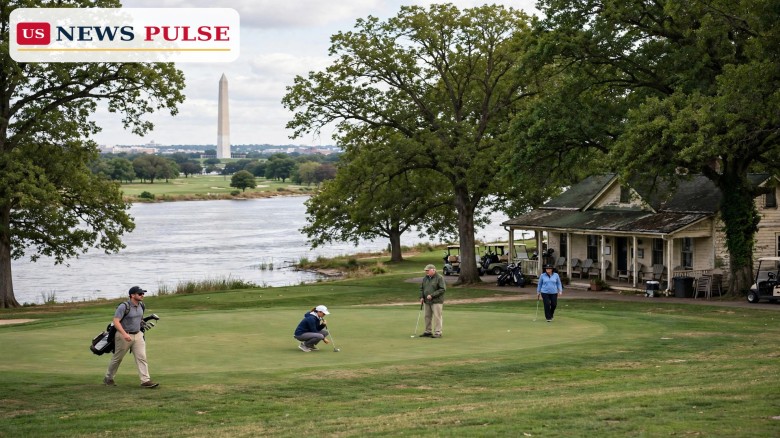
Washington's historic East Potomac Golf Course will close on November 15, the Trump administration has confirmed in a court filing, ending weeks of confusion over whether the president's championship redesign of the public course would go ahead at all. The National Park Service will shut East Potomac Park south of Buckeye Drive, including the golf course, under the president's directive, and a design by architect Tom Fazio will go to the National Capital Planning Commission on Friday ahead of a review meeting on December 3.
The filing matters because it is the first time the government has put the closure in writing in court. Until now, President Donald Trump had said publicly that the course would close on November 15 for a 15-month renovation, while his own lawyers and Interior Department officials told a federal judge they knew of no such roadmap. On Wednesday, the administration's own notice settled that contradiction in the president's favour, even as a court injunction still bars further tree removal and requires advance notice before irreversible changes.
Key Points
- The Trump administration has confirmed in a court filing that East Potomac Golf Course will close on November 15 for a championship redesign.
- The National Park Service will submit a Tom Fazio design to the National Capital Planning Commission on Friday, with a review meeting set for December 3.
- The 36-hole public facility, where fees top out at $48, would become a single upscale 18-hole course capable of hosting Ryder Cups and major championships.
- The miniature golf course and Ohio Drive, popular with walkers, joggers and cyclists, will also close during the renovation.
- Judge Ana Reyes's preliminary injunction still stands: no more trees may be removed without a court order, and at least 10 business days' written notice is required before irreversible changes.
What Happened
On Wednesday, October 29, 2026, the Trump administration filed a legal notice acknowledging that the National Park Service "will close East Potomac Park south of Buckeye Drive, including the Golf Course, consistent with the President's directive." The language, reported by GOLF.com, is the administration's first formal court acknowledgement of a closure plan that Trump has described in public for weeks.
The filing also set out the next procedural steps. The Park Service will submit a design from Fazio to the National Capital Planning Commission on Friday, and the commission will review the plan at a December 3 meeting. The government pledged that "with respect to the ongoing planning process to renovate the East Potomac Golf Course itself, Defendants will follow all relevant procedural requirements in finalizing and implementing the Fazio plan."
That pledge is significant because the lawsuit at the heart of the dispute argues that the administration began altering a site listed on the National Register of Historic Places without the legally required environmental reviews and historic preservation consultations. Judge Reyes, who is overseeing the case, has said she is not interested in shaping the government's plans for the property, only in ensuring that those plans follow the rule of law. Now that a formal plan is about to be delivered, she will likely have to rule on whether the plan itself is lawful.
On Wednesday evening, Trump returned to the subject on Truth Social, describing the golf course as "highly dangerous, dilapidated, and absolutely disgusting." He singled out the double-decker driving range for its "exposed nails and disintegrating wood," and promised: "The current condition of the golf course is a National Disgrace, but we will make it a WORLD CLASS PUBLIC Golf Course that is AFFORDABLE for locals — Just like the Great and Historic Public Courses of Torrey Pines and Bethpage Black, only better."
Background and Context
East Potomac Golf Links is one of Washington's most familiar public recreation sites. It sits on a peninsula in East Potomac Park, bounded by the Potomac River on the west and the Washington Channel on the east, with Hains Point at its southern tip. The National Park Service's historic resource study records that the first nine holes, designed by Walter J. Travis, opened to the public on July 8, 1920, and that the remaining holes of the original design were completed by the summer of 1923. The complex grew to 36 holes, with an 18-hole miniature golf course, a 100-stall driving range and practice facilities, all built between 1917 and 1931.
From the start it was public golf for the people: the first fee was 25 cents, and President Warren Harding famously turned up unannounced in April 1921, paid his quarter and played a round. The course also occupies a place in the struggle against segregation: in 1941 it was the site of efforts to desegregate Washington's public golf courses, a history the Park Service itself records. Today the facility still trades on affordability, with rates reported from $17 to $48, and it served roughly 130,000 rounds in 2025, according to reporting on the dispute.
The Trump administration's redesign was unveiled by Interior Secretary Doug Burgum on May 14, 2026. It envisions a single 18-hole championship course designed by Fazio, stretching to 7,660 yards, along with a nine-hole pitch-and-putt and a revamped driving range. Burgum compared the concept to public championship courses such as Bethpage Black and Torrey Pines, saying the facility would offer championship-quality golf at affordable, highly discounted rates. Fazio, who has designed multiple courses for the Trump Organization, described the site as having "Pebble Beach quality land" and said he initially turned the project down before changing his mind after visiting the property.
The dispute escalated in October, when crews cut down more than 400 trees at the course. The D.C. Preservation League and two local golfers, who had sued in February, argued that the tree removal was part of the broader redevelopment, pursued despite repeated statements from government lawyers that no final plan existed. The Interior Department said the cutting was routine maintenance to remove hazardous, invasive, dying or declining trees, but the timing raised questions among golfers and preservationists.
East Potomac Golf Course: The Court Fight So Far
Judge Ana C. Reyes issued a preliminary injunction on Monday, October 26, 2026, converting an earlier short-term pause into a longer-lasting order. Her 70-page opinion bars the government from cutting, removing or damaging more trees in East Potomac Park without a court order, and requires "no less than ten business days' written advance notice" before closing the park or making any irreversible change to its landscape, vegetation, pathways, structures or other features.
Reyes's opinion was strikingly blunt about the gap between the president's public statements and the government's position in court. "Rarely, if ever, has the United States Department of Justice urged a federal court not to believe the sitting President," she wrote. "Not to believe what the President has repeatedly told the American public. And yet, here we are."
Trump responded within hours, writing on Truth Social: "We are closing the East Potomac Golf Course Site as scheduled on November 15th." He said the judge "has absolutely no right to hold up this very important and beautiful Project" and that giving her notice "is not fair, appropriate, or Constitutional." Speaking to reporters at Joint Base Andrews, he said the project "has the go-ahead." It does not, in legal terms: the injunction stands unless an appeals court lifts it, and Trump cited no ruling holding a notice requirement unconstitutional. The Justice Department appealed the injunction to the U.S. Court of Appeals for the D.C. Circuit on Tuesday, October 27, without requesting an immediate stay, leaving the restrictions in effect.
The administration had also moved to have Reyes removed from the case, accusing her in a 14-page motion of deep-seated antipathy toward the administration. That effort had not displaced her by the time she issued the preliminary injunction, and the new filing now puts the government on record as moving ahead on the very timetable she questioned.
Reactions and Quotes
Trump's Wednesday evening post framed the existing course as beyond saving and the replacement as a public asset. "The current condition of the golf course is a National Disgrace, but we will make it a WORLD CLASS PUBLIC Golf Course that is AFFORDABLE for locals," he wrote, comparing the planned course to Torrey Pines and Bethpage Black, "only better."
Reyes, by contrast, has framed the case as one about process, not golf. "The Court still does not speak for the trees. It speaks only for the rule of law," she wrote, according to the Associated Press. Her order does not decide whether Trump's proposed overhaul is ultimately lawful; it preserves the site while the parties litigate the underlying challenge.
Preservationists and local golfers have treated the injunction as a victory, fearing that Trump's vision would rob the city of one of its most vital and historic recreational outlets. Their concern is practical as well as historic: reducing the facility from 36 holes to 18 would significantly cut capacity for recreational golfers, and critics have questioned whether a 7,660-yard championship layout makes sense for a site too small to host a major championship's hospitality infrastructure. Supporters of the plan counter that a single championship course, kept affordable, would be a better public asset than the current worn facility, the argument Burgum made when he unveiled the design in May.
The New York Times, cited by GOLF.com, noted that Trump has "stacked the board with loyalists" on the National Capital Planning Commission, and that it "has reliably voted to approve other proposals that he has sent." That history will colour how the December 3 review is received, whatever the commission decides.
Why It Matters
East Potomac is a small patch of land with an outsized symbolic load. It is public golf on federal parkland, a century-old, affordable facility in a city where green space is tightly watched, and it sits within the National Register-listed East Potomac Park. How it is changed, and whether the change follows environmental and historic preservation law, will be read as a test of how far a president can reshape federal parkland on his own timetable.
The case also tests the credibility of the government's word in court. Reyes's opinion turned on the contradiction between what Trump said publicly and what his lawyers told the court. The new filing resolves that contradiction in one direction: the government now agrees, on the record, that the closure is happening on November 15. That may strengthen the administration's position on the facts, but it also sharpens the legal question. If the closure and the Fazio plan are real, then the environmental and preservation reviews the plaintiffs say were skipped become harder to describe as premature.
For ordinary Washington golfers, the stakes are immediate and concrete. A 15-month closure removes one of the city's cheapest places to play, along with the miniature golf course and the Ohio Drive loop used daily by walkers, joggers and cyclists. For the city's other public courses, the outcome may set a precedent: the National Links Trust, which holds a 50-year lease to operate Washington's three historic public courses, had planned a phased rehabilitation beginning elsewhere, with East Potomac later. A presidential redesign imposed from above cuts across that slower, review-heavy model.
What Happens Next
The immediate dates are clear. The Park Service submits the Fazio design to the National Capital Planning Commission on Friday, October 30, 2026. The commission reviews the plan at its December 3 meeting. The course itself is scheduled to close on November 15, subject to the injunction's notice requirement and to any ruling from the D.C. Circuit on the administration's appeal.
Watch, too, for what Reyes does next. With a formal plan now in play, she will likely have to rule on its legality, and the plaintiffs may ask her to test whether the closure itself complies with the notice rule. The administration, for its part, has pledged to follow all relevant procedural requirements in finalising and implementing the Fazio plan, a commitment the plaintiffs will hold it to, document by document.
If the plan survives review and litigation, work would begin on a 15-month renovation, turning a worn 36-hole municipal complex into a single 18-hole championship course with a pitch-and-putt and a rebuilt range. If it does not, East Potomac will remain a case study in how a public park became a courtroom battleground, and in how a president's public promises collided with his own government's court filings.
Frequently Asked Questions
When will East Potomac Golf Course close?
November 15, 2026, according to the Trump administration's court filing of October 29, 2026, which says the National Park Service will close East Potomac Park south of Buckeye Drive, including the golf course, consistent with the president's directive.
How long will the renovation take?
Trump has said the renovation will last 15 months, transforming the 36-hole facility into a single upscale 18-hole championship course.
What will happen to the miniature golf course and Ohio Drive?
Both will close during the renovation, according to GOLF.com's report of the filing. Ohio Drive encircles the peninsula and is popular with walkers, joggers and cyclists.
Can the course still be saved by the courts?
Judge Reyes's preliminary injunction still bars further tree removal without a court order and requires at least 10 business days' written notice before irreversible changes. The administration has appealed, but has not sought an immediate stay, so the restrictions remain in effect.
When will the new design be reviewed?
The National Park Service will submit Tom Fazio's design to the National Capital Planning Commission on Friday, October 30, 2026, and the commission will review it at a December 3 meeting.
Related coverage on US News Pulse: Judge Blocks Trump East Potomac Golf Course Renovation After 400 Trees Felled; Trump Fires Back at Obama Over Cheesecake Factory White House Renovation Jibe; US News Pulse homepage.
© 2026 US News Pulse. All rights reserved.
 Print
 Save