
Mastercard Q3 Earnings Beat Estimates as Cross-Border Spending Jumps in 2026
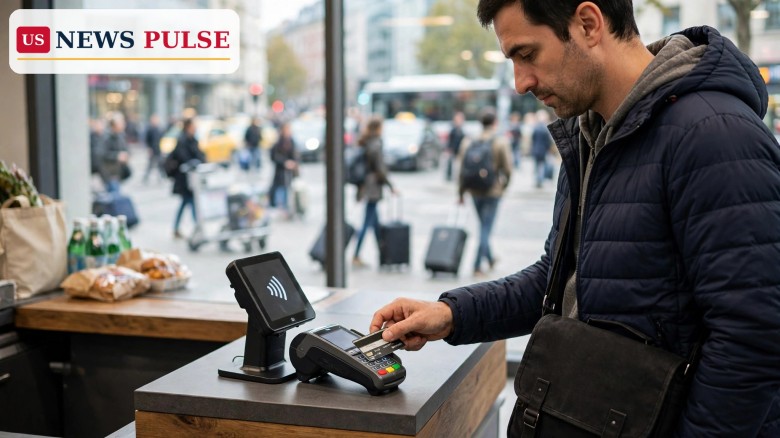
Mastercard Q3 earnings beat Wall Street estimates on Thursday, October 29, 2026, as Americans and travellers abroad kept spending through their cards and the payments giant sold more of its high-margin services to banks and merchants. The Mastercard Q3 earnings report showed net revenue up 14% from a year earlier to $9.8 billion and adjusted earnings of $5.31 per share, up 21.2% year over year, in a quarter that underlined how resilient consumer spending has remained even as interest rates stay high and households complain about prices.
Key Points
- Mastercard reported third-quarter 2026 adjusted earnings of $5.31 per share, up 21.2% year over year, beating the Zacks consensus estimate by 3.3%.
- Net revenue rose 14% to $9.8 billion, topping the consensus of about $9.66 billion, helped by cross-border volumes, pricing and value-added services.
- Gross dollar volume rose 7.5% in local currency to $3 trillion, cross-border volumes grew 11%, and switched transactions rose 9% to 49.3 billion.
- Value-added services and solutions revenue jumped 19% to $4.1 billion, while the adjusted operating margin widened 70 basis points to 60.5%.
- Mastercard shares rose about 2.4% in premarket trading to around $625 from Wednesday's close of $610.31, and climbed nearly 5% later in the session.
- Management reaffirmed its 2026 outlook for low-teens revenue growth, and guided fourth-quarter revenue to the high end of low-double-digit growth.
What Happened
Mastercard, the world's second-largest card network, reported its third-quarter results before the opening bell on Thursday, October 29, 2026, joining a busy earnings day that also featured Eli Lilly, Caterpillar, Merck and a string of other large companies. The headline numbers cleared the bar on both the top and bottom lines. Adjusted earnings of $5.31 per share compared with a Zacks consensus estimate of about $5.14 to $5.17, depending on the survey, while revenue of $9.81 billion beat forecasts of roughly $9.63 billion to $9.66 billion. On a generally accepted accounting basis, Mastercard earned $4.63 billion, or $5.28 per share, in the quarter.
The beat was broad-based rather than driven by a single line item. Payment network net revenue rose 11% to $5.7 billion, lifted by higher domestic and cross-border transaction volumes, more transaction processing and pricing. Value-added services and solutions, the faster-growing arm that sells fraud detection, security, authentication and customer-engagement tools to banks and merchants, grew 19% to $4.1 billion, beating model estimates of about $4 billion. Adjusted operating income rose 15% to $5.9 billion, and the adjusted operating margin improved to 60.5% even as adjusted operating expenses climbed 12% to $3.9 billion on higher general and administrative costs.
Investors reacted quickly. Mastercard shares, which had closed on Wednesday at $610.31 and were up 6.9% for the year, rose about 2.4% in premarket trading to around $625 and extended gains to nearly 5% during Thursday's session, outpacing rivals Visa, which gained about 1.7% in premarket trading, and American Express, up about 1.2%. The move stood out on a day when the wider market was under pressure after Alphabet's earnings miss reignited worries about artificial intelligence spending, with the Nasdaq opening more than 1% lower.
Background: How Mastercard Makes Its Money
Mastercard does not lend money to cardholders. Its business is the toll road of electronic payments: every time a Mastercard-branded card is swiped, tapped or used online, the company earns fees for routing, authorising and clearing the transaction, and it sells additional services on top of that network. That model makes its results a useful real-time gauge of consumer spending, travel and the shift from cash to cards, and it explains why investors watch three operating metrics so closely each quarter.
The first is gross dollar volume, the total dollar value of purchases and cash obtained with Mastercard and Maestro cards. In the third quarter it rose 7.5% in local currency to $3 trillion, slightly ahead of model estimates. The second is cross-border volume, spending on cards outside the country where they were issued, which is closely tied to international travel and e-commerce. It grew 11% in local currency, a sign that travel demand and overseas online shopping held up through the summer. The third is switched transactions, the individual authorisations and clearings Mastercard processes, which rose 9% to 49.3 billion, though that was slightly below one model estimate.
As of September 30, 2026, clients had issued 3.8 billion Mastercard and Maestro-branded cards, and the company ended the quarter with $10.1 billion in cash and equivalents, $58.1 billion in total assets and $22.2 billion in long-term debt. It generated $11.9 billion in operating cash flow in the first nine months of 2026, repurchased 5.3 million shares for $3 billion in the quarter, paid $763 million in dividends, and bought back another 1.1 million shares for about $0.6 billion between October 1 and October 26, leaving $4.9 billion under its authorised repurchase programmes.
The quarter also fits a strong run for the card networks. Visa reported fiscal fourth-quarter results earlier in the week that beat expectations, with revenue up 13% to $12.1 billion and a record full-year net revenue of $45.9 billion, while American Express posted third-quarter earnings of $4.68 per share, up 13%, on revenue of $20.1 billion. Together, the three reports suggest that card spending, cross-border travel and demand for payment services remained healthy into the autumn, even as the Federal Reserve held rates at 3.75% to 4.00% at its October meeting and signalled it would watch inflation data closely before its December decision.
Mastercard Q3 Earnings: Cross-Border Volumes Lead the Beat
The clearest story inside the Mastercard Q3 earnings report is the strength of cross-border spending. Cross-border volumes grew 11% in local currency, payment network revenue rose 11%, and value-added services grew even faster at 19%, driven by pricing and strong demand for security, digital and authentication products as well as customer acquisition and engagement services. That mix matters because value-added services carry high margins and are less exposed to the rebates and incentives Mastercard pays to banks, which rose 18% in the quarter on higher activity and new and renewed deals.
Management's commentary around the results also pointed to where the company is placing its next bets. Mastercard has been building out tools for agentic artificial intelligence commerce, in which software agents can make purchases on a consumer's behalf, and for cross-border money movement. The centrepiece is its newly launched Global Money Platform, a unified payments infrastructure service built on its $1.8 billion purchase of stablecoin provider BVNK. This month it also launched Stablecoin Security, a risk product designed to help banks and payment providers spot fraud or scams before a stablecoin transaction settles on a public blockchain.
The strategy mirrors a wider shift across the payments industry. Visa, which also beat expectations this week, has likewise been leaning into artificial intelligence and stablecoins as long-term growth areas, and both networks are competing to be the rails on which new forms of digital money move. For Mastercard, the bet is that its existing relationships with banks, merchants and regulators give it an advantage over crypto-native rivals, while its fraud and authentication tools can solve the trust problem that has held back stablecoin payments for everyday purchases.
Reactions and Market Response
The market's verdict on Thursday was unambiguously positive for Mastercard even as the broader market fell. Shares rose about 2.4% before the open and were up between 4.66% and 4.77% in later quotes, according to InvestingPro data cited in market coverage, well ahead of Visa and American Express. Analyst sentiment heading into the print was already constructive: of 44 analysts polled by FactSet, 39 recommended buying the stock and four rated it Hold, and data provider Investing.com showed 24 positive earnings revisions against five negative ones over the previous 90 days.
Zacks Investment Research, whose consensus the company beat by 3.3%, carries Mastercard at Rank #2, or Buy. The stock's run into the report had been steady rather than spectacular: it was up 6.49% over the previous three months and 10.23% over the previous twelve months as of Wednesday's close, according to Investing.com data, leaving room for a relief rally on a clean beat. Some of the recent pressure on the shares had come from worries that higher interest rates could slow spending and travel, a concern Thursday's cross-border and transaction numbers did little to support.
The contrast with the rest of Thursday's market was sharp. Alphabet shares had plunged after its own earnings miss, dragging the Nasdaq down more than 1% at the open, while Caterpillar fell about 8% after its revenue merely matched expectations despite a profit beat. Mastercard's gain, alongside solid results from Eli Lilly and others, showed investors were still willing to reward companies that beat on both revenue and profit, particularly when the beat came with a reaffirmed outlook rather than a warning.
Why It Matters
Mastercard's quarter matters beyond its shareholders because card data is one of the fastest reads on the American consumer. A 14% revenue increase, 7.5% growth in gross dollar volume and 11% growth in cross-border volume all point in the same direction: households kept spending, travelling and shopping online through the third quarter, even with borrowing costs elevated and the economy digesting a long government funding fight and a Federal Reserve on hold. That picture lines up with Thursday's other big data point, the advance estimate showing the economy grew at a 3.4% annual rate in the third quarter, faster than forecasters expected.
It also matters for the competitive map of money. Mastercard and Visa together dominate card payments in the United States, and their parallel pushes into stablecoins and AI-driven commerce will shape how Americans pay in the coming years. If stablecoin payments take off, the networks want to be the trusted layer that moves them, rather than being bypassed by them. Thursday's launch of the Global Money Platform and Stablecoin Security shows Mastercard intends to compete for that role aggressively, using acquisitions like BVNK and its fraud expertise as weapons.
For consumers, the near-term effect is indirect but real. Strong card-network profits are funded by the fees merchants pay, which are ultimately reflected in prices, and by the rebates networks pay banks, which fund card rewards. The regulatory backdrop remains live: the Federal Trade Commission this week ordered nine large companies, including DoorDash, Instacart, Target and Walmart, to disclose how personal data shapes prices, a reminder that how payments data is used is under growing scrutiny in Washington.
What Happens Next
Management guided fourth-quarter net revenue to grow at the high end of the low-double-digit range year over year, with adjusted operating expenses rising at a low-teens pace, and reaffirmed its full-year 2026 outlook for low-teens revenue growth with adjusted operating expenses at the high end of low-double-digit growth. Investors will test that guidance against the holiday quarter, traditionally the strongest for card spending, and against the first reads on Black Friday and December travel.
The next big test for the payments sector comes after the close on Thursday, when Amazon reports third-quarter results, and in the coming weeks as retailers report holiday trading. For Mastercard itself, the questions are whether cross-border growth can hold above 10% into the winter travel season, whether value-added services can sustain growth near 19%, and whether the Global Money Platform and stablecoin products begin to show up in revenue rather than just in strategy presentations. If the answers are yes, Thursday's rally may prove to be the start of a re-rating rather than a one-day reaction.
Frequently Asked Questions
What did Mastercard report for Q3 2026?
Mastercard reported net revenue of $9.8 billion, up 14% year over year, and adjusted earnings of $5.31 per share, up 21.2%, both beating Wall Street estimates. GAAP net income was $4.63 billion, or $5.28 per share.
Why did Mastercard stock rise on October 29, 2026?
The stock rose about 2.4% in premarket trading and nearly 5% later in the session because the company beat on both revenue and earnings, reported 11% cross-border volume growth and 19% value-added services growth, and reaffirmed its full-year outlook.
What are Mastercard's cross-border volumes?
Cross-border volumes measure spending on cards outside the country where they were issued, closely linked to international travel and cross-border e-commerce. They grew 11% in local currency in the third quarter of 2026.
What is Mastercard's Global Money Platform?
It is a newly launched unified payments infrastructure service built on Mastercard's $1.8 billion purchase of stablecoin provider BVNK, aimed at cross-border money movement, alongside a new Stablecoin Security fraud-detection product.
What is Mastercard's outlook for 2026?
Management reaffirmed low-teens net revenue growth for full-year 2026, with fourth-quarter revenue expected at the high end of low-double-digit growth and adjusted operating expenses rising at a low-teens pace.
Read more: Visa Q4 Earnings Beat Estimates as Record $45.9 Billion Year Lifts Dividend, PayPal Q3 Earnings Beat Estimates as Revenue Misses and Guidance Rises and Alphabet Q3 Earnings Miss Sends Shares Down 10% as AI Spending Burns Cash.
© 2026 US News Pulse. All rights reserved.
 Print
 Save