
Fairfax County Officers Shot in Chantilly Traffic Stop, Suspect in Custody
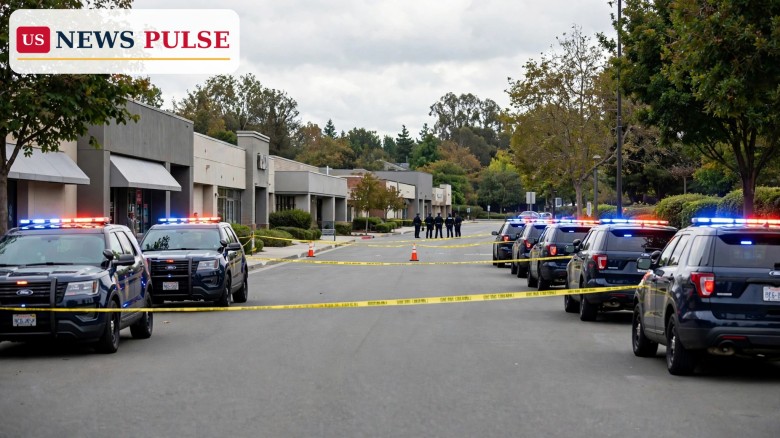
Two Fairfax County police officers were shot during a traffic stop in Chantilly, Virginia, on Wednesday afternoon, October 28, 2026, and a suspect is in custody, according to the Fairfax County Police Department. Both officers were taken to hospital with injuries that police described as not life-threatening, after gunfire was exchanged during the stop in the 4000 block of Majestic Lane, near the Greenbriar Town Center shopping centre.
The shooting, at about 3 p.m., shut down a stretch of Majestic Lane between Lee Jackson Highway and Meadow Hill Lane while detectives investigated, and drivers were asked to avoid the area. Police have not publicly identified the officers or the suspect, and have not yet said what prompted the traffic stop, whether a weapon was recovered, or whether the suspect was injured in the exchange of gunfire. The Fairfax County officers shot in the Chantilly traffic stop are the latest reminder of how quickly a routine roadside encounter can turn violent, and the investigation is still in its early stages.
Key Points
- Two Fairfax County police officers were shot during a traffic stop at about 3 p.m. on Wednesday, October 28, 2026, in Chantilly, Virginia.
- The shooting happened in the 4000 block of Majestic Lane, near the Greenbriar Town Center shopping centre.
- Both officers were taken to hospital with injuries described by police as not life-threatening.
- A suspect is in custody, but police have not publicly identified the suspect or the officers.
- Majestic Lane was closed between Lee Jackson Highway and Meadow Hill Lane while police investigated the scene.
What Happened
According to the Fairfax County Police Department, the incident began as a traffic stop on Wednesday afternoon in Chantilly, a community in western Fairfax County, Virginia's most populous county. At about 3 p.m., in the 4000 block of Majestic Lane, gunfire was exchanged between officers and a suspect. Two officers were struck and taken to hospital. Police said their injuries were not life-threatening, a detail that will come as a relief to their families and colleagues, but also a reminder that the outcome could easily have been far worse.
The suspect was taken into custody, police said. No further details about the suspect have been released, including a name, an age, or any charges. It was also not immediately clear whether the suspect was injured during the exchange of gunfire. That gap in the public record is normal in the first hours after a police shooting: detectives must first secure the scene, interview witnesses, recover any weapons and video, and notify families before they can give a fuller account.
The location matters. Majestic Lane runs through a busy commercial area beside Greenbriar Town Center, a shopping destination with dozens of retailers in Chantilly, close to Lee Jackson Highway, which is U.S. Route 50. A shooting at 3 p.m. on a weekday afternoon, in daylight, in a place where shoppers and commuters are coming and going, is precisely the kind of incident that rattles a community, even when, as here, police say the immediate danger has passed with a suspect in custody.
Police closed Majestic Lane between Lee Jackson Highway and Meadow Hill Lane to investigate, and asked drivers to avoid the area and take an alternate route. Road closures of this kind usually last for hours after a police shooting, because investigators must photograph and map the scene, mark where shots were fired from and where they landed, and collect shell casings and other physical evidence before traffic can safely return.
Background/Context
Chantilly sits in western Fairfax County, between Washington Dulles International Airport and the county's suburban communities, and it is policed by the Fairfax County Police Department, one of the largest local police agencies in Virginia. Traffic stops are among the most common, and most unpredictable, contacts between police and the public: an officer approaching a vehicle has limited information about who is inside, whether anyone is armed, or whether the stop will end with a citation, an arrest, or, rarely, violence.
That unpredictability is why police shootings during traffic stops draw such close attention, and why departments treat them as major investigations from the outset. In Virginia, as in most states, a shooting involving officers typically triggers parallel tracks: a criminal investigation into the suspect's actions, and an administrative review of the officers' actions, including whether their use of force complied with department policy. If a suspect is charged, prosecutors will separately decide which offences the evidence supports.
What is known so far about the Chantilly case is deliberately limited, and that is worth stating plainly. Police have confirmed the time, the place, the number of officers injured, the seriousness of their injuries, and that a suspect is in custody. They have not confirmed the reason for the stop, the sequence of shots, the type of weapon involved, or whether any bystanders were hurt or at risk. None of that should be guessed at: early reporting on police shootings is often corrected as video, witness accounts and forensic evidence become available.
The broader context is a week in which police shootings have already made national news more than once. In New Jersey, the state attorney general's office is investigating a fatal encounter in Moonachie, Bergen County, in which a state trooper shot and killed a man on October 28. In Chicago, an off-duty FBI agent shot dead a man in the Pilsen neighbourhood on October 26 after, police said, the man fired at a homeless encampment. Each case is different, and each will be judged on its own facts, but together they underline how often American policing's most dangerous moments happen in seconds, on ordinary streets, far from any planned operation.
Fairfax County Officers Shot: What Police Have — and Have Not — Said
The Fairfax County officers shot in Chantilly are, as of Thursday morning, recovering from injuries that police have described as not life-threatening. That single fact is the most important one in the story so far: two officers who went to work on a Wednesday afternoon were shot, and both are expected to survive. Everything else remains, for now, unconfirmed.
Police have not said how many shots were fired, who fired first, or what led officers to make the stop in the first place. They have not said whether the suspect was armed with a gun recovered at the scene, whether the suspect fired from inside a vehicle or after getting out, or whether other officers returned fire. They have not released the names of the officers, the suspect, or the hospital where the officers are being treated. Reporters seeking more detail were told that more information would be shared as the investigation unfolds.
That restraint can frustrate readers, but it serves a purpose. Naming a suspect before charges are filed, or describing a sequence of shots before witnesses have been interviewed and any available video reviewed, risks locking in a version of events that later evidence contradicts. The cost of waiting is uncertainty for a day or two; the cost of rushing can be a wrongful accusation, or a compromised prosecution.
Reactions/Quotes
There has been no detailed public statement yet from Fairfax County police leadership about the Chantilly shooting beyond the initial account given to reporters: two officers hospitalised with non-life-threatening injuries, a suspect in custody, and a road closed for investigation. No quotes from the county police chief, the sheriff, or county officials about this incident were available in the first reporting, and this article does not invent any.
What usually follows in a case like this is a sequence readers can expect. Police will issue a further update once the officers' families have been fully briefed and once detectives have a clearer picture of the sequence of events. If charges are filed, the suspect's name, the charges, and any court date will normally be released through the police department or the Commonwealth's Attorney's Office for Fairfax County. If any officer fired a weapon, that use of force will be reviewed under department policy, a process that typically takes weeks rather than hours.
Local reaction, in the meantime, is likely to be felt most keenly in Chantilly itself, where a daytime shooting beside a shopping centre is not an everyday event. Shopkeepers, shoppers and commuters who use Majestic Lane and Lee Jackson Highway will have seen the road closure and the police presence on Wednesday afternoon, and many will be waiting for the same answers as everyone else: what happened, why, and whether anyone else was in danger.
Why It Matters
This story matters for three reasons. First, because two police officers were shot while doing a job that requires them to walk up to unknown vehicles, alone or in pairs, dozens of times a day. Whatever the circumstances of this particular stop turn out to be, the risk is inherent to the work, and it is borne by officers in every part of the country.
Second, because the public has a legitimate interest in a full and accurate account. A police shooting is an exercise of state power in its most serious form, and it deserves scrutiny even when, as here, the officers are the ones who were wounded. Transparency about what happened protects the officers, the suspect, and the community alike, because it replaces rumour with evidence.
Third, because Chantilly is not an isolated place. It is part of the Washington metropolitan area, home to hundreds of thousands of people who drive the same roads, shop at the same centres, and are stopped by the same police department. An incident here resonates locally in a way that a distant story does not, and it will shape, at least for a time, how residents think about safety on their own streets.
What Happens Next
The investigation will now move through its standard stages. Detectives will interview the officers, the suspect, and any witnesses; review any body-worn camera footage, dashboard camera footage, and surveillance video from nearby businesses; and examine the scene evidence, including any weapons and shell casings. The road closure will lift once that work is complete, and normal traffic will return to Majestic Lane.
Next, expect a police update with the suspect's identity and any charges, most likely once the suspect has been formally charged and booked. If the suspect was injured, hospitals and police will confirm that in due course. The officers' conditions will be updated if they change, and their names may be released once their families agree and the department's policy allows.
Longer term, the case will be reviewed by prosecutors, who will decide whether the evidence supports charges such as attempted murder of a law enforcement officer, malicious wounding, or firearms offences, depending on Virginia law and the facts established. That charging decision, when it comes, will be the moment the public record of this case becomes substantially fuller than it is today. Until then, the confirmed facts are few, but they are enough to report responsibly: two officers shot, both expected to recover, one suspect in custody, and an investigation under way.
Frequently Asked Questions
Where did the Fairfax County officers shooting happen?
In the 4000 block of Majestic Lane in Chantilly, Virginia, near the Greenbriar Town Center shopping centre, at about 3 p.m. on Wednesday, October 28, 2026.
How badly were the officers injured?
Police said both officers were taken to hospital with injuries that were not life-threatening. Their names have not been publicly released.
Is the suspect in custody?
Yes. Police said a suspect is in custody, but have not publicly identified the suspect or said whether the suspect was injured.
What caused the traffic stop?
Police have not yet said what prompted the stop, who fired first, or whether a weapon was recovered. Those details are part of the ongoing investigation.
Is the area safe now?
Police closed Majestic Lane between Lee Jackson Highway and Meadow Hill Lane to investigate and asked drivers to avoid the area. With a suspect in custody, police have not reported any ongoing threat to the public.
Related coverage on US News Pulse: an off-duty FBI agent's fatal shooting in Chicago's Pilsen neighbourhood, the New Jersey attorney general's investigation into the fatal Moonachie trooper shooting and a New York pipeline inspector sentenced for faking gas safety tests.
© 2026 US News Pulse. All rights reserved.
 Print
 Save