
Vance Donor Network Brazil Investigation Ordered by Supreme Court Justice
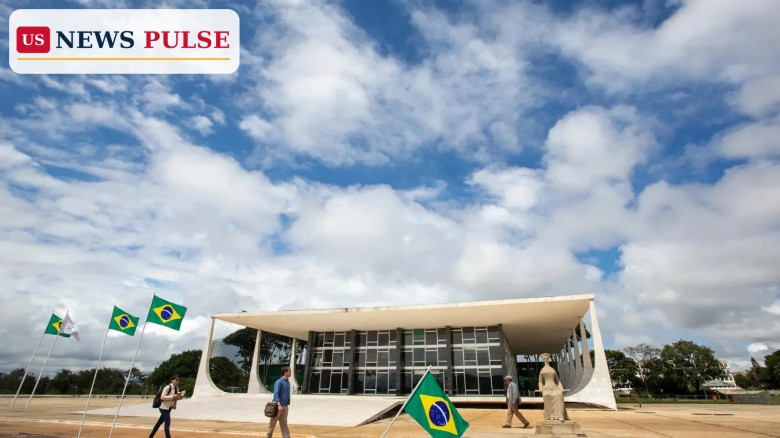
A Brazilian Supreme Court justice has ordered federal police to investigate whether a donor network co-founded by United States Vice President JD Vance illegally helped finance the presidential campaign of Flávio Bolsonaro, in a ruling that lands a foreign-funding inquiry squarely on one of Washington's most powerful political operations just five days before America's midterm elections. The Vance donor network Brazil investigation, ordered on Tuesday, October 27, 2026, asks police to trace the nature of any contacts between the Rockbridge Network and Bolsonaro's campaign, and to identify who paid for and contracted electoral advertising attributed to foreign profiles.
The order, reported by The Washington Post, comes after Lula won re-election on Sunday, October 25, beating Flávio Bolsonaro by about 51.8% to 48.2%, and after the defeated senator fled to the United States, where the Trump administration granted him and his family visas. No finding of wrongdoing has been made against Vance, Rockbridge or anyone else named in the order, and Rockbridge has denied any involvement, saying Brazilians falsely claimed a relationship with the network. But the investigation itself, ordered by one of Brazil's highest judges, opens a new front in the already strained relationship between Washington and Brasília.
- The order: Supreme Court Justice Flávio Dino directed Brazil's federal police to investigate the Rockbridge Network's alleged links to Flávio Bolsonaro's campaign, in a 38-page decision written in Portuguese.
- The question at the centre: whether the network provided money, personnel, services or other economic benefits to the campaign, which Brazilian law strictly forbids from foreign sources.
- The denial: Rockbridge said Brazilians "made false representations about their relationship with Rockbridge and created documents representing or referencing Rockbridge without Rockbridge's knowledge or consent."
- The timing: the order came two days after Lula's runoff win, and days after Bolsonaro left Brazil after the Supreme Court ordered him to surrender his passports in a separate $10 million money-laundering and corruption probe, which he denies.
- The wider stakes: the probe reaches into a network whose backers, according to Reuters, include billionaire Peter Thiel and megadonor Rebekah Mercer, and whose associates include senior Trump administration officials.
What Happened
Justice Flávio Dino's ruling, issued on Tuesday, October 27, 2026, cited "reports of a potential influx of foreign funds to benefit an election campaign" and said the Rockbridge Network allegedly participated in discussions meant to secure financial backing for Bolsonaro, according to reporting on the decision. The order directs federal police to investigate "the nature" of contacts between Rockbridge and any Brazilian companies or political operatives said to have aided or financed Bolsonaro's run, and to establish "the identity of those responsible for paying for and contracting the electoral advertising attributed to foreign profiles," as well as the source of the funding.
It is a crime in Brazil for a political candidate to accept funding or other campaign assistance from a foreign source, directly or indirectly, and Dino noted in his ruling that the United States has similar bans. The investigation was prompted in part by complaints filed before the election with Brazil's Supreme Electoral Court: Lula's Workers' Party and presidential candidate Renan Santos both raised concerns about the network's activities in the country. Santos, a right-wing Brazilian politician, said representatives of Rockbridge approached him offering help and also discussed assistance to Bolsonaro, according to reports of the complaints.
Dino's order went further than the donor network alone. It also directed federal police to look into "algorithmic manipulations" by tech companies intended to help certain candidates in the election, and it cited several flashpoints in US-Brazil relations, including negotiations over ambassadors and legal tensions with Meta. An entity associated with Lula's campaign, Brasil Pronto pra Mais, sued Meta earlier in October alleging preferential treatment for Bolsonaro's campaign on its platforms, and Brazil's Superior Electoral Court ruled on October 15 that the tech giant must ensure Lula and Bolsonaro receive equal treatment ahead of the runoff. Meta has denied wrongdoing.
The vice president's office did not immediately respond to a request for comment when the Post reported the order, and no timetable has been given for the police investigation. Brazilian federal police investigations of this kind can run for months, and an order to investigate is not a charge: it is a direction to gather evidence and establish whether any crime occurred.
Background: The Rockbridge Network, Bolsonaro and a Bitter Election
Rockbridge was founded in 2019 by Vance and conservative media figure Chris Buskirk. Reuters described it in 2024 as an effort to influence US politics through a centrally controlled web of right-wing groups, "backed by some of the same deep-pocketed tech investors who helped bankroll Vance's political rise." Although Rockbridge does not disclose its financial backers, Reuters reported that they include Palantir co-founder and longtime Vance mentor Peter Thiel, investor Omeed Malik, venture capitalist Blake Masters and conservative megadonor Rebekah Mercer. Several figures associated with Rockbridge are now senior members of the Trump administration, including White House political adviser James Blair, Treasury Secretary Scott Bessent and Secretary of State Marco Rubio, according to PressTV's account of the network.
The Brazilian election it is now linked to was one of the most bitterly fought in the country's recent history. Flávio Bolsonaro, a senator and the son of former president Jair Bolsonaro, ran on a promise to pardon his father, who is serving a sentence of more than 27 years in prison for plotting a coup after losing the 2022 election to Lula. Flávio cultivated ties with the Trump administration, welcomed US pressure on Brazil, and at one point urged Washington to delay additional tariffs, arguing they could benefit Lula electorally. His brother Eduardo moved to the United States to lobby Trump's allies on their father's behalf and publicly welcomed sanctions against Brazilian officials.
The Trump administration's involvement in the campaign season was already under scrutiny before Dino's order. A Reuters investigation published on October 24 reported that two US State Department officials had pursued measures intended to help return the Bolsonaro family to power, including sanctions and other pressure on Brazilian institutions, although Reuters could not establish the extent to which the officials were acting on direct orders from Trump or Rubio. In July 2025, Trump announced steep tariffs on Brazilian imports and later imposed sanctions on Supreme Court Justice Alexandre de Moraes, who oversaw Jair Bolsonaro's case, sharply straining relations between Washington and Brasília. Lula condemned the tariffs as political pressure.
After Lula's runoff win, Trump questioned the result without presenting evidence of fraud, calling it "another rigged election." Flávio Bolsonaro initially sought to challenge the result but later withdrew his request to annul the vote, saying he would lead the opposition to Lula's government. He then left Brazil after the Supreme Court ordered him to surrender his passports and barred him from international travel as part of a criminal probe into a $10 million money-laundering and corruption scheme. He has denied wrongdoing and referred to himself on Wednesday as the "true president-elect." The Trump administration granted him and his family US visas, the Post reported.
Vance Donor Network Brazil Investigation: What the Order Does and Does Not Say
It is important to be precise about what Dino ordered, because the distinction matters for everyone named in it. The justice did not find that Rockbridge funded Bolsonaro's campaign, did not charge Vance or anyone else, and did not conclude that any foreign money reached the campaign at all. What he ordered is an investigation into whether it did: into the nature of contacts, the identity of those who paid for and contracted advertising attributed to foreign profiles, and the source of the funding. That is the standard first step in a Brazilian criminal inquiry, and it can end with no charges, just as it can end with a prosecution.
Rockbridge's denial, given to the Post in a written statement, is equally specific. The network said it had no contact with or involvement in the people cited in Dino's order who had said they were its agents, and that "the Brazilians made false representations about their relationship with Rockbridge and created documents representing or referencing Rockbridge without Rockbridge's knowledge or consent." If that account is borne out, the investigation could turn on individuals who claimed a Rockbridge connection they did not have, rather than on the network itself. If police find documents, payments or communications that contradict it, the stakes rise sharply, for the network and for the vice president who co-founded it.
The order also sits in a wider pattern of Brazilian judicial action that has drawn criticism as well as support. Commentators sympathetic to Bolsonaro have argued that the high court is acting at the request of the president's party and that launching a politically explosive investigation days after an election does not inspire confidence in judicial independence. Supporters of the inquiry argue the opposite: that a court which has already jailed a former president for a coup plot cannot ignore credible reports of foreign money in an election, whichever candidate it might have helped. Both arguments will now play out alongside the police work itself, in a country where the judiciary has become a central political actor.
Reactions and Quotes
Rockbridge's written statement to the Post remains the fullest on-the-record response from the network: "The Brazilians made false representations about their relationship with Rockbridge and created documents representing or referencing Rockbridge without Rockbridge's knowledge or consent." The vice president's office did not immediately respond to a request for comment, and neither the White House nor the State Department had issued a detailed response to the order at the time of reporting.
Trump's own public position on the Brazilian result is on the record. He questioned Lula's victory without presenting evidence of fraud, describing the result as "another rigged election." Flávio Bolsonaro, for his part, has denied wrongdoing in the separate corruption probe that prompted the passport order, and has cast himself, in his own words on Wednesday, as the "true president-elect," even as he withdrew his legal challenge to the vote and said he would lead the opposition.
In Brazil, the order has been reported as the latest entry in a pattern of escalating tensions between the two countries, particularly since Trump levied significant tariffs on Brazil after tense relations with Lula. In August, the State Department revoked the visa of Brazil's ambassador to the United States after Brazilian officials declined to grant diplomatic approval to Daniel Perez, the US ambassador to Brazil, a dispute Dino's ruling also cites. Neither government has said whether the new investigation will be raised through diplomatic channels.
Why It Matters
The investigation matters first because of who is involved. A sitting US vice president's donor network is rarely the subject of a foreign criminal inquiry, and rarer still one ordered by a supreme court justice in a country whose election the network is accused of trying to influence. Even if the inquiry clears Rockbridge entirely, its existence will follow Vance through the final days of the midterm campaign and into any future presidential contest, because it touches the central question of his political rise: the billionaire-backed network that helped build it.
It matters second because of what it says about the US-Brazil relationship. Washington and Brasília are already at odds over tariffs, sanctions on a Brazilian supreme court justice, the jailing of Jair Bolsonaro and the flight of his son to the United States. A Brazilian police investigation into an American vice president's network adds a law-enforcement dimension to a diplomatic dispute, and it does so in a country where the judiciary, not the presidency, has driven the most consequential decisions about the Bolsonaro family. How the Trump administration responds, whether with silence, protest or counter-pressure, will be watched in both capitals.
And it matters third because it tests a principle both countries claim to share: that elections should not be bought from abroad. Brazil bans foreign campaign funding outright, as does the United States, and Dino's order expressly notes that parallel. If the investigation finds that individuals traded on Rockbridge's name without its knowledge, it will be a story about fraud and false representation. If it finds real money or real services, it will be a story about foreign interference in a presidential election, with consequences no one in Washington or Brasília can yet predict.
What Happens Next
Brazil's federal police will now work through Dino's directions: identifying who paid for and contracted the advertising attributed to foreign profiles, tracing the source of any funding, and establishing what contact, if any, Rockbridge had with Brazilian companies or political operatives. There is no published deadline, and the first public sign of progress may be a request for documents, a witness interview or a court filing, rather than a formal announcement.
In the United States, the immediate question is whether Vance, Rockbridge or the White House responds in more detail, and whether Congress takes an interest. With the November 3 midterms five days away, any further statement will be read politically as well as legally, and both parties will be tempted to use the inquiry in the campaign's final days. In Brazil, Flávio Bolsonaro's position as opposition leader, from the United States, and Lula's new government will both shape how the investigation is received, and whether it is seen as law enforcement or politics by other means.
The longer arc is the relationship itself. Lula begins a new term with a Supreme Court willing to order investigations into American political networks, a US president who has questioned his election and sheltered his defeated rival, and tariffs and sanctions still in place between the two largest economies in the Americas. The Rockbridge investigation will not settle that dispute, but it has just become one of its most sensitive chapters.
Frequently Asked Questions
What did Brazil's Supreme Court order?
Justice Flávio Dino ordered Brazil's federal police to investigate alleged links between the Rockbridge Network, co-founded by JD Vance, and Flávio Bolsonaro's presidential campaign, including who paid for electoral advertising attributed to foreign profiles.
Has anyone been charged?
No. The order directs an investigation; it is not a charge and makes no finding of wrongdoing against Vance, Rockbridge or anyone else. Rockbridge denies any involvement.
What does Rockbridge say?
It told The Washington Post that Brazilians "made false representations about their relationship with Rockbridge and created documents representing or referencing Rockbridge without Rockbridge's knowledge or consent."
Why is foreign funding illegal in Brazil?
Brazilian law strictly prohibits candidates from receiving funding or assistance from foreign sources, directly or indirectly. Dino noted the United States has similar bans.
What happened in Brazil's election?
Lula won the October 25 runoff with about 51.8% against 48.2% for Flávio Bolsonaro, who later withdrew a challenge to the result, left Brazil after a passport-surrender order in a separate probe he denies, and was granted US visas with his family.
Related coverage on US News Pulse: Lula wins a historic fourth term against Bolsonaro, Flávio Bolsonaro arrives in Miami after fleeing Brazil, and Trump approves Flávio Bolsonaro coming to the US.
© 2026 US News Pulse. All rights reserved.
 Print
 Save