
US MQ-1 Drone Downed Near Strait of Hormuz, Iran Claims Its 14th Kill
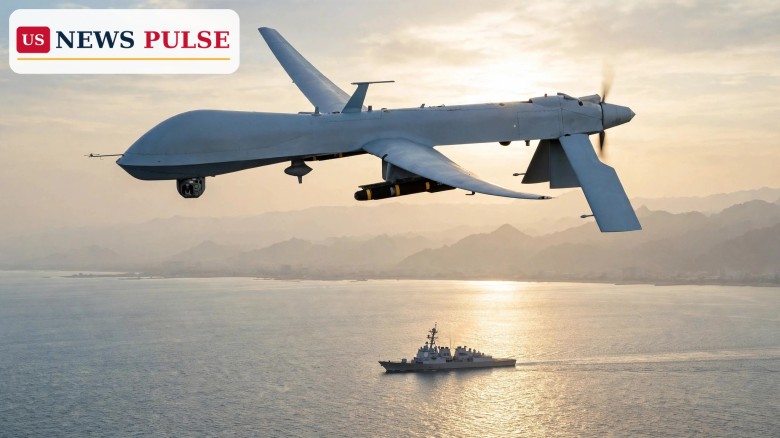
Iran said on Thursday, October 29, 2026, that its air defences shot down a US MQ-1 drone near the Strait of Hormuz, the latest flashpoint in a war that has already disrupted one of the world's most important shipping lanes and now hangs over the final days of America's midterm election campaign. The claim, announced by the Islamic Revolutionary Guard Corps (IRGC), could not be independently confirmed in the reports reviewed for this article, and it landed on the same morning that Washington was still weighing whether to order a new round of strikes on Iran after the November 3 vote.
According to Iran's state news agency IRNA, the US MQ-1 drone was intercepted and destroyed east of the Strait of Hormuz, off the coast of Sirik in Hormozgan Province, by what the IRGC described as an advanced air defence system operated by its Aerospace Force under Iran's integrated national air defence network. The IRGC said it was the 14th MQ-1 aircraft it has shot down during the war, and put its total tally of downed US drones at 68, including 54 MQ-9 aircraft.
Key Points
- Iran's IRGC said on October 29, 2026, that it shot down a US MQ-1 drone east of the Strait of Hormuz, off the coast of Sirik.
- The IRGC called it the 14th MQ-1 it has downed and claimed 68 US drones in total, including 54 MQ-9s, during the war.
- There was no independent confirmation of the claim in the reports reviewed, and no US confirmation had been reported at the time of writing.
- The claim follows a separate Iranian Army report on Sunday that a US LUCAS-type drone was downed over Bandar Abbas.
- It comes as US officials have warned Middle East allies to prepare for possible renewed strikes on Iran after the November 3 midterms.
What Happened
The IRGC's public relations department issued its statement on Thursday morning, and Iranian state media carried it within the hour. Trend News Agency, reporting from Baku, said the drone was shot down about an hour before its report, at around 10:51 a.m. local time in Azerbaijan, while IRNA's English service published its account at 06:27 UTC. The location given in every version of the claim was the same: the airspace east of the Strait of Hormuz, opposite Sirik, a coastal district in Hormozgan Province where the strait opens toward the Gulf of Oman.
The statement was precise about the weapon and the command chain, and vague about the evidence. It said the interception was carried out by the IRGC Aerospace Force's new air defence system, operating under the control and supervision of Iran's integrated national air defence network. It did not publish wreckage photographs in the reports reviewed, and it did not say whether the drone was armed or on a reconnaissance mission. The MQ-1 Predator is a long-endurance unmanned aircraft that the United States has used for both surveillance and strike missions, and its loss, if confirmed, would be a propaganda prize for Tehran even if the military effect were limited.
Thursday's claim did not arrive in isolation. On Sunday, Iran's Army said its air defence forces had shot down a US LUCAS-type drone over the southern port city of Bandar Abbas, also under the integrated air defence network. And on Wednesday, October 28, US Central Command published a video statement saying that all primary shipping routes through the strait remained cleared of naval mines and safe for passage, directly rejecting IRGC claims that multiple commercial tankers had struck sea mines. On Thursday, Iranian state media also reported an unexplained fire aboard a commercial vessel in the strait, a claim that, like the drone announcement, had no independent confirmation in the reports reviewed.
A separate Iranian claim carried by regional monitors on Thursday went further. Rear Admiral Moghadam of the Iranian Navy was quoted as saying Iranian forces had carried out a combined drone, cruise missile and electronic warfare attack on the US guided-missile destroyer DDG-103, forcing it to withdraw around the Cape of Good Hope. That claim, attributed to Iranian state media, was likewise unverified, and it illustrates how the information war around the strait now runs almost as hot as the military confrontation itself, with each side's announcements aimed as much at insurers, shippers and voters as at the other side's generals.
Background
The war between the United States, Israel and Iran began on February 28, 2026, when the US and Israel launched strikes on Iran despite Oman-mediated talks on Tehran's nuclear programme already being under way. More than 3,000 Iranians have been killed since the war began, according to reporting on Thursday, and the fighting has repeatedly spilled into the Strait of Hormuz, the narrow waterway between Iran and Oman through which a large share of the world's seaborne oil passes.
Tensions escalated again on July 8, when US forces launched several waves of strikes on Iranian territory, reportedly in response to an attack on a commercial vessel in the strait. President Donald Trump then announced the end of a ceasefire with Iran, and Tehran responded by striking US facilities in Bahrain, Jordan, Qatar, Kuwait, the United Arab Emirates and Oman. Since then, maritime trade through the strait has been brought close to a standstill, according to regional reporting, with commercial operators rerouting bulk freighters around Africa at the cost of 10 to 14 additional transit days.
The economic pressure is visible in the numbers. Brent crude was elevated at $114.50 a barrel in a regional shipping assessment published on Thursday, insurers were demanding up to 10 percent of a hull's value for Gulf transits, and ships with Western ties were reported to be paying triple the usual rates. In the United States, the average gasoline price stood at $4.24 a gallon on Wednesday, according to AAA figures cited in daily briefing reports, a reminder that a distant strait can reach American drivers within days. Flight tracking data on October 28 showed five US Air Force aerial refuelling aircraft operating directly over the strait to support combat air patrols, a sign of how heavily US air power is committed to the corridor even between major strike waves.
US MQ-1 Drone Downed: What the Claim Means for the Hormuz Standoff
The US MQ-1 drone claim matters less as a single aircraft than as a signal about where the standoff is heading. Iran's message is that its air defences can reach American aircraft operating near the strait, and that it intends to contest the airspace above the waterway just as it has contested the water itself with mines, warnings to shipping and control of transit routes. For Washington, the claim arrives at an awkward moment: five days before midterm elections in which the war, fuel prices and the president's handling of both are already central issues.
The timing also connects the drone claim to a diplomatic track that has been running in parallel with the military one. The Wall Street Journal reported on Wednesday that Vice President JD Vance had written to Mohsen Rezaei, secretary of Iran's Supreme National Security Council and a former IRGC commander, proposing a new framework for negotiations. Trump confirmed the letter on Wednesday but denied that he had directed Vance to restart peace talks, saying the outreach concerned Iran's need for help with medical supplies. "No. They need help with medical supplies and various things. He asked me what I thought. I said, 'If you want to do that, that's okay'," Trump said, according to reports of his remarks.
Iran's Foreign Minister Abbas Araghchi said on Wednesday that Tehran was still giving diplomacy a chance, maintaining close contact with mediators while keeping its armed forces ready to defend the country. That dual posture, talking while shooting down drones and warning ships, is the pattern of this phase of the war: neither side has closed the door to negotiation, and neither side is willing to look like it is backing down first.
Reactions and Quotes
Trump, speaking at a rally in Ohio on Wednesday ahead of the midterms, addressed the war directly and rejected the idea that he had started it. "We didn't start this war. It should have been taken care of long before I came here," he said. He added that Iran still owned missiles but "much less" of them than before, and that its drone manufacturers were facing problems because they "can't get electricity anymore," a reference to the damage from months of strikes on Iranian infrastructure.
The IRGC's own statement struck a triumphant tone, presenting the downing as the work of a modern, integrated defence network rather than a lucky shot. "An hour ago, the fourteenth advanced MQ-1 drone was intercepted and destroyed by the advanced and modern air defense system of the Air Force of the Guard, under the control of the integrated national air defense network, in the airspace east of the Strait of Hormuz, off the coast of Sirik," the statement said, as quoted in Iranian and regional media.
Meanwhile, the Associated Press reported on Thursday that US officials had told Middle East allies to prepare for possible renewed military action against Iran after next week's elections, as well as for Iranian retaliation against their energy facilities and critical infrastructure. Trump has not made a final decision on new strikes, according to diplomats briefed on the matter, but he has repeatedly said he is weighing ordering new military action once the November 3 elections are over. The Wall Street Journal separately reported that Washington had asked several Gulf Arab countries to prepare for a "short, intense military campaign" after the midterms, possibly targeting Iranian infrastructure and nuclear sites.
Why It Matters
For American voters, the drone claim connects three issues that will be on the ballot on November 3: the cost of living, the war, and the president's judgment. Fuel at $4.24 a gallon is a daily reminder of the Hormuz crisis, and any escalation after the election could push it higher. For Gulf allies, the warning to prepare for retaliation is a direct threat to their oil facilities, airports and desalination plants, which is why the AP report landed so heavily in regional capitals.
For the military balance, the claim, if true, would show that Iran's air defences remain dangerous despite months of strikes, and that US drone operations near the strait carry a real risk of loss and embarrassment. If false or exaggerated, it still serves Tehran's purpose: dominating a news cycle, forcing Washington to respond, and reminding shippers and insurers that the strait is not safe. Either way, the episode underlines that control of the information space around Hormuz is now part of the war itself, and that claims from either side need independent verification before they are treated as fact.
What Happens Next
The immediate question is whether the United States confirms or denies the loss of an MQ-1, and whether any wreckage or flight data emerges to settle the claim. The next question is what happens after November 3. Trump is scheduled to rally in Rock Hill, South Carolina, on Thursday and to host Halloween at the White House in the evening, but the decisions that matter for Iran will come after the votes are counted, when the political cost of a new campaign changes overnight.
Watch for three signals: any US statement on the drone, any movement of US naval forces in or around the strait, and any further Iranian announcements about shipping, mines or air defences. If the diplomacy track survives, Vance's letter and Araghchi's remarks suggest the outlines of a negotiation are still alive. If it does not, the allies' warning suggests the region could face a short, intense campaign within days of the election, with retaliation against Gulf energy infrastructure as the most feared consequence.
Frequently Asked Questions
What did Iran claim on October 29, 2026? Iran's IRGC said its air defences shot down a US MQ-1 drone east of the Strait of Hormuz, off the coast of Sirik, and called it the 14th MQ-1 it has downed during the war.
Has the United States confirmed the drone was shot down? No independent confirmation appeared in the reports reviewed for this article, and no US confirmation had been reported at the time of writing. The claim should be treated as an Iranian claim, not an established fact.
How many US drones does Iran claim to have downed? The IRGC put its total at 68, comprising 54 MQ-9 drones and 14 MQ-1 drones, according to its statement.
Why does the Strait of Hormuz matter? It is the narrow waterway between Iran and Oman through which a large share of the world's seaborne oil travels. Disruption there raises oil prices, insurance costs and fuel prices in the United States and beyond.
What happens after the November 3 midterms? US officials have warned allies to prepare for possible renewed strikes on Iran after the elections, but Trump has not made a final decision, according to diplomats cited by the Associated Press. A diplomatic track through Vice President Vance's letter to Iran's security chief is also still open.
Related coverage on US News Pulse: US warns allies to brace for possible post-election Iran strikes; South Carolina Senate race turns battleground as Trump heads to Rock Hill; Melania Trump ceasefire brings hope to Oleshky as Ukraine aid mission begins.
Featured image: an illustration of a military drone aircraft flying over a strait at dawn, with a naval ship below. It is not a photograph of the aircraft named in Iran's claim.
© 2026 US News Pulse. All rights reserved.
 Print
 Save