
FBI Agents Fear Voting Machine Seizures Could Disrupt Midterm Election Day
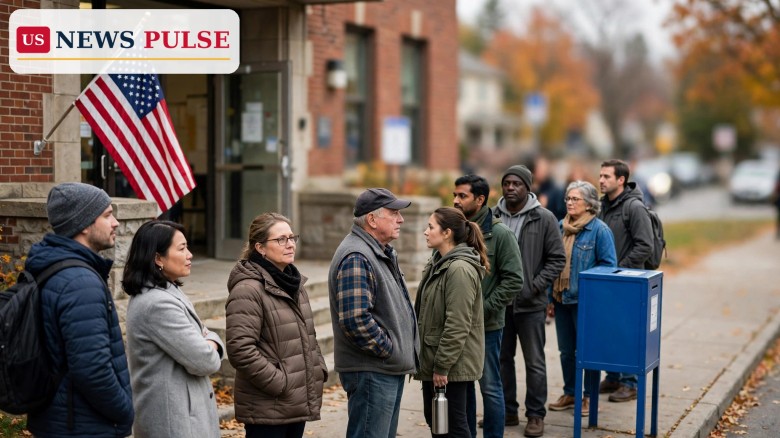
Some FBI agents are privately bracing for orders they fear could throw next week's midterm elections into chaos, according to a report published on Wednesday, October 28, 2026, by MS NOW. The FBI voting machines fear centres on a stark worry inside the bureau: that agents could be told to seize voting machines or ballots, or to show up at polling places, in the final days before Americans vote on November 3.
Seven people familiar with internal conversations at the bureau told MS NOW, in reporting by Ken Dilanian and Carol Leonnig, that some agents worry they could be directed to pursue shaky election-fraud claims using legally dubious tactics. Current and former FBI officials said recent administration actions appeared aimed at casting doubt on the voting process, leaving some agents alarmed about what they might be asked to do when the stakes are highest.
Key Points
- Seven people familiar with internal FBI conversations told MS NOW that some agents fear orders to seize voting machines or take other actions that could disrupt election results.
- The report, published Wednesday, October 28, 2026, comes five days before the November 3 midterm elections, with early voting already under way in many states.
- Agents pointed to the FBI's January 2026 seizure of 2020 ballots in Fulton County, Georgia, and its March collection of voting records and equipment in Maricopa County, Arizona; neither move has produced criminal charges, the report says.
- Federal law bars armed agents from polling places, but officials fear the Justice Department could seek warrants built on thin fraud allegations that would in theory let armed officers legally seize ballots or equipment.
- FBI Director Kash Patel declined to rule out sending agents to polling places at a September Senate hearing, and Attorney General Todd Blanche has refused to rule out postelection Justice Department moves.
What Happened
The MS NOW report landed in the last week of a midterm campaign already saturated with election-fraud claims. It does not allege that any seizure order has been issued for November 3. What it describes is anticipation inside the bureau: agents talking among themselves about what they would do if such an order came, and whether they could refuse an order they believed was unlawful.
"I'm worried about that situation for sure," one current FBI official told MS NOW. "We have all the evidence we need to expect at least one U.S. Attorney and one FBI agent to be willing to sign on to such actions, such as Georgia and Arizona."
That last phrase matters. Georgia and Arizona are the two states where the bureau has already taken the kinds of actions agents now fear could be repeated. The official's point, as reported, was not that the whole bureau would go along, but that it would only take a small number of willing officials to set a seizure in motion.
Former supervisory FBI agent Rob D'Amico put the worry in blunter terms. "I and others are worried that the FBI will be the administration's arm into seizing voting machines or issuing warrants on questionable probable cause," D'Amico said. "It is going to take people of high moral character to hold the line between doing what they're told and doing what is right and lawful."
The FBI did not immediately respond to MS NOW's request for comment, according to the report's republication. The bureau has also not publicly addressed the specific fears described by the seven sources, who spoke about internal conversations rather than putting their names to a formal complaint.
Background: Fulton County and Maricopa County
To understand why agents are worried now, the report points back to two earlier operations tied to the 2020 election. The first, and the more dramatic, came on January 28, 2026, when FBI agents executed a search warrant at Fulton County's Elections Hub and Operations Center in Union City, Georgia, and hauled away ballots from the 2020 presidential election.
The warrant, signed by U.S. Magistrate Judge Catherine M. Salinas, authorised agents to seize physical ballots, ballot images, tabulator tapes and voter rolls from Fulton County's 2020 election. The stated basis was alleged violations of federal laws against destroying election-related records and producing fraudulent voter registrations or fraudulent votes. Director of National Intelligence Tulsi Gabbard was present at the operation, alongside FBI Deputy Director Andrew Bailey, a presence that drew sharp criticism because the intelligence chief holds no domestic law-enforcement powers. Georgia Democrats condemned the raid, with State Representative Saira Draper calling it an "attack on our democracy" and U.S. Senator Jon Ossoff calling it a "sore loser's crusade."
The second operation came in March 2026, when the bureau collected voting records and equipment tied to the Republican-led review of the 2020 election in Maricopa County, Arizona. Like the Fulton County seizure, it has produced no criminal charges, according to the MS NOW report. For agents watching both episodes, the pattern is what alarms them: high-profile seizures, built substantially on claims about 2020 that state and federal officials have repeatedly said were debunked, followed by silence on any resulting prosecution.
That history also explains the legal mechanism agents fear. Federal law bars armed agents from polling places. But a warrant changes the picture. If the Justice Department obtained a warrant based on allegations of voting irregularities, armed officers could in theory enter a facility legally and take ballots or machines, even though they could not simply station themselves at a polling place. Experts cited in the reporting warned that such seizures could prevent voters from casting ballots and officials from counting them, and could interfere with the chain of custody normally required to guard against tampering.
The administration's own framing of the earlier operations has been election security. Officials have said the Fulton County material was sought because of alleged failures to retain election records as federal law requires, and Gabbard's office has said she has a pivotal role in protecting elections against interference, including operations targeting voting systems, databases and election infrastructure. That justification has not persuaded critics, who note that Fulton County's 2020 results were repeatedly audited and recounted, and that no evidence of widespread fraud sufficient to change the outcome has ever been produced.
FBI Voting Machines Fear Grows as Top Officials Decline to Rule It Out
What has done little to calm nerves inside the bureau, according to the report, is the response of the administration's top law-enforcement officials when asked directly. At a Senate Judiciary Committee hearing in September 2026, FBI Director Kash Patel was asked by Senator Richard Blumenthal, a Connecticut Democrat, about sending agents to polling places. Patel answered: "I don't know that we can't legally do it."
Attorney General Todd Blanche has likewise refused to rule out postelection moves by the Justice Department. Neither statement is an announcement of a plan. But in a bureau where agents are already discussing the possibility of seizure orders, the refusal to close the door has been read as leaving it open.
The concern is sharpened by the broader election-security climate in the final week of the campaign. President Donald Trump has offered a $1 million reward for tips leading to the arrest and conviction of people for voter fraud, announced days before the midterms, and federal prosecutors have charged dozens of noncitizens with illegal voting in recent weeks. Supporters of the administration present those steps as a crackdown on fraud. Critics, including the officials quoted by MS NOW, present them as part of a pattern of casting doubt on results the administration may dislike.
States, meanwhile, are not waiting to find out which reading is right. According to MS NOW, one unnamed state attorney general has already written to federal judges asking for a chance to respond before any warrant targeting ballots or voting equipment is approved. Election administrators across the country have spent months planning for scenarios that once sounded far-fetched, including federal agents arriving at polling sites or their state's top election official being taken into custody.
Reactions and Quotes
The most quoted voices in the report are the agents themselves, and their language is unusually personal for serving and former federal law-enforcement officials. "I'm worried about that situation for sure," the current FBI official said, in a remark that captures the report's central finding: this is not a single disgruntled employee, but a worry shared in internal conversations across the bureau.
D'Amico's warning went further, framing the moment as a test of individual conscience. "I and others are worried that the FBI will be the administration's arm into seizing voting machines or issuing warrants on questionable probable cause," he said. "It is going to take people of high moral character to hold the line between doing what they're told and doing what is right and lawful."
A former senior FBI agent, quoted without a name, warned that the administration's aim appeared to be muddying any results it dislikes. "This administration is clearly willing to throw anything at the wall and see if it sticks," the former agent said. "So, big picture, I'm concerned they'll cast doubt on the results, tie states up in litigation, and try to delay certification."
Patel's Senate testimony provides the administration's side of the exchange, if only by omission. Asked whether agents could be sent to polling places, he did not say no. "I don't know that we can't legally do it," he said, a formulation that lawyers and former agents have since parsed closely, because the law on armed federal officers at polling places has long been understood as a prohibition, with narrow exceptions.
No response from the FBI, the Justice Department or the White House to the specific claims in the MS NOW report had been published at the time of this article. That silence is itself part of the story: agents who spoke to MS NOW did so against a backdrop in which their own leadership has not publicly reassured them, or the public, that no such orders are coming.
Why It Matters
The importance of this report lies less in what it proves about a plan than in what it reveals about the institution that would have to carry one out. The FBI is the federal government's principal domestic law-enforcement agency, and its credibility in an election depends on voters believing that its agents act on evidence, not on political direction. When current agents say privately that they fear being used to disrupt an election, that credibility is already damaged, whether or not any order is ever given.
The practical risks are concrete. A seizure of ballots or machines on or just after Election Day would not need to succeed in court to cause harm. It could halt counting in a jurisdiction, break the chain of custody that courts rely on to trust results, and hand every losing candidate a ready-made argument that the count cannot be trusted. Even a seizure later ruled unlawful would leave a permanent cloud over the affected results, because the ballots themselves would have passed through federal hands outside the normal local process.
The timing compounds the risk. Certification deadlines follow Election Day quickly in most states, and litigation over a seizure could easily run past them. That is why the former senior agent's warning about delaying certification matters: in a close midterm, where control of the House or Senate could turn on a handful of races, a delayed certification in even one state could become a national crisis.
There is also a longer-term institutional cost. The FBI has spent decades building a norm of staying away from polling places, precisely so that no voter feels watched or intimidated while casting a ballot. If that norm is broken in 2026, it will be harder to restore in 2028, regardless of who wins next week. Agents who refuse an unlawful order may face discipline; agents who obey one may face prosecution or public disgrace. Either way, the bureau emerges weaker.
What Happens Next
In the five days before November 3, the story will be tested in three places. First, in public statements: whether Patel, Blanche or the White House explicitly rule out seizures of ballots or machines, or deployments to polling places, will be watched closely by election officials and by agents themselves. A clear, unequivocal statement would do more to calm the bureau than any internal memo.
Second, in the courts. The state attorney general who has already written to federal judges is seeking, in effect, an early warning system: a chance to argue against a warrant before it is executed, rather than after ballots are already in trucks. If other attorneys general follow suit, any future warrant application could face organised legal opposition before a judge signs it.
Third, at polling places themselves. Election administrators say they have contingency plans for federal agents arriving on Election Day, including legal hotlines, documentation procedures and chains of command for refusing access without a valid warrant. Whether those plans are ever used will be one of the first things known on the night of November 3, and one of the most consequential.
For now, the report stands as a warning from inside the bureau, not a prediction. No seizure order for the midterms has been reported, and the agents who spoke to MS NOW were describing a fear, not a fact. But fears of this kind, voiced by seven people familiar with internal FBI conversations, are themselves a fact about the state of American elections in 2026, and they will shape how the country watches next Tuesday.
Frequently Asked Questions
What did the MS NOW report actually find?
MS NOW reported, citing seven people familiar with internal FBI conversations, that some agents fear they could be ordered to seize voting machines or ballots, or be sent to polling places, in ways that could disrupt the November 3 midterm elections. The report was published on Wednesday, October 28, 2026.
Has anyone been ordered to seize voting machines for the midterms?
No such order has been reported. The agents described a fear about what could be ordered, based on earlier operations in Fulton County, Georgia, in January 2026 and Maricopa County, Arizona, in March 2026, not on a current seizure order.
Can armed FBI agents legally go to polling places?
Federal law bars armed agents from polling places, according to the report. Officials fear, however, that a warrant based on fraud allegations could in theory allow armed officers to enter a facility legally and seize ballots or equipment.
What did Kash Patel and Todd Blanche say?
At a September Senate Judiciary Committee hearing, FBI Director Kash Patel answered a question from Senator Richard Blumenthal about sending agents to polling places by saying, "I don't know that we can't legally do it." Attorney General Todd Blanche has refused to rule out postelection Justice Department moves.
What are states doing about it?
One unnamed state attorney general has written to federal judges seeking a chance to respond before any warrant for ballots or voting equipment is approved, and election administrators have planned for scenarios including federal agents arriving at polling sites.
Related coverage: James O'Keefe hit with felony charges over Minnesota voting stunt before midterms and Trump $1 million voter fraud reward: tips must lead to arrest and conviction.
© 2026 US News Pulse. All rights reserved.
 Print
 Save