
Fed Holds Interest Rates at 3.75%-4% in 10-2 Vote Despite 3.7% Inflation
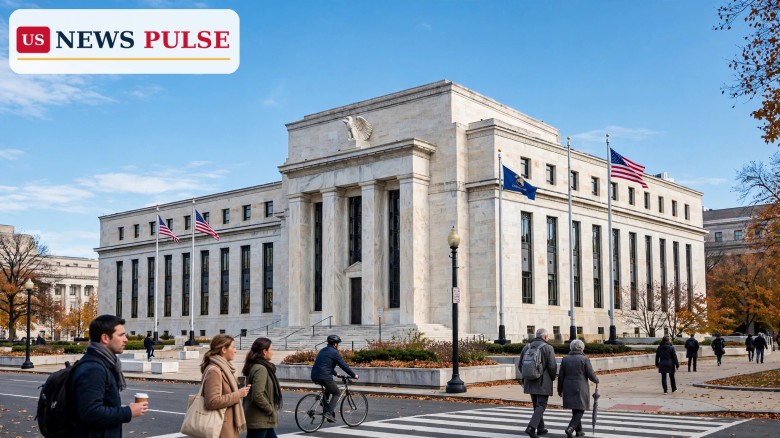
The Federal Reserve held interest rates steady on Wednesday, October 28, 2026, choosing to wait for more evidence on inflation rather than raise borrowing costs again just six weeks after its first increase in three years. The Federal Open Market Committee voted 10-2 to keep the federal funds target range at 3.75% to 4.00%, a decision that landed six days before the November 3 midterm elections, with price rises still running well above the central bank's 2% goal. Two policymakers wanted to go further immediately, and the split vote, the chair's unusually frank account of a heated internal debate, and a surprise change to the meeting calendar for 2027 all ensured that a widely expected pause still carried real news for households, markets and the election campaign.
The decision was announced at 2 p.m. Eastern Time, after a two-day meeting in Washington. It followed a September move in which the same committee lifted rates by a quarter of a percentage point to the current range, ending a long stretch without an increase. This time, the committee said it wanted more information before deciding what stance would bring inflation back to target in good time. That caution was enough to hold the majority, but not enough to persuade Governor Lisa Cook and Cleveland Federal Reserve President Beth Hammack, who both preferred a quarter-point rise at this meeting. Their dissent turned a routine hold into a visible disagreement about how urgent the inflation problem now is.
Key Points
- The Federal Reserve held its benchmark rate at 3.75% to 4.00% on October 28, 2026, by a 10-2 vote of the Federal Open Market Committee.
- Governor Lisa Cook and Cleveland Fed President Beth Hammack dissented, preferring an immediate quarter-point increase.
- Consumer inflation was 3.7% over the year to September, up from 3.4% in August, against the Fed's long-run 2% target.
- Chair Kevin Warsh said politics played no role in the decision and described a heated internal debate, while refusing to signal future moves.
- Markets rose modestly after the announcement, while traders raised the implied chance of a December rate increase to 85%.
What Happened
The statement released on Wednesday kept the central message short: the target range would stay where it is, in support of the Fed's dual mandate of maximum employment and stable prices, and the Fed would continue to maintain ample reserves in the banking system. It also upgraded the description of growth, saying economic activity was expanding at a strong pace, compared with a solid pace in September. Domestic spending, it said, had been resilient, productivity growth was strong and capital investment was robust. On jobs, it reported that gains had kept pace with the workforce and that the unemployment rate had changed little.
On prices, the tone was less comfortable. The committee repeated that inflation remains elevated, and said accumulating more information would help it judge the right policy stance for a timely return to its 2% goal. That single sentence captured the tension at the heart of the meeting. Growth looks strong, jobs look steady, and yet prices are still rising too fast, and the committee is not yet sure whether the last increase has done enough work, or whether the economy needs another push in the opposite direction.
The vote itself told part of the story. Ten members backed the hold. Cook and Hammack did not. According to reporting of the statement, Cook's dissent was her first since she joined the Fed board in 2022. Hammack had also dissented in July, when Dallas President Lorie Logan and Minneapolis President Neel Kashkari voted with her; both of them backed the majority this time. The pattern matters because dissents are rare, and they are usually read as a signal of where pressure for the next move is building, even when the dissenters lose the vote.
At his press conference, Warsh was pressed directly on whether the approaching midterms had shaped the timing. He answered plainly, saying politics played no role in the decision. He declined to respond to recent comments by President Donald Trump about the board, and added that he believed the committee had reached the right policy decision for this moment and that he was honoured to chair the group. He also repeated a long-held position on guidance, saying he does not believe in forward guidance absent exigent circumstances or a crisis, a stance that leaves markets to infer the next step from data rather than from promises.
Warsh also announced a change that could quietly reshape future decisions. The Fed will keep eight meetings a year, he said, but in 2027 one meeting will focus exclusively on broad monetary policy strategy, with neither a vote on the federal funds rate nor a policy statement expected. In 2028, he expects two strategy meetings and six policy-setting meetings. He said there was more news to come on what the Fed would release after those strategy sessions. Analysts were quick to note the practical effect: fewer meetings at which rates can actually move.
Background and Context
To understand why a pause after a hike drew so much attention, it helps to retrace the last two months. In September, the committee raised rates by a quarter point, its first increase since July 2023, taking the range to 3.75% to 4.00%. The move came against a backdrop of persistent price pressure, driven in part by higher energy costs linked to the war in Ukraine and the wider conflict involving Iran, by broad tariff policies, and by an investment boom in artificial intelligence and the huge data centres built to support it. The Fed had already missed its 2% inflation target for more than five years, and households and businesses had felt the strain of sustained price increases.
The latest inflation figures explain why the debate was so sharp. The Consumer Price Index rose 0.6% on a seasonally adjusted basis in September, after a 0.4% gain in August. Over twelve months, prices rose 3.7%, up from 3.4% in the year to August and edging back towards a three-year high reached in May. Energy accounted for much of the jump, climbing 20.4% over the year. Excluding food and energy, the core index rose 2.6%, compared with 2.4% a month earlier, while food prices rose 2.5% over the year. In other words, the headline was not the only problem: underlying pressures had also ticked higher.
The jobs side of the Fed's mandate looked steadier. The unemployment rate has been largely stable at around 4.2% over the past year, with job growth mostly positive, albeit driven by only a few sectors. That stability is one reason some economists questioned the logic of pausing so soon after hiking. If the labour market was not deteriorating, they argued, and inflation was still rising, why wait? The Fed's answer, in effect, was that it needed to see whether September's increase, and the data still to come, would change the picture before acting again.
The political backdrop cannot be ignored, even though Warsh insisted it did not drive the decision. Trump has loomed large over the Fed since returning to power, pressing for lower rates, pursuing criminal charges against Warsh's predecessor Jay Powell, and attempting to fire Governor Cook. The probe against Powell was dropped to smooth the way for Warsh's Senate confirmation, but the White House has recently renewed its drive to remove Cook, despite a Supreme Court decision that rejected an earlier attempt. Former Cleveland Fed President Loretta Mester, who sat in FOMC meetings during her tenure, said the committee did not take political issues into account when debating policy, while also saying she did not expect the attacks to stop.
Before the meeting, markets had largely priced in a hold. Futures traders put the chance of a quarter-point hike this week at only about 10.5% on Monday afternoon, down from 33.8% on October 14, and a Reuters poll of economists found 94 of 100 expecting a hold, with all 100 expecting a hike in December. That consensus helps explain why the market reaction was measured rather than dramatic: the decision itself was expected, while the dissents, the press conference and the calendar change gave traders new material to parse.
Fed Holds Interest Rates: Why the Pause Won
The case for waiting rested on uncertainty. The committee said uncertainty remains elevated, in part because of geopolitical developments, and it wanted more information before judging whether its current stance would deliver price stability in good time. Warsh acknowledged that the discussion had been tense, describing a fairly heated debate with serious and careful exchanges, and saying he thought the committee had made the right decision at this time. He also pointed to positive signs in the economy, including strong consumer purchasing power, robust capital investment and healthy growth, while conceding that inflation was still too high and had not yet been brought under control.
The case for moving now was straightforward, and it was made most clearly by the two dissenters and by outside critics. If September's hike was justified, they argued, the same logic applied in October, because inflation had not improved in the meantime and the labour market had not weakened enough to change the balance. Wendy Edelberg, a senior fellow at the Brookings Institution, said before the meeting that a hold after a September rise was potentially contradictory, given that the labour market, the Fed's other mandate, had been largely stable. She said she did not totally understand the logic, adding that if there had been a reason to raise rates at the last meeting, there was just as compelling an economic reason to raise them at this meeting.
There was also a structural argument tucked inside Warsh's calendar announcement. Gareth Berry, a foreign exchange and rates strategist at Macquarie Group, described the strategy-meeting plan as a clever way of effectively reducing the number of meetings without actually doing so, adding that it would limit the scope for the Fed to adjust rates. He noted that United States two-year Treasury yields fell after the announcement, while markets scaled back expectations for rate hikes over the next twelve months. His reading was that the market saw fewer opportunities for future tightening, and therefore allowed some of the froth to come out of pricing that had already been built in.
For borrowers, the practical meaning of the hold is simple: the benchmark that feeds through to credit card rates, home equity lines and many business loans stays where it is, at least until the next scheduled decision on December 9. That does not mean borrowing costs will feel unchanged, because lenders, bond markets and expectations about December all move independently. But it does mean the Fed itself has not added another increase to the cost of credit this month, even as it leaves the door open to one in December.
Reactions and Quotes
Warsh's own words set the tone for the aftermath. "Politics played no role in the decision," he said when asked about the midterms, according to live coverage of the press conference. "We came to the right policy decision for this moment and I am honoured to be here and honoured to be the chairman of this group." On future guidance, he was equally clear: "I don't believe in forward guidance, absent exigent circumstances, absent a crisis." And on the internal debate, he conceded the disagreement without downplaying it: "We just had a fairly heated debate internally, with serious and careful exchanges. I think we made the right policy decision at this time."
The Fed's statement carried the formal language of the decision: "The accumulation of more information will help the Committee determine the policy stance appropriate to ensure a timely return of inflation to the Committee's 2 percent goal." It added, in a line repeated from September, "The Committee will deliver price stability." The dissent was recorded just as formally: "Voting against the monetary policy action were Lisa D. Cook and Beth M. Hammack, who preferred to raise the target range for the federal funds rate by 1/4 percentage point at this meeting."
Outside the Fed, analysts split between those who saw a sensible pause and those who saw a missed chance. Charlie Wise, head of global research at TransUnion in Chicago, said the decision reflected the continued balancing act between inflation concerns and an economy and employment situation that had remained relatively resilient. Kay Haigh, head of fixed income and liquidity solutions at Goldman Sachs Asset Management in New York, cautioned that while the September dot plot suggested just one more hike, another increase in energy prices or further strong data prints could bring additional tightening into play next year.
Mester's defence of the institution was pointed. She insisted that the committee did not take into account any kind of political issues when it debated monetary policy, while warning about the climate around it. "I don't think it's going to stop because I think it's in the nature of this administration to continue those attacks," she said of the pressure on the Fed. Edelberg's scepticism, by contrast, was purely economic, and it will likely be quoted back at the Fed if inflation rises again before December.
Why It Matters
The decision matters first because inflation is still the central economic issue of the midterm campaign. Working-class households across the country are struggling to make ends meet despite largely stable overall growth, and the Fed's choice will be read, fairly or not, through that lens. A hold keeps borrowing costs from rising further before voters go to the polls on November 3, but it also leaves the inflation problem unsolved, and it invites the question of whether the Fed is waiting too long while prices climb.
It matters second because of what it reveals about the Fed under Warsh. A 10-2 vote, with a first dissent from a sitting governor, a heated debate acknowledged in public, and a calendar change that reduces future decision points, all point to a committee that is less unanimous and more contested than it appeared in September, when the hike passed 12-0. The Fed's independence is also part of the story: the attempt to fire Cook, the dropped probe against Powell, and the renewed pressure from the White House all form a backdrop that makes every decision look political, even when the chair insists it is not.
It matters third for markets, because the Fed's stance feeds directly into asset prices, bond yields and the dollar. On Wednesday, the market reaction was orderly rather than euphoric. Global stocks and major Wall Street indexes gained, oil rose on renewed supply concerns, and Treasury yields gave up gains briefly after Warsh's comments. That calm should not be mistaken for indifference: traders immediately repriced the December meeting, lifting the implied chance of a hike, and they will reprice again when Thursday's inflation and growth data arrive.
Finally, it matters for the wider world. Other central banks moved on the same day: Canada's central bank raised its key rate to 2.5%, its first hike since July 2023, while New Zealand's central bank surprised investors by leaving rates at 2.75% in a narrow vote. The European Central Bank and the Bank of Japan were due to issue decisions later in the week. The Fed does not set policy in isolation, and its pause, combined with Canada's hike, underlines how differently major economies are now reading the same global inflation shock.
What Happens Next
The next major test arrives almost immediately. On Thursday, October 29, at 8:30 a.m. Eastern Time, the Bureau of Economic Analysis is scheduled to release September personal income and outlays, including the Personal Consumption Expenditures price index that the Fed prefers, along with the advance estimate of third-quarter gross domestic product. A hot PCE reading would strengthen the dissenters' case for December. A soft one would give the majority room to argue that waiting was wise.
After that, attention turns to the December 8-9 meeting, with a decision due on December 9 at 2 p.m. Eastern Time. Markets are already leaning towards a hike: CME's FedWatch tool put the likelihood of a 25-basis-point increase in December at 85.0% after Wednesday's decision, up from 78.3% on Tuesday. That is a strong lean, but not a certainty, and Warsh's refusal to offer forward guidance means the Fed will not confirm it in advance. Every inflation print, jobs report and energy price move between now and December will be read as a clue.
The election itself is the other near-term milestone. Voters go to the polls on November 3, with Democrats seeking to wrest control of both houses of Congress from Trump's Republicans, and with affordability and inflation among the defining issues. The Fed will not meet again before then, so Wednesday's hold is the last monetary policy decision voters will see before they cast their ballots. How they judge it will depend less on the statement's wording than on the prices they see in shops and at petrol stations in the coming days.
Beyond December, the calendar change adds a longer-term question. If 2027 has one strategy meeting and 2028 has two, the Fed will have fewer chances to move rates in those years, which could make each remaining meeting more consequential and each decision harder to reverse. Warsh said more news would come on what the Fed releases after strategy meetings, and analysts will watch closely for whether those sessions become genuine reviews of the policy framework or simply quieter months in the calendar.
Frequently Asked Questions
Did the Fed raise or cut interest rates on October 28, 2026? Neither. It held the federal funds target range unchanged at 3.75% to 4.00%, after raising it by a quarter point in September.
Who dissented, and what did they want? Governor Lisa Cook and Cleveland Fed President Beth Hammack dissented, preferring a quarter-point increase at this meeting.
Why did the Fed hold despite 3.7% inflation? The committee said it wanted more information to judge the right stance for a timely return to its 2% goal, while noting strong growth, resilient spending and a broadly steady jobs market.
When is the next Fed rate decision? The next meeting is December 8-9, 2026, with the decision due on December 9 at 2 p.m. Eastern Time. Markets put the chance of a December hike at about 85% after the October hold.
What does the hold mean for borrowers? The benchmark rate that influences credit cards, home equity lines and many business loans stays at 3.75% to 4.00% for now, but lenders and bond markets can still move, and a December hike remains likely.
Related coverage on US News Pulse: our preview of the October Fed decision, the Big Tech earnings test facing Alphabet, Amazon and Apple, and Amazon's Q3 earnings preview.
© 2026 US News Pulse. All rights reserved.
 Print
 Save