
Ex-NYPD Sergeant Tiffany Howell Sentenced to 4-12 Years in Fatal DUI Crash
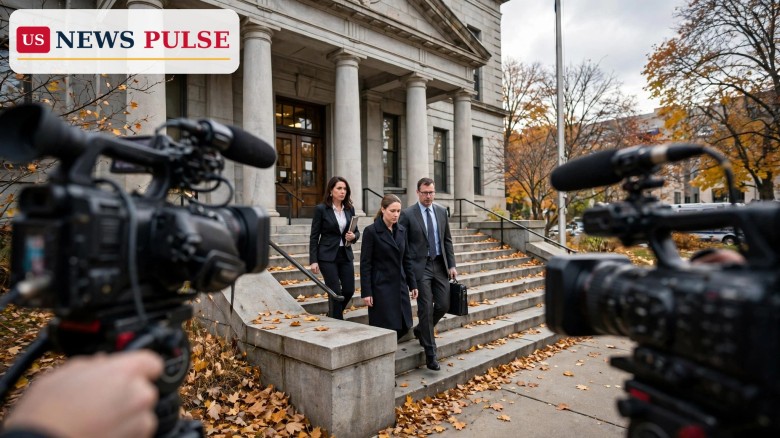
Former NYPD Sergeant Tiffany Howell was sentenced to four to 12 years in state prison on Wednesday, October 28, 2026, for the drunken wrong-way crash on the Taconic State Parkway that killed Manuel Boitel, a 61-year-old Upper East Side doorman driving home from work. The Tiffany Howell sentenced case closed in a Westchester County courtroom filled with grief and anger, as Boitel's family told the former officer that no apology could repair what one night of drinking had destroyed.
Howell, 48, of Warwick, Orange County, had pleaded guilty on August 19, 2026, to aggravated vehicular homicide and second-degree manslaughter. Judge Anne B. Bianchi imposed the sentence she had promised at the time of the plea: concurrent terms adding up to four to 12 years behind bars. Howell's driver's licence has been revoked, and she has waived her right to appeal, according to New York Attorney General Letitia James, whose office prosecuted the case.
Key Points
- Tiffany Howell sentenced: former NYPD Sergeant Tiffany Howell, 48, received four to 12 years in state prison on October 28, 2026, in Westchester County Court.
- She pleaded guilty in August 2026 to aggravated vehicular homicide and second-degree manslaughter over the January 22, 2026, wrong-way crash on the Taconic State Parkway.
- Howell was driving south in the northbound lanes at more than 50 mph with a blood alcohol content of at least 0.18, more than twice the legal limit, when she hit Manuel Boitel head-on.
- Boitel, 61, of Peekskill, a doorman for decades at the St. Tropez condominium on Manhattan's Upper East Side, was pronounced dead shortly after midnight.
- His family condemned the sentence as too short, while Judge Anne B. Bianchi called Howell's courtroom apology "superficial" and "self-serving".
What Happened
The sentencing hearing on Wednesday brought the two families face to face for the first time since Howell's guilty plea. Boitel's widow, Marisol Boitel, addressed the court in Spanish through an interpreter before Judge Bianchi passed sentence. "I believe four years is nothing for a woman that caused so much pain because of her irresponsibility," she said. "She destroyed my family when she killed my husband because she was drinking like a lunatic without thinking about the consequences."
Her son Eric Boitel was equally unsparing. He told the court that Howell, as a law officer, understood exactly what drunk driving does to families. "She has seen firsthand the devastation that actions can leave behind," he said, according to CBS News reporting of the hearing. "She knows that one reckless decision can take someone's life, tear a family apart and leave loved ones carrying pain for the rest of their lives."
Howell spoke with a shaking voice as she learned her fate. "I know that I made a terrible decision and I know that the consequences are irreversible," she said, according to the New York Times. "I know I shouldn't have consumed alcohol and taken the wheel and I'm so incredibly sorry that I did."
The judge was unmoved. Bianchi described Howell's apology as "superficial" and "self-serving", and told her plainly whose suffering mattered in the room. "This is the Boitel family's nightmare. This is not your nightmare," the judge said. "This is a situation you created and that you could have completely avoided."
Background and Context
The crash happened late on January 22, 2026. According to the Attorney General's office, Howell had spent the evening helping to organise a "Holy Smoke" fundraiser for the Manhattan-Brooklyn-Staten Island chapter of the NYPD's Holy Name Society, of which she was treasurer. The event, held at Mom's Cigar Warehouse on Central Park Avenue in Greenburgh, had an open bar. Video showed Howell making repeated trips to the bar, and a bartender told investigators he had served her several drinks.
Howell left in her Infiniti and headed home to Warwick, travelling on the Sprain Brook Parkway, which becomes the Taconic State Parkway. At some point she left the highway and, when she got back on, she was travelling south in the northbound lanes. At 11:37 p.m., in Mount Pleasant, just south of Route 117, she crashed head-on into the Toyota driven by Boitel at more than 50 mph. Boitel, who had been driving home to Peekskill after his shift, was taken to a local hospital, where he was pronounced dead shortly after midnight.
Howell was an 18-year veteran of the NYPD and held the rank of sergeant. She was off duty on the night of the crash. She was forced to resign from the department following her arrest. Because the death was caused by a police officer, the case was assessed and investigated by the Attorney General's Office of Special Investigation, which under New York Executive Law Section 70-b examines every reported incident in which an officer may have caused a death, on or off duty.
Howell was indicted on March 2, 2026, on charges including aggravated vehicular homicide, a class B felony, second-degree manslaughter, a class C felony, first-degree vehicular manslaughter and two counts of second-degree vehicular manslaughter. She was arraigned in Westchester County Court, where bail was set at a $250,000 bond, with a $500,000 partially secured bond or $100,000 cash alternative. The maximum sentence on the top count alone was eight and one-third to 25 years in prison. Her guilty plea in August narrowed the case to the two most serious counts, and the four-to-12-year term was the sentence promised at that time.
Tiffany Howell Sentenced: What the Judge Said
The sentence itself became the sharpest point of dispute in the courtroom. Under an indeterminate sentence of four to 12 years, the four-year figure is the minimum term Howell must serve before she can be considered for release, while 12 years is the maximum she can be held on this sentence. For the Boitel family, even that framework felt inadequate next to a life taken.
Prosecutors had already signalled their view of Howell's conduct long before sentencing. At a bail hearing after her arrest, Assistant Attorney General Allison Stuart said Howell had "no regard for his life, or of any other life for that matter, as she drove into oncoming traffic". The judge's remarks at sentencing echoed that assessment: the crash was not an unavoidable accident but a chain of choices, from drinking at an open bar to getting behind the wheel to entering the highway in the wrong direction.
Howell's defence position, as expressed in her own words to the court, rested on remorse. She described a "terrible decision" with "irreversible" consequences and apologised directly. The court did not accept that as mitigation enough to go below the promised term, and the family made clear they did not accept it either. The hearing therefore ended not with reconciliation but with two irreconcilable accounts of the same night: a former officer asking for forgiveness, and a family insisting that forgiveness cannot be granted on their loved one's behalf.
Reactions and Quotes
Attorney General Letitia James announced the sentence in a statement on Wednesday, setting out the facts of the case in stark terms: Howell, driving the wrong way on the Taconic State Parkway with a blood alcohol content of at least 0.18, caused Boitel's death on January 22, 2026. The statement confirmed the concurrent four-to-12-year sentences, the revocation of Howell's licence and her waiver of appeal.
The family's statements carried the emotional weight of the day. Eric Boitel's message was that Howell knew better than almost anyone what drunk driving costs, because she had spent 18 years in law enforcement watching its aftermath. Marisol Boitel's message was simpler and harsher: four years, the minimum of the sentence, is "nothing" against the destruction of a family. Both statements were reported by local and national outlets covering the hearing, and both were delivered before the judge imposed the sentence.
The case has also drawn attention beyond Westchester County because of who Howell was. A police sergeant convicted of killing a man while driving drunk, after an evening at a police fraternal organisation's fundraiser with an open bar, raises questions that go beyond one crash: about drinking culture in law enforcement circles, about how officers are held to account when they break the laws they enforced, and about whether the justice system treats its own differently. The sentence, at the bottom end of the possible range for the top count, will fuel that debate rather than settle it.
Why It Matters
Wrong-way crashes are among the deadliest on American highways because head-on collisions at highway speeds leave almost no margin for survival, and alcohol is a factor in a large share of them. Boitel's death fits that grim pattern exactly: a sober driver heading home from work, killed by a drunk driver travelling against traffic at more than 50 mph. Cases like this are why prosecutors, road-safety campaigners and the families of victims treat drunk driving not as a mistake but as a decision with foreseeable, lethal consequences.
The Howell case matters also because of public trust. Police officers ask the public to obey the law, and they enforce drunk-driving laws against others. When an officer breaks those laws with fatal results, the damage extends beyond one family: it corrodes confidence that the law applies equally. The involvement of the Attorney General's Office of Special Investigation, rather than a local prosecutor alone, reflects that sensitivity. The office exists precisely for cases in which an officer may have caused a death, and its handling of the Howell case, from indictment to a guilty plea to Wednesday's sentence, was designed to show that the process was independent.
Finally, the sentence matters as a measure of how New York punishes fatal drunk driving. Howell faced up to 25 years on the top count but received a minimum of four years under the plea agreement. Supporters of the outcome will note that a prison term of up to 12 years, loss of her career and licence, and a permanent criminal record are severe consequences. Critics, led by the Boitel family, will note that the minimum term is a fraction of the maximum and a fraction of the life Boitel lost. Both readings will be cited in future sentencing debates in New York and beyond.
What Happens Next
Howell will now begin serving her state prison sentence, with her licence revoked and her appeal rights waived under the terms announced by the Attorney General. The waiver means the sentence is unlikely to be challenged in the courts, and the family's focus will turn from the courtroom to living with the outcome.
For road-safety advocates, the case is likely to be cited in campaigns against drunk driving and wrong-way driving, particularly around the holiday season, when alcohol-related crashes rise. For the NYPD, the case is a closed chapter in one sense — Howell has resigned — but it leaves behind questions about the culture around department social events where alcohol is served, including fundraisers organised by officers themselves.
For the Boitel family, there is no next legal step that restores what was lost. Manuel Boitel spent decades as a familiar, trusted presence at the St. Tropez on the Upper East Side, and his death on a routine drive home from work is the fact that will outlast every court date. The sentence gives the case a legal ending; it does not give the family its husband and father back.
Frequently Asked Questions
Who is Tiffany Howell? Tiffany Howell, 48, of Warwick, New York, was an 18-year veteran NYPD sergeant. She was forced to resign after her arrest over the fatal January 22, 2026, crash.
What sentence did Tiffany Howell receive? On October 28, 2026, Judge Anne B. Bianchi sentenced Howell to four to 12 years in state prison, the term promised when she pleaded guilty in August 2026.
Who was Manuel Boitel? Manuel Boitel, 61, of Peekskill, was a doorman for decades at the St. Tropez condominium building on Manhattan's Upper East Side. He was driving home from work when Howell hit his car head-on.
How drunk was Howell at the time of the crash? Prosecutors said her blood alcohol content was at least 0.18, more than twice New York's 0.08 legal limit for drivers.
Can Howell appeal her sentence? No. According to the Attorney General's announcement, Howell has waived her right to appeal, and her driver's licence has been revoked.
Related coverage on US News Pulse: Bronx fire kills boy and leaves four family members critical at Patterson Houses, Violent crime falls 25% in 2025 in largest drop ever, DOJ survey finds, and Alexander brothers sentenced to 30 years each in sex trafficking case.
© 2026 US News Pulse. All rights reserved.
 Print
 Save