
Knicks Beat Pistons 111-97 as Towns Powers First Win After Winless 0-3 Start to Season
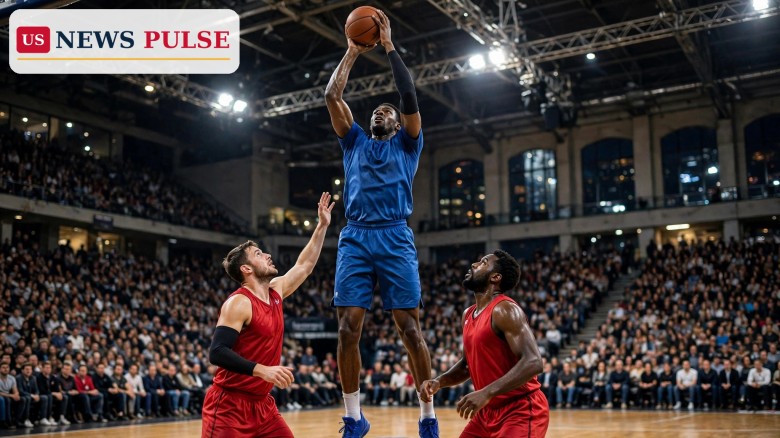
The defending champion New York Knicks are finally in the win column. On Tuesday night, October 27, 2026, the Knicks beat the Pistons 111-97 at Madison Square Garden, turning a 13-point first-quarter deficit into a convincing victory and ending an anxious 0-3 start to the season. Karl-Anthony Towns led the way with 27 points and 20 rebounds, while Jalen Brunson added 23 points and seven assists as New York outscored Detroit 37-13 in a decisive third quarter.
For a team that lifted its first championship in 53 years in June, the opening week had felt strangely flat. The Knicks had lost their first three games, and the talk around them had turned to a championship hangover. On Tuesday, at least for one night, they looked like themselves again. The defence tightened, the rebounding tilted sharply in their favour, and the crowd that had waited through a sleepy first quarter finally had something to roar about.
Key Points
- The Knicks beat the Pistons 111-97 at Madison Square Garden on Tuesday, October 27, 2026, for their first win of the season.
- Karl-Anthony Towns finished with 27 points and a season-high 20 rebounds, including 19 points and 11 rebounds in the second half.
- New York trailed 38-25 after the first quarter, then held Detroit to 25 points across the second and third quarters combined.
- Jalen Brunson scored 23 points with seven assists, while Paul Reed led Detroit with 22 points and nine rebounds.
- The win moved the Knicks to 1-3 and dropped the Pistons to 3-1, ending Detroit's unbeaten start and New York's six-game losing run against Detroit.
What Happened
The game began in worrying fashion for the home side. Detroit, which had won its first three games, ended the first quarter on a 15-5 run and took a 38-25 lead on Paul Reed's three-pointer with 2.8 seconds left in the period. Reed, starting in place of the injured Jalen Duren, had 13 points in the opening quarter alone, and the Pistons were shooting 60.9 percent from the field. It was the kind of start that had defined New York's opening week: slow, soft defensively, and chasing the game early.
The second quarter changed the mood. Andre Drummond and Landry Shamet sparked the comeback, scoring the first 11 points of a half-ending 19-8 run, and Brunson sank two free throws with 2.4 seconds remaining to give New York the lead for good at 51-50. Brunson had struggled early, shooting 1-for-9 in the first half, but he found his way to the free-throw line, finishing 13-for-16 there on the night, and steadied the offence when the Knicks needed it most.
Then came the third quarter, and with it the game. New York outscored Detroit 37-13, with Towns scoring 13 of his game-high 27 points in the period. The Knicks led by as many as 25 points, and the Pistons, who had looked so fluent early, managed only 12 points in the second quarter and 13 in the third. By the time Detroit coach J.B. Bickerstaff emptied his bench with seven-and-a-half minutes remaining, the contest was decided. The Knicks' starters stayed on court, and Towns finished the night with 20 rebounds.
The final quarter scores tell the story of the turnaround: 25-38, 26-12, 37-13, 23-34. New York won the middle two quarters by a combined 38 points. OG Anunoby and reserve Landry Shamet scored 13 points each, Mikal Bridges added 12, and Drummond contributed 10 points and eight rebounds off the bench. For Detroit, Cade Cunningham finished with 19 points, nine rebounds and eight assists, Duncan Robinson scored 12, and Ausar Thompson and reserve Daniss Jenkins added 11 each. The Pistons had been seeking their first 4-0 start since the 2018-19 season.
Background and Context
Context matters here, because this was not just any early-season win. The Knicks entered Tuesday at 0-3, and the only defending NBA champions to start worse were the 1969-70 Boston Celtics, who dropped their first four games. A loss on Tuesday would have put New York in that unwanted company, as the first reigning champion since 1969 to open a season 0-4. Instead, the Knicks avoided that mark and gave their season its first positive reference point.
The recent history against Detroit made the win sweeter. The Pistons had won all three regular-season meetings between the teams last season by a combined 84 points, and the result on Tuesday snapped a six-game losing streak for New York against Detroit. A year after losing every regular-season matchup against the Pistons, the Knicks landed the first blow in the new season's series, and they did it on a night that was at times chippy.
Detroit, it should be said, was shorthanded. The Pistons were without the injured Jalen Duren and Isaiah Joe, and Reed's early dominance was partly a product of that reshuffled frontcourt. Even so, the Knicks' improvement was real: after giving up 40 points in the fourth quarter of Sunday's loss to the Orlando Magic, they held Detroit to 25 points across two full quarters in the middle of Tuesday's game. That defensive shift, more than any single shot, was the difference.
New York's roster continuity also frames the early struggles. The Knicks lost only Mitchell Robinson from last season's rotation, which is why the 0-3 start surprised so many observers. The core that won the title in June remained intact, led by Finals MVP Brunson, yet the opening week produced none of the cohesion of last spring. Tuesday's performance suggested the problem was rhythm and intensity rather than talent, though one game cannot settle that question.
Karl-Anthony Towns: 27 Points and 20 Rebounds for the Knicks
Towns was the story of the night, and his second half was the story within it. After a quiet first half in which Reed, his direct opponent, had 15 points and five rebounds and was, in coach Mike Brown's words, winning the matchup, Towns responded with 19 points and 11 rebounds after the break. Reed, by contrast, was a non-factor in the second half and grew frustrated, earning a flagrant-1 foul for elbowing Towns in the head while fighting for a rebound in the third quarter.
Brown did not hide what he said at half-time. "I just told him the truth," Brown said. "'KAT, the guy is killing us on the glass and when he gets a rebound, he's putting it back. Or anything he gets in the paint, he's putting it back. If he catches it on the perimeter, guard him.' And he did those things. I gotta tip my hat off to KAT because I thought his shift in his mindset was really big for us in the second half."
Brown added: "I challenged KAT and KAT had a tremendous second half. Twenty-seven and 20, he's more than capable of doing that night in and night out." Towns himself summed up the change more simply after the game: "We looked more like ourselves from last year." That line will matter to Knicks fans, because resemblance to last year's team, rather than any single statistic, is what the opening week had lacked.
Towns finished 12-for-21 from the field, with three assists, but also seven turnovers, a reminder that the performance was powerful rather than perfect. His plus-minus for the night was minus-3, an odd footnote to a 20-rebound game, and a sign of how much damage Detroit did in the first quarter before the Knicks took control. None of that diminishes the second half, in which Towns imposed himself on both ends and turned a close game into a rout.
Reactions and Quotes
Brunson, last season's NBA Finals MVP, struck a patient note after the game. "We got to remember that Rome wasn't built in a day. This is a new year, new team," he said. "Adversity started early, so we just got to fight back." On the decisive middle quarters, he added: "I think we were just able to get stops, run a little bit, create a good enough lead, knowing that they were going to have a run in them to fight back."
The contrast with Brown's mood after the first three games could hardly have been sharper. After the Knicks dropped to 0-3, Brown said: "Our crap stinks. It does." Tuesday, particularly in the way New York defended, represented a sharp improvement on that assessment. Brown also revealed a tactical adjustment: after experimenting in the first three games with having both Brunson and Towns on the bench at the same time, a move that delivered bad results, he went away from that strategy on Tuesday.
Detroit's perspective was simpler. The Pistons had started fast, led by 13 early, and then scored only 25 points in the middle two quarters combined. Bickerstaff's decision to empty the bench with seven-and-a-half minutes left was an acceptance of the night, not a tactical gamble. The Pistons still leave New York at 3-1, with a strong start intact, but their first defeat exposed what happens when their early shooting cools and the rebounding battle turns against them.
Why It Matters
One win in late October does not rescue a season, and nobody inside the Knicks' locker room would claim otherwise. What it does is stop a narrative before it hardens. At 0-4, the Knicks would have faced a week of questions about a championship hangover, about whether the title run had taken too much out of them, and about whether a largely unchanged roster had somehow gone stale. At 1-3, those questions still exist, but they are quieter, and the team has a performance to point to as evidence of what it can still do.
The defensive numbers are the most encouraging part. Holding any NBA team to 12 and 13 points in consecutive quarters is difficult, and doing it after conceding 38 in the first quarter shows an ability to adjust mid-game that was missing in the opening week. If the Knicks can defend like that consistently, the offence, led by Brunson and Towns, will usually be enough. If they cannot, Tuesday will be remembered as a one-night reprieve rather than a turning point.
For Detroit, the loss is a useful early test. The Pistons are 3-1, they have beaten good teams, and they did much of Tuesday's damage without Duren. But the middle quarters showed their vulnerability when the shots stop falling and the second-chance points dry up. How they respond in their next game, and whether Duren returns soon, will say more about their season than one bad half at Madison Square Garden.
What Happens Next
The Knicks do not have long to enjoy the win. Their next test comes on Wednesday in Chicago, where a second straight victory would put much of the early-season anxiety to rest. Back-to-back wins, after an 0-3 start, would change the shape of the opening fortnight entirely. A loss would not erase Tuesday, but it would reopen the questions about consistency that the Pistons game only partly answered.
Longer term, the questions for New York are about rotation and rhythm. Brown's decision to stop resting Brunson and Towns together is a small but telling adjustment, and the bench contributions of Drummond and Shamet on Tuesday showed the value of a second unit that can extend a lead rather than surrender it. The Knicks' schedule will test that depth quickly, and the coaching staff will be watching whether Tuesday's defensive intensity travels.
Detroit, meanwhile, will look to regroup at 3-1 and get healthy. The Pistons' start remains one of the better ones in the Eastern Conference, and a single road loss to the defending champions is no cause for alarm. But the film from the second and third quarters will make uncomfortable viewing, particularly the rebounding battle once Towns found his rhythm. Expect that to be the focus of their next practice.
Frequently Asked Questions
What was the final score of Knicks vs Pistons on October 27, 2026?
The Knicks beat the Pistons 111-97 at Madison Square Garden. New York won the second quarter 26-12 and the third quarter 37-13 after trailing 38-25 after the first.
How many points and rebounds did Karl-Anthony Towns have?
Towns finished with 27 points and 20 rebounds, including 19 points and 11 rebounds in the second half. It was a season-high rebounding total for Towns.
Why was the Knicks' win significant?
It was New York's first win of the season after an 0-3 start. A loss would have made the Knicks the first defending NBA champions since the 1969-70 Boston Celtics to open a season 0-4.
Who led the Pistons in scoring?
Paul Reed led Detroit with 22 points and nine rebounds, starting in place of the injured Jalen Duren. Cade Cunningham added 19 points, nine rebounds and eight assists.
What is next for the Knicks?
The Knicks play again on Wednesday in Chicago, where a second straight win would ease the early-season pressure after their 0-3 start.
Related coverage on US News Pulse: Jayson Tatum's buzzer-beater lifts the Celtics past the Nets 125-124 in overtime, the Spurs beat the Kings 130-103 behind Wembanyama's 80-point first half, and the Trail Blazers beat the Lakers 136-129 despite Doncic's 41 points.
© 2026 US News Pulse. All rights reserved.
 Print
 Save